
Portugal Golden Visa 2026: Routes, Cost and Timeline
What the Portugal Golden Visa offers in 2026 after the property route closed: qualifying investments, stay rules, costs, and the taxes an owner pays.
By Portuguese Estate Editorial · Updated September 7, 2026 · 14 min read
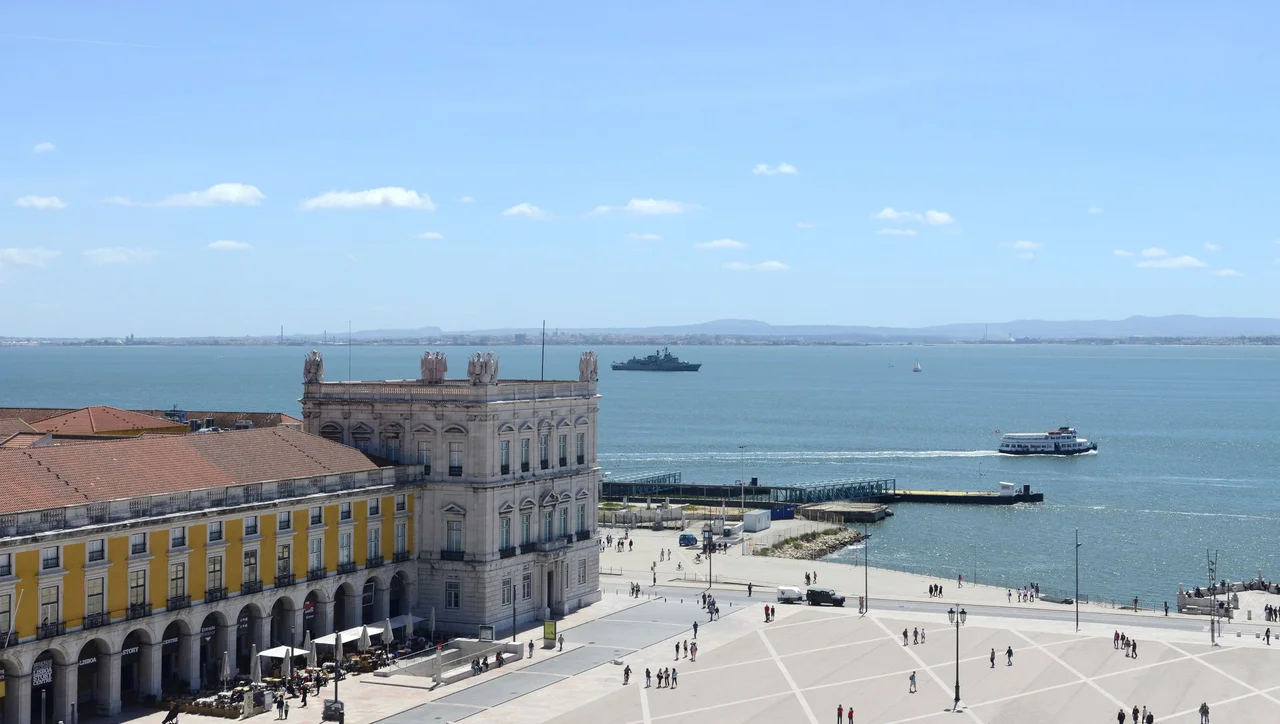
Quick Answer: The Portugal Golden Visa still exists in 2026, but not for property buyers. Law 56/2023 closed every real estate route in October 2023. What remains is capital and activity based, led by a EUR 500,000 subscription to a CMVM-regulated fund, with a stay requirement of roughly seven days a year and a five-year path to citizenship.
Most people who search for the Portugal Golden Visa are still looking for the version that ended three years ago: buy a EUR 500,000 apartment, get EU residence, visit for a week a year. That version is gone, and the search volume has not caught up. Around 140 people a month in the United States still search specifically for the Golden Visa real estate route, and another 110 for Golden Visa properties.
This guide covers what the programme actually is now, what it costs beyond the headline investment, and the part that advisory sites skip: what a Golden Visa holder pays if they buy a Portuguese home anyway. Those are two separate transactions with two separate tax consequences, and confusing them is the most expensive mistake in this cluster.
What Changed in October 2023, and What Survived
Law 56/2023, part of the Mais Habitação housing package, removed the property acquisition routes from the Golden Visa entirely. This was not a threshold increase or a geographic restriction of the kind applied in 2022. Purchase of residential property, purchase of commercial property, and the reduced thresholds for interior low-density territories all ceased to qualify.
The political reasoning was housing supply, not immigration. Portugal concluded that a residence programme routed through real estate was competing with residents for the same stock. Whether that diagnosis was right is a separate argument; the legal position is settled.
The routes that qualify in 2026
| Route | Minimum | Practical notes |
|---|---|---|
| CMVM-regulated investment fund | EUR 500,000 | At least 60% of assets in Portuguese companies, minimum five-year maturity. The dominant route by volume. |
| Cultural production or heritage support | EUR 250,000 | Falls to EUR 200,000 for projects in designated low-density territories. The cheapest live route. |
| Research activities | EUR 500,000 | Into accredited scientific or technological research institutions. |
| Company capitalisation plus jobs | EUR 500,000 | Capital into a Portuguese company, combined with creating five permanent jobs. |
| Job creation | 10 jobs | No capital floor, but the operational commitment is real. |
Two things follow from this table. First, the fund route dominates because it is the only one that does not require you to run something. Second, cultural production at EUR 250,000 is half the price and is consistently under-discussed, because the advisory firms that rank for this query earn more on fund referrals.
For the mechanics of choosing between funds, see our Portugal Golden Visa fund investment guide. For the full account of what closed and when, see Portugal Golden Visa real estate ended.
What It Costs Beyond the Headline Number
The EUR 500,000 fund subscription is the visible figure and it is not the whole cost. Application, biometric and issue fees are charged per family member, legal and fund set-up costs land in the first year, and management charges run for the full 5 years of the hold. Budget these separately.
| Cost element | Applies to | Timing |
|---|---|---|
| AIMA application fee | Each applicant, main and dependants | At submission |
| Residence permit issuance fee | Each applicant | On approval |
| Renewal fees | Each applicant | At each renewal cycle |
| Legal and immigration fees | Household | Typically staged across the process |
| Fund subscription charge | Investment | One-off, deducted from or added to the subscription |
| Fund annual management charge | Investment | Every year for at least five years |
| Bank account and compliance costs | Main applicant | Setup, then annual |
AIMA republishes its fee schedule annually, so any figure quoted in an article written a year ago is already wrong. Ask for the current table in writing before you commit, and ask for it per person rather than per family.
The charge that compounds is the fund’s annual management fee. On a EUR 500,000 subscription held for five years, a management charge of two percent a year is EUR 50,000 of the investment consumed before any return. That is a larger number than the entire legal bill on most applications, and it is the one that never appears in a comparison table.
Stay Requirements and the Residency Clock
The Golden Visa requires 7 days of physical presence in the first year and 14 days across each subsequent 2-year period, which averages to roughly a week a year. That is the lightest presence requirement of any European residence-by-investment programme, and it is the single feature the route is bought for.
| Period | Days required | Averaged |
|---|---|---|
| Year 1 | 7 | 7 a year |
| Years 2 and 3 | 14 | 7 a year |
| Years 4 and 5 | 14 | 7 a year |
| Full 5-year hold | 35 | 7 a year |
Presence is evidenced rather than assumed. Keep boarding passes, entry stamps and accommodation records for every trip, because the renewal that fails is usually the one where the days were spent and never documented.
This is the programme’s whole commercial proposition. Every other Portuguese residence route expects you to live in Portugal. The D7 passive income visa and the D8 digital nomad visa both assume genuine residence, with the tax consequences that follow. The Golden Visa does not.
The clock that matters for citizenship now runs from the date the residence permit application was submitted, not from the date it was approved. Given AIMA’s processing backlog, that distinction has been worth years to applicants who filed early and waited.
Golden Visa, D7 or D8: Which Route Fits
Three routes reach the same Portuguese residence permit and the same naturalisation clock, and they differ almost entirely in what they ask of you. The Golden Visa asks for EUR 500,000 and about 7 days a year. The D7 asks for roughly EUR 920 a month in passive income and that you actually live here.
| Factor | Golden Visa (fund) | D7 passive income | D8 digital nomad |
|---|---|---|---|
| Core requirement | EUR 500,000 locked for five years | About EUR 920 per month passive income | About EUR 3,680 per month remote income |
| Capital committed | Yes, and illiquid | No | No |
| Physical presence | About 7 days a year | High, genuine residence expected | Medium to high |
| Likely tax outcome | Stays non-resident | Becomes tax resident | Becomes tax resident |
| Property tax effect | Flat 7.5% IMT on purchase | Resident scale, refund route available | Resident scale, refund route available |
| Best fit | Capital-rich, wants EU mobility without moving | Retirees, landlords, dividend income | Employed remote workers |
The D7 and D8 income thresholds track the national minimum wage, which stands at EUR 920 a month in 2026. Both routes have their own guides: the D7 passive income visa and the D8 digital nomad visa. D8 requires four times that figure. Anyone quoting EUR 3,040 or EUR 3,480 for D8 is working from a 2023 or 2025 wage and has not updated.
A wider survey of what is available without the Golden Visa is in Portugal residency options without Golden Visa.
What a Golden Visa Holder Actually Pays on Property
A Golden Visa holder who buys a Portuguese home pays exactly what any other non-resident pays, because the permit confers no tax advantage on a purchase. That means flat 7.5% IMT plus 0.8% stamp duty from 1 September 2026, then IMI annually, and AIMI at 0.7% above EUR 600,000 of taxable value per owner.
Buying a home in Portugal as a Golden Visa holder is an ordinary foreign purchase. The permit gives you no discount, no exemption and no special treatment. What determines your tax position is tax residency, not immigration status, and most Golden Visa holders deliberately remain non-resident.
| Tax or charge | Non-resident owner in 2026 | Where it bites |
|---|---|---|
| IMT on purchase | Flat 7.5% on residential property from 1 September 2026 under DL 97/2026 | One-off, at the deed |
| Stamp duty | 0.8% of the purchase price | One-off, at the deed |
| IMI municipal property tax | Annual, set by each municipality within a statutory band | Every year |
| AIMI wealth surcharge | Applies above EUR 600,000 of taxable value per owner | Every year, above the threshold |
| Rental income tax | Portuguese-source income taxed for non-residents | If you let the property |
The flat 7.5% non-resident rate is the number that surprises people. A resident buying the same home moves along a progressive scale that starts far lower. On a EUR 600,000 apartment, the difference between the two positions runs into tens of thousands of euros.
There is a refund route. If you become Portuguese tax resident within 24 months of purchase and satisfy the 183-day presence test, the excess IMT can be reclaimed. The mechanics are in IMT refund for tax residents and the underlying non-resident rules in IMT tax for non-residents.
For a Golden Visa holder spending a week a year in Portugal, that refund is unreachable by design. The programme that keeps you non-resident is the same programme that keeps you on the higher IMT rate. That trade is rarely priced into the comparison tables published by firms selling the visa.
Before any purchase, you need a NIF. See NIF for a Portugal property purchase and the full sequence in how to buy property in Portugal step by step.
Fund Versus Simply Buying a Home
Buying a home and subscribing to a EUR 500,000 fund stopped being the same transaction in October 2023, and they are no longer alternatives to one another. The comparison is still worth running once, because a buyer with EUR 500,000 to deploy is genuinely choosing between an asset they control and a permit.
| Cost line | EUR 500,000 fund route | EUR 400,000 apartment, non-resident buyer |
|---|---|---|
| Core capital deployed | EUR 500,000 subscription | EUR 400,000 purchase price |
| IMT transfer tax | None on a fund subscription | EUR 30,000 at the flat 7.5% rate |
| Stamp duty | Minimal, on documents | EUR 3,200 at 0.8% |
| Fund charges over five years | Roughly EUR 25,000 to EUR 75,000 at 1% to 3% a year | Not applicable |
| Immigration legal and AIMA fees | Household, five figures | Not applicable |
| Property legal and notary | Not applicable | Roughly EUR 5,000 to EUR 9,000 |
| Annual IMI | Not applicable | Four figures, municipality dependent |
| What you hold at the end | Regulated securities exposure and a residence permit | A deeded asset you can live in or let |
The last row is the whole comparison. The apartment column buys something you can sleep in. The fund column buys immigration status and fund exposure, and no kitchen. Comparing only the headline euros is misleading unless you put a value on residence rights, Schengen access and citizenship optionality after five compliant years.
Investors who want both stack the columns rather than choosing between them. Five hundred thousand into the fund for the permit, plus a separate purchase for the family, is a common pattern, and the total capital deployed is the sum of the two with the carrying costs on top.
What the five-year hold actually commits you to
Subscribing to a EUR 500,000 CMVM-regulated fund commits the capital for a minimum of 5 years, and in practice for longer, because the permit must be maintained until the naturalisation or permanent residency milestone you are aiming at. The fund itself is illiquid: units are not listed, redemption follows the vehicle’s own terms rather than your timetable, and a secondary sale depends on finding a buyer who also wants the residency benefit. Management charges apply across every year of that hold, so a 10-year horizon carries roughly twice the fee drag of the 5-year one most subscribers originally modelled. Since the naturalisation period for non-EU nationals moved to 10 years in May 2026, the realistic commitment for an investor whose objective is the passport is now a decade of illiquidity rather than half of one.
Pros and Cons of the Fund Route
The fund route trades capital and liquidity for the lightest presence requirement in Europe: EUR 500,000 locked for 5 years against roughly 7 days a year on the ground. Whether that trade is good depends almost entirely on whether you would hold a regulated Portuguese fund position without the permit attached.
Advantages:
- Schengen mobility and EU residence without relocating
- Family included: spouse, dependent children, and dependent parents under the standard rules
- No requirement to run a business or prove income
- Regulated wrapper, with CMVM oversight and audited reporting
Disadvantages:
- EUR 500,000 illiquid for at least five years
- Management charges consume a meaningful share of the capital over that period
- Investment risk sits with you; a Golden Visa fund is a fund, not a deposit
- Processing times at AIMA have been measured in years, not months
- Programme terms have narrowed twice in a decade
Risks and Red Flags
Most Golden Visa failures are administrative rather than financial: a renewal missed, a presence record never kept, a fund that turned out to hold Portuguese real estate and stopped qualifying. The 18 to 24 month AIMA wait amplifies every one of them, because a file that needs correcting rejoins the back of the queue.
Red flags worth acting on:
- Guaranteed return language. A fund promising a fixed return on a five-year lock is either mispricing its risk or misdescribing it. CMVM regulation covers conduct, not outcomes.
- Advisers paid by the fund. Ask directly what commission the firm receives from the fund it is recommending, and ask in writing.
- Fee quotes without a date. AIMA fees change annually. A quote with no date on it is a quote for a previous year.
- Bundled property offers. Any firm still packaging a Golden Visa with a property purchase is either three years out of date or selling you the flat you did not need.
- Timeline promises. Nobody controls AIMA’s queue. A firm that promises an approval date is promising something it cannot deliver.
Checklist before you commit capital:
- Confirm the fund is CMVM-regulated and that its prospectus states the 60% Portuguese asset floor
- Get the full fee schedule, per person, dated, in writing
- Confirm whether your legal fee is fixed or staged, and what triggers each stage
- Model the outcome if you never become tax resident, because most holders do not
- Model the outcome if you later want to sell the property you bought alongside
Who This Route Suits
The fund route suits a narrow profile: capital-rich, unwilling or unable to relocate, and comfortable holding an illiquid position for 5 years or more. Three buyer profiles come up repeatedly in enquiries about it, and only one of the three is actually a good fit for what the programme now offers.
The mobility buyer. Wants EU residence rights, has capital, is not moving. Keeps their existing tax residence, visits occasionally, values the Schengen access and the family inclusion. This is the profile the programme was rebuilt for after 2023, and it works.
The relocating family. Wants to actually live in Portugal. American households in this position should start with moving to Portugal from the US, and retirees with retiring in Portugal. For them the Golden Visa is the expensive answer to a question the D7 or D8 answers for free. If you are going to live there and pass the 183-day test, tying up EUR 500,000 buys you nothing that an income-based route does not already give you, and it costs you the resident IMT scale on any home you buy.
The property investor. Wants Portuguese property and thought the visa came with it. It does not, and has not since 2023. Buy the property on its own merits, price the 7.5% non-resident IMT into the deal, and decide about residence separately. The cost comparison above sets out that decision line by line.
Citizenship by Investment: the Same Question, Different Words
Portuguese citizenship by investment is not a programme, it is a phrase describing the end of this one. The Golden Visa grants residence; naturalisation follows after 7 years of legal residence for EU and CPLP nationals and 10 years for everyone else, under the law in force since 19 May 2026.
What people mean by it is the end of this process rather than the start. The Golden Visa grants residence. Residence, maintained and renewed, is what eventually opens naturalisation.
| Stage | What it grants | What it does not |
|---|---|---|
| Golden Visa residence permit | Legal residence, Schengen travel, family inclusion | A passport, or EU citizenship |
| Renewals across the required period | Continuity of legal residence | Any acceleration of the clock |
| Naturalisation application | Eligibility to apply, subject to the conditions | Automatic approval |
The conditions changed on 19 May 2026 and the change is large. Lei Organica 1/2026 replaced five years of legal residence with seven for EU and CPLP nationals and ten for everyone else, and it moved the start of the clock from the application date to the date the permit is issued. For an American, British, Canadian or Emirati investor that is a decade of maintained residence, not five years, and the AIMA wait now sits in front of the clock rather than inside it.
Citizenship by investment in the strict sense, paying for a passport directly, is not what Portugal offers and never was. Portugal sells residence. The passport is earned by holding that residence over time, which is a materially different product from the Caribbean programmes the phrase is borrowed from. The full picture, including the transitional rule and who is protected by it, is in Portuguese citizenship by investment.
Timeline: What Actually Happens
A Golden Visa file runs on two clocks and only one of them is yours. Preparation and subscription take weeks and are controllable. AIMA’s processing has been running 18 to 24 months, and since the 2026 nationality law the naturalisation count does not begin until that permit is issued.
| Stage | What happens | Practical duration |
|---|---|---|
| Preparation | NIF, Portuguese bank account, source-of-funds file | Weeks |
| Investment | Fund subscription completed and evidenced | Weeks |
| Submission | Application filed with AIMA; the citizenship clock starts here | On completion |
| Biometrics | Appointment scheduled and attended | Historically a long wait |
| Approval and card | Residence permit issued | Historically a long wait |
| Renewals | Permit renewed on the statutory cycle, presence evidenced | Every renewal period |
| Naturalisation | Ten years of legal residence for most non-EU nationals, A2 Portuguese, clean record | From the date the permit was issued |
AIMA processing has been running 18 to 24 months from submission to permit issue, and that wait now sits in front of the naturalisation clock rather than inside it. Before a 2026 amendment the residence period counted from the date the permit was applied for, which protected applicants against the agency’s own backlog; the current law counts from the date the permit is issued. For a non-EU investor subscribing in 2026, the arithmetic runs roughly: 4 months to prepare and subscribe, 18 to 24 months until the permit issues, then 10 years of legal residence, then a further 12 to 24 months of processing at the Conservatoria dos Registos Centrais. That totals about 13 to 14 years from the first euro committed to a Portuguese passport in hand, roughly double the figure the same calculation produced before May 2026.
The two long waits are outside your control and outside your adviser’s. Plan around them rather than against them.
A closing caution on citizenship. The rules moved once already, in May 2026, and they moved against applicants who had planned around the previous ones. Nothing guarantees that the terms in force when you apply are the terms in force when you qualify, and a plan that only works if the rules hold unchanged for ten years carries a risk that belongs in your model rather than in a footnote.
Frequently Asked Questions
No. Law 56/2023 removed every real estate route in October 2023, including the reduced thresholds for low-density interior areas. Buying a Portuguese home in 2026 gives you an asset and a tax bill, not a residence permit. The routes that survived are capital-based or activity-based: regulated investment funds, cultural production, research, job creation, and company capitalisation.
The fund route requires EUR 500,000 into a CMVM-regulated fund that holds at least 60% of its assets in Portuguese companies and has a maturity of at least five years. The subscription is locked for the life of the application. Cultural production is the cheapest surviving route at EUR 250,000, and EUR 200,000 when the project sits in a designated low-density territory.
Seven days in the first year, then fourteen days across each subsequent two-year period. That averages to about a week a year, which is the entire commercial logic of the programme: it is designed for people who want EU residence rights without relocating. Every other Portuguese residence route, D7 and D8 included, expects you to actually live there.
No, and that is usually the point. Tax residency follows the 183-day physical presence test or having your habitual home in Portugal, not the type of permit you hold. A Golden Visa holder spending a week a year normally stays non-resident, which means Portuguese tax applies only to Portuguese-source income, and any property purchase carries the flat 7.5% non-resident IMT rate.
It changed on 19 May 2026. Lei Organica 1/2026 replaced the five-year rule with seven years of legal residence for EU and CPLP nationals and ten years for everyone else, which covers American, British, Canadian and Emirati applicants. The clock now runs from the date the residence permit is issued rather than the date it was applied for, and only nationality applications already filed on 19 May 2026 keep the old terms. The A2 language test and clean criminal record still apply, alongside broader integration requirements.
Budget for the AIMA application and permit issuance fees per family member, which are republished each January, plus legal fees typically running to five figures, fund subscription and annual management charges, and the cost of renewals. The investment itself is the visible number; the recurring fees and the fund's management charge over five years are the ones investors underestimate.
Yes, and many do. It simply plays no part in the visa application. You buy as an ordinary foreign purchaser: NIF first, then bank account, promissory contract, IMT and stamp duty, then the notarial deed. Because most Golden Visa holders remain non-tax-resident, they pay the flat 7.5% IMT rate on residential purchases rather than the resident scale.
The programme survived the 2023 reform that removed property, and it continues to run on the capital and activity routes. It has been narrowed twice in a decade, so treat continuity as a policy assumption rather than a guarantee. If your plan only works if the rules hold for five years unchanged, the plan has a risk you have not priced.
Buying in Portugal alongside a residence application?
Tell us your route and timing. We map the IMT, NIF and tax-residency steps in the order they actually hit.
Get a Portugal property shortlist
Tell us your budget and region (Lisbon, Algarve, Porto, Cascais). We reply within one business day with vetted options matched to your goals.