
Retire in Portugal 2026: Visas, Tax, Costs and Towns
Retiring to Portugal in 2026: the D7 income floor, why IFICI no longer shelters pensions, what a home costs to own, and which towns suit older buyers.
By Portuguese Estate Editorial · Updated September 23, 2026 · 13 min read
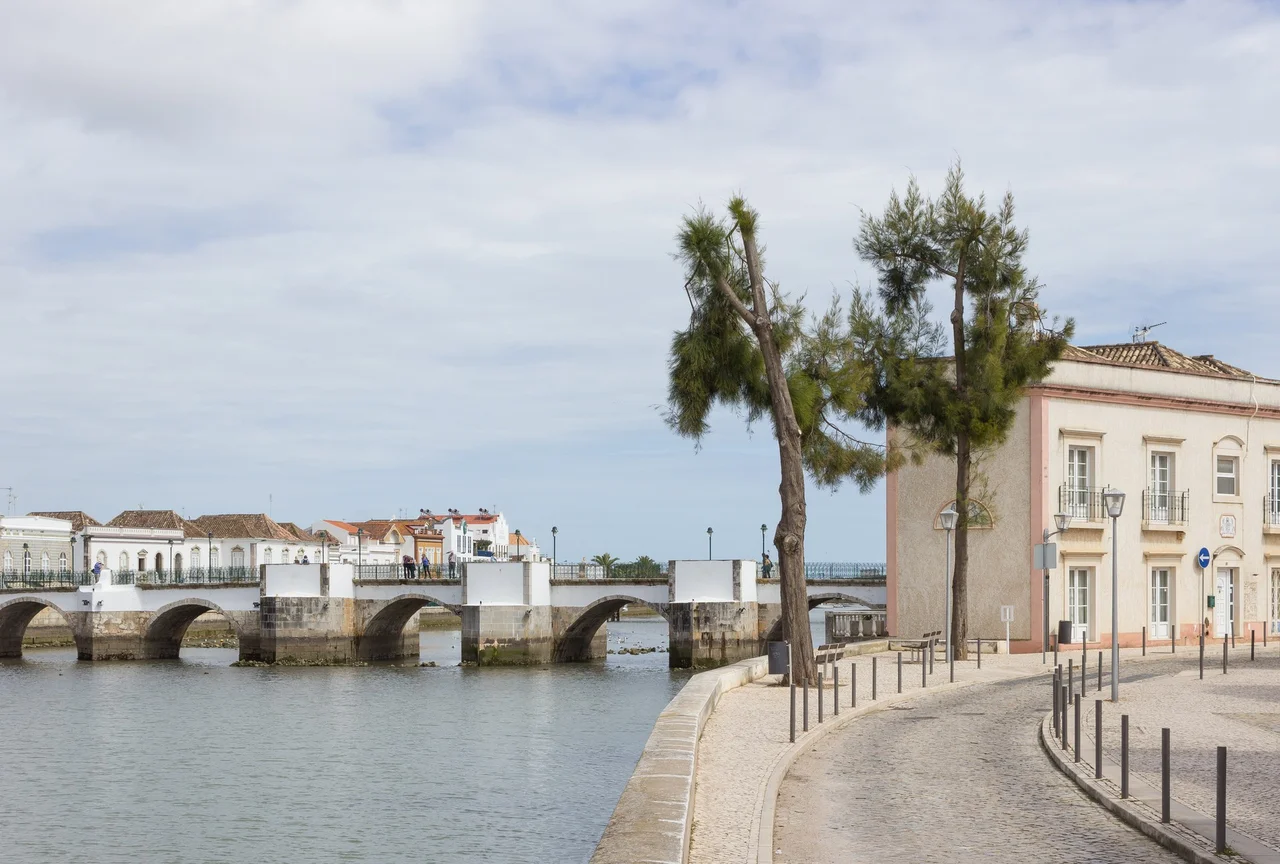
Quick Answer: Retiring to Portugal in 2026 runs through the D7 visa at roughly EUR 920 a month of passive income. The tax picture has changed against retirees: NHR closed to new applicants at the end of 2024 and its replacement, IFICI, does not cover pensions. Rent before you buy, because purchasing before tax residency costs the flat 7.5% IMT rate.
Portugal has been the default answer to “where should we retire” for a decade, and most of the guides ranking for it were written when that answer was easier. Two things have changed. The pension tax regime that made the maths work closed to new applicants at the end of 2024, and housing costs on the coast have risen faster than any retirement budget.
Neither change makes Portugal a bad answer. Both change the arithmetic, and the pages ranking above this one mostly have not updated. This guide gives the current position, including the part that retirement guides never cover: what the house costs to own once you have bought it.
The Visa: D7, and Almost Nothing Else
The D7 passive income visa is the retirement route and effectively the only one. It asks for proof of income you do not work for, referenced to roughly EUR 920 a month for a single applicant in 2026, with uplifts of 50% for a spouse and 30% per dependent.
| Household | Monthly passive income to demonstrate in 2026 |
|---|---|
| Single applicant | EUR 920 |
| Applicant and spouse | About EUR 1,380 |
| Couple with one dependent | About EUR 1,656 |
The floor tracks the national minimum wage, which is EUR 920 a month in 2026. Pensions, both state and occupational, dividends, foreign rental income and royalties all qualify. Consulates want to see the income arriving regularly across twelve to twenty-four months rather than a lump sum sitting in an account.
The full application sequence, documents and consulate variations are in the Portugal D7 visa guide. The Golden Visa fund route exists but is the wrong tool for someone actually relocating: it locks EUR 500,000 for five years and buys residence rights you would get anyway on income. See the Portugal Golden Visa guide if capital, rather than relocation, is the point.
The Tax Change That Matters Most
For a decade the honest reason many retirees chose Portugal over Spain or Italy was NHR, the non-habitual resident regime, which gave favourable treatment to foreign pension income. It closed to new applicants at the end of 2024, and its replacement, IFICI, excludes pensions entirely.
NHR closed to new applicants at the end of 2024.
Its replacement, IFICI, applies a flat rate to qualifying Portuguese employment and self-employment income for ten consecutive years. It excludes pensions, and it excludes Portuguese rental income. For a retiree living on a pension, IFICI does nothing at all. The detail is in IFICI, the NHR replacement.
The practical consequence: once you are Portuguese tax resident, your pension is taxed under the ordinary rules on worldwide income. Whether that is better or worse than your home country depends on your home country and your treaty position, and it is a calculation to run before you move rather than after.
Several pages currently ranking above this one still describe the NHR pension treatment as available. If your plan was built on that, the plan needs redoing.
Tax residency itself follows the 183-day test or having your habitual home in Portugal. See the 183-day test.
Rent First. Here Is the Arithmetic
| Scenario | IMT on a EUR 350,000 home | When it is paid |
|---|---|---|
| Buy before tax residency | Flat 7.5%, EUR 26,250 | At the deed |
| Buy after tax residency | Resident progressive scale, materially lower | At the deed |
| Rent 12 months, then buy | Nothing during the lease | Resident scale if timed right |
The flat 7.5% non-resident rate applies to residential property from 1 September 2026 under DL 97/2026, with 0.8% stamp duty on top. There is a refund route if you become tax resident within 24 months and pass the 183-day test, set out in the IMT refund guide, but you fund the higher figure first.
At retirement age the non-financial argument for renting first is stronger than the financial one. A February in an uninsulated house on the Silver Coast is a different proposition from an August viewing. So is the drive to the nearest hospital when it is not a hypothetical.
What the House Costs to Own
Every retirement guide budgets rent and almost none budgets ownership, which is what most of their readers end up doing. A purchase adds 7.5% IMT for a non-resident, 0.8% stamp duty, then IMI annually at 0.3% to 0.45% of rateable value plus condominium quotas and maintenance.
| Charge | Basis | Frequency |
|---|---|---|
| IMI municipal property tax | 0.3% to 0.45% of rateable value for urban property, set by each council | Annual |
| AIMI surcharge | 0.7% on taxable value above EUR 600,000 per owner | Annual |
| Condominium fees | Building budget, scaled to your share | Monthly or quarterly |
| Buildings insurance | Mandatory with a mortgage, sensible without | Annual |
| Maintenance | Higher on older and coastal stock | Ongoing |
The detail sits in IMI, AIMI, condominium fees and maintenance costs. A full city-by-city budget separating renting from owning is in the cost of living guide.
One item retirees specifically should settle before buying: succession. Portugal has no inheritance tax in the conventional sense, but stamp duty at 10% applies on transfers outside the direct line of spouse, descendants and ascendants, who are exempt. A will covering the Portuguese asset prevents a cross-border probate. See inheritance tax on Portuguese property.
Healthcare, Which Is the Real Decision
Portugal’s public system, the SNS, is the reason a lot of people can afford to retire here at all. Once you hold a residence permit and a social security number you can register with your local health centre and use it on the same terms as any resident.
Most retired foreign households run two layers. Private cover, which the visa application requires anyway, buys speed and English-speaking consultations for routine care. The public system carries serious and expensive treatment. Private premiums at retirement age are higher than the headline figures quoted for younger applicants, and some insurers cap new entrants by age, so price your own cover before assuming the national average applies to you.
The variable nobody prices is distance. Portugal concentrates its hospitals on the coast and around the two big cities. A house in the interior at half the coastal price can sit an hour from an emergency department, and that hour is the difference the brochures leave out. If you are buying at sixty, you are also buying for eighty.
| Consideration | Coast and cities | Interior |
|---|---|---|
| Distance to an emergency department | Usually under 30 minutes | Frequently an hour or more |
| English-speaking private care | Widely available | Limited |
| Housing cost | Higher, sharply so near Lisbon | The lowest in western Europe |
| Community and services | Established | Thinning with depopulation |
The First Year, in Order
| Step | What happens | Timing |
|---|---|---|
| NIF and bank account | Tax number first, then the account | Before anything else |
| Consulate application | Income evidence, insurance, criminal record certificate | In your home country |
| Arrival and lease | Twelve-month rental establishes the address | On entry |
| AIMA appointment | Biometrics and residence permit | Historically a long wait |
| Social security and health centre | Register once the permit is issued | After the card |
| Tax residency | 183 days, or habitual home | Within the first calendar year |
| Purchase | Buy on the resident IMT scale | Year two in most plans |
The order is the point. Buying before the tax residency step is what converts a EUR 350,000 purchase into a EUR 26,250 IMT bill instead of a materially smaller one, and it is the most common expensive mistake in this cluster.
Where Retirees Actually Go
| Area | Draw | The honest trade |
|---|---|---|
| Eastern Algarve, Tavira and Olhao | Mildest winters, established community, walkable towns | Summer crowds, prices risen sharply since 2020 |
| Cascais and Estoril | Lisbon hospitals within reach, international circle, transport | The most expensive housing in the country |
| Silver Coast | Space, coastline, materially lower prices | Colder wetter winters, thinner English-speaking services |
| Setubal peninsula | Coast plus an hour to Lisbon, moderate prices | Less established expatriate infrastructure |
| Interior and Alentejo | The cheapest housing in western Europe | Long drives to hospitals and airports, services thinning |
The variable that decides this table at retirement age is not climate or price. It is distance to a hospital, and it is the one nobody weighs until they need to. Get in the car and drive it before you commit.
Wills, Succession and What Happens to the House
A Portuguese property falls under Portuguese succession rules unless you actively elect otherwise, and for a retiring couple that is among the most consequential decisions in the move. Portuguese law reserves a share of the estate for spouse and children, and the election has to be made in a will.
| Element | Position |
|---|---|
| Forced heirship (legitima) | Portuguese law reserves a share for spouse and children |
| Choice of national law | EU succession rules allow you to elect your nationality’s law |
| Where the election is made | In a will, expressly, before it is needed |
| Stamp duty on inheritance | Spouse, children and parents are exempt |
| Others inheriting | 10% stamp duty applies |
| A foreign will alone | May work, and creates delay and cost in practice |
The forced heirship row is what surprises British and American buyers, whose home systems allow far freer disposal. Portuguese law reserves a portion of the estate for close family, and without an express election that is what governs the Portuguese property.
The election is available and it is straightforward, but it has to be made deliberately and in writing. Doing it in a Portuguese will drafted alongside your existing one is the usual approach, and it costs a few hundred euros against an estate worth several hundred thousand.
The exemption row is the good news, and it is frequently misunderstood. There is no inheritance tax as such in Portugal, and transfers to a spouse, children or parents are exempt from the stamp duty that applies to other beneficiaries. See inheritance and succession for foreign owners for how that works in practice.
Ageing in the House You Buy
Most retirement purchases are made in someone’s sixties for a life running into their eighties, and the property that suits the first decade frequently fails the second. Stairs, a steep street, a large garden and a 40-minute drive to a pharmacy all read differently at 80 than at 65.
| Feature | Why it matters later |
|---|---|
| Stairs, inside and outside | The single most common reason people move again |
| A steep street or a hill | Fine at 65, decisive at 80 |
| Lift in an apartment building | Non-negotiable above the second floor |
| Distance to a pharmacy and a doctor | Walkable beats drivable |
| Garden size | A pleasure, then a burden, then a cost |
| Public transport | Matters the day driving stops |
| Distance from an airport | Determines how easily family visits |
The hill row deserves emphasis on the Portuguese coast specifically, because so much of the attractive stock sits on slopes with steps, terraces and level changes. A house reached by forty steps from the road is a different proposition at eighty than at sixty-five, and the family who bought it at sixty-five will be selling it into a market that knows this.
The practical filter is to view every candidate twice: once as the person you are, and once as the person you will be in twenty years. Households who apply that test tend to buy flatter, closer in, and smaller, and tend not to move again.
Pros and Cons
Portugal remains one of the more practical retirement destinations in Europe on healthcare, safety and cost, and the tax argument that once headlined it is gone. NHR closed to new applicants at the end of 2024, and its replacement excludes pensions entirely.
Advantages:
- No capital requirement: the D7 asks for income, not investment
- Healthcare quality high and cost low by American and northern European standards
- Housing far cheaper than the UK, Ireland or a US coastal metro outside Lisbon and Cascais
- Established English-speaking communities on the Algarve and the Lisbon coast
- Safe, politically stable, and inside the EU and Schengen
Disadvantages:
- Pensions no longer shelter under IFICI, so the tax case is weaker than it was
- Older housing stock is poorly insulated and expensive to heat in winter
- Bureaucracy is slow, and AIMA appointments have been a genuine bottleneck
- Interior living means real distance from hospitals
- Coastal prices have risen faster than pensions since 2020
Risks and Red Flags
Retirement purchases fail on healthcare distance, stairs and succession, and all three are invisible at 65. The NHR closure at the end of 2024 removed the tax argument that brought many retirees here, and plans built on it need rebuilding.
- Any guide promising tax-free pensions. It is describing NHR, closed to new applicants since the end of 2024.
- Buying in the first six months. Wrong tax status, wrong season, and usually the wrong town.
- Ignoring the hospital drive. The cheapest houses are cheapest for reasons that matter more each year.
- No Portuguese will. Cross-border probate on a Portuguese deed can run for years.
- Advisers who cover only one side. Your home-country tax position and your Portuguese one interact, and one adviser rarely knows both.
Checklist before you commit:
- Model your pension tax position under the ordinary Portuguese rules, since NHR is closed to new applicants
- Drive from the candidate house to the nearest hospital with an emergency department
- Visit in February as well as in summer
- Get the actual IMI charge for the specific property instead of relying on the municipal band
- Instruct a Portuguese will alongside the purchase
Who This Works For
Retirement in Portugal suits households with documented pension income, a tolerance for administrative process, and a realistic view of healthcare distance. It suits badly anyone who budgeted on NHR, or who chose a hillside house with 40 steps without thinking about the second decade of ownership.
The couple on two pensions. The core case. The D7 income test is comfortable, and the planning work is the tax position rather than the visa. Rent a year, buy once resident, take the resident IMT scale.
The single retiree on one pension. The EUR 920 floor is a legal minimum, not a budget. It is thin on the coast and workable inland, and consulates look at sufficiency rather than arithmetic.
The retiree with capital rather than income. The D7 is awkward here, because it tests flows and not balances. Structuring the capital to produce a documented income stream is the usual answer, and it needs advice before the application rather than after a refusal.
The couple splitting time between two countries. Workable, but watch the 183-day line in both directions. Being tax resident nowhere is not the plan people think it is.
Frequently Asked Questions
The D7 passive income visa, in almost every case. It asks for stable passive income at or above the national minimum wage, EUR 920 a month in 2026 for a single applicant, plus 50% for a spouse and about 30% for each dependent child. Pensions, dividends and rental income from outside Portugal all qualify. There is no property purchase requirement and no minimum investment.
No, and this is the biggest change for retirees in a decade. The NHR regime that gave favourable treatment to foreign pensions closed to new applicants at the end of 2024. Its replacement, IFICI, applies a flat rate to qualifying Portuguese employment and self-employment income for ten years and explicitly excludes pensions. A retiree moving in 2026 is taxed on pension income under the ordinary rules once tax resident.
Two numbers that are tested separately. The visa floor is EUR 920 a month for a single applicant, which is a legal minimum rather than a budget. The realistic budget depends entirely on the town: a couple in the interior lives on a fraction of what the same couple spends in Cascais. If you buy rather than rent, add IMI, AIMI above EUR 600,000 of taxable value, condominium charges and maintenance on top.
Rent for the first year in most cases. Buying before you become Portuguese tax resident triggers the flat 7.5% IMT rate rather than the resident scale, a five-figure difference on a typical purchase. A year of renting also tells you what a town is like in February, which matters more at retirement age than at any other, because winter damp in older housing and distance to a hospital are the two things people get wrong.
The eastern Algarve around Tavira and Olhao for climate and an established community, the Silver Coast for space and lower prices, and the Cascais and Estoril belt for proximity to Lisbon hospitals and an international social circle. The interior is the cheapest by a wide margin and the hardest on healthcare distance, which is the trade nobody frames honestly until they have lived it.
Private health insurance is required for the visa application. Once you hold a residence permit and a social security number you can also register with the public system. Most retired households run both for the first years: the public system for serious care, private cover for speed and English-speaking consultations. Distance to the nearest hospital is the practical variable, and it varies enormously between the coast and the interior.
Portugal has no inheritance tax in the ordinary sense, but stamp duty at 10% applies to transfers outside the direct line of spouse, descendants and ascendants. Direct-line heirs are exempt from that charge. Your home country may still tax the estate, and a will covering the Portuguese asset avoids a cross-border probate that can take years. Address this before you buy, not after.
Retiring to Portugal and weighing towns?
Tell us your budget and what matters most. We price the same house across the Algarve, Silver Coast and Setubal, owner costs included.
Get a Portugal property shortlist
Tell us your budget and region (Lisbon, Algarve, Porto, Cascais). We reply within one business day with vetted options matched to your goals.