
Property for Sale in the Alentejo and Comporta 2026
Buying on the Alentejo coast and inland: Comporta, Melides, Milfontes and the plains, what each costs and what protection rules mean for building.
By Portuguese Estate Editorial · Updated September 7, 2026 · 12 min read
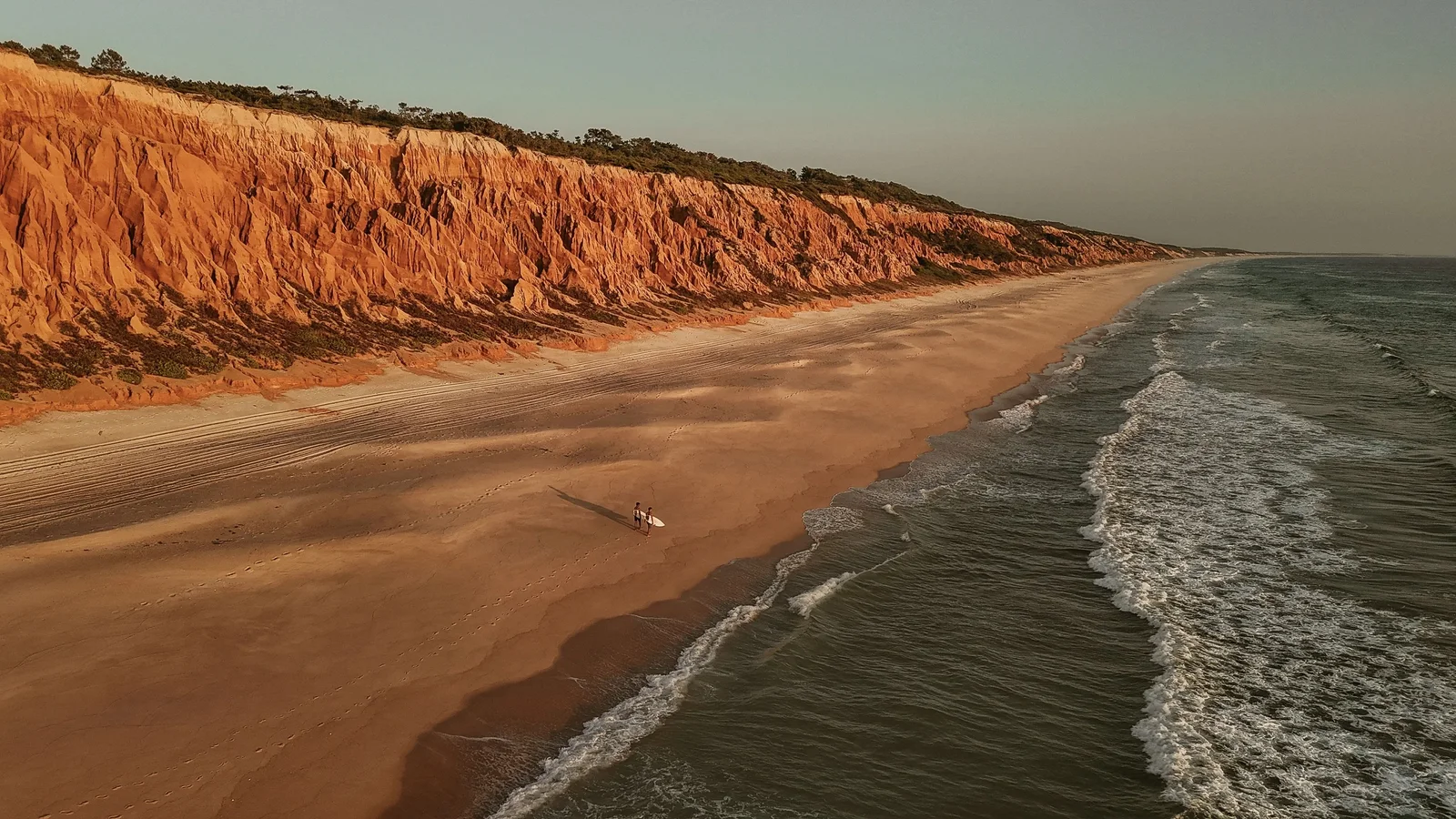
Quick Answer: The Alentejo is two markets sharing a name. Comporta and Melides are a small protected coastal enclave with prices near the top of the Portuguese market. Everything else, the southern coast and the whole interior, is among the cheapest habitable property in western Europe.
American searches put comporta portugal real estate at 210 a month and alentejo portugal real estate at 70, with British buyers adding comporta property for sale at 110 and alentejo property for sale at 70. The volumes are modest and the price range they cover is the widest of any Portuguese region.
That range is the reason this page treats them together: buyers arrive searching one word and need to know which of two markets they are in.
Two Markets, One Name
| Market | Where | Price character |
|---|---|---|
| The protected enclave | Comporta, Carvalhal, Melides, Troia | Near the top of the Portuguese market |
| The southern coast | Sines, Vila Nova de Milfontes, Zambujeira do Mar | Far lower, and a longer season |
| The wine and heritage interior | Evora, Estremoz, Borba, Monsaraz | Low, with handsome towns |
| The deep interior | Beja, Serpa, Moura, the plains | Among the cheapest in western Europe |
The Comporta Enclave
Comporta is a rice-farming parish that became an international address. What made it is not a developer but a rulebook: the coast between Troia and Melides sits inside protected landscape and nature reserve designations that cap building and keep the dune and pine landscape intact.
The commercial consequence is straightforward. Supply is fixed by regulation, demand has risen sharply since 2015, and prices followed. The architecture that made the place famous, low, timber, thatched, deliberately modest against the landscape, exists partly because that is what the rules and the setting permit.
For a buyer, three things follow.
What may be built is narrow and specific. Do not assume a plot supports the house you have drawn. Get the permitted volume from the municipality in writing for that parcel.
Existing houses carry a premium over land. Because consent is the scarce commodity, a legal house with a certificate is worth much more than an equivalent plot with a plan.
The rules protect your purchase too. The same designations that limit what you may build limit what may be built next to you, which is a large part of the value.
Melides sits just south, quieter and slightly cheaper, and Troia on the peninsula is a different product again: a resort development with apartments and a golf course, closer to Setubal by ferry than to Comporta by road.
The Southern Coast
South of Sines the coastline enters the Vicentine Coast natural park and stays protected all the way to the Algarve. Vila Nova de Milfontes, Almograve and Zambujeira do Mar are surf and walking towns with real winter populations, spectacular cliffs, and prices a fraction of Comporta’s.
The trade is exposure and distance. This coast faces the open Atlantic and is windier and cooler than the Algarve, and it is two hours or more from Lisbon. It suits buyers who want the coast without the enclave, and it is one of the few places in Portugal where protection and affordability coincide.
The Interior
| Area | Character | Price level |
|---|---|---|
| Evora and around | A walled UNESCO city, wine country, an hour and a half from Lisbon | The interior’s highest |
| Estremoz, Borba, Vila Vicosa | Marble towns, handsome, quiet | Low |
| Monsaraz and the Alqueva | Hilltop village, Europe’s largest artificial lake | Low, with a view premium |
| Beja, Serpa, Moura | The deep plains, big skies | Among the cheapest in the country |
Two facts shape the interior. Summer heat is severe: the plains regularly exceed forty degrees in July and August with almost no shade in the landscape, and that decides whether a house is usable half the year. And the population has been falling for decades, which is why the prices are what they are and why services thin over a long hold.
What You Pay to Buy
| Cost | Basis | Comporta, EUR 1,200,000 | Interior, EUR 200,000 |
|---|---|---|---|
| IMT, non-resident | Flat 7.5% from 1 September 2026 | EUR 90,000 | EUR 15,000 |
| Stamp duty | 0.8% | EUR 9,600 | EUR 1,600 |
| Notary, registry, legal | Fixed plus percentage | Around EUR 15,000 to EUR 20,000 | Around EUR 3,000 |
| Total | Roughly 9% to 11%, higher at the low end | About EUR 115,000 to EUR 130,000 | About EUR 20,000 |
The residency timing point is worth a great deal at Comporta levels and still matters inland. See IMT for non-residents and the cost of buying.
What It Costs to Hold
| Charge | Coastal enclave | Interior |
|---|---|---|
| IMI | 0.3% to 0.45% of a high rateable value | The same rate on a low one |
| AIMI | Applies routinely above EUR 600,000 per owner | Effectively never |
| Pool and grounds | Standard, and a real annual cost | Where they exist |
| Salt, sand and pine maintenance | High: the landscape is abrasive | Not applicable |
| Cooling | Coastal Atlantic moderation helps | Serious inland, in summer |
| Caretaking | Essential for an absentee owner | Advisable |
AIMI is the line that separates the two columns. At Comporta prices it applies annually at 0.7% on taxable value above EUR 600,000 per owner, and joint ownership gives each owner an allowance, which is a point for before the deed. See AIMI, the wealth surcharge.
Protection Rules Decide Everything
Whether you are looking at a EUR 2 million dune house or a EUR 80,000 village ruin, the same question governs the value: what does the applicable designation and classification permit on that parcel.
| Layer | What it controls |
|---|---|
| Municipal plan | The baseline permitted use and volume |
| Protected landscape or natural park | A narrower scope again, and a separate consent |
| Rustic or urban classification | Whether building rights exist at all |
| Existing licensed structure | What may be restored, and at what recorded volume |
| Obras licence | The permission, and the municipal queue behind it |
Answer these in writing before valuing anything. A plot with documented consent is a different asset from an identical plot without it, and the price rarely reflects the difference. The general framework is in due diligence on Portuguese property and the licensing in the obras licence guide.
Water, and Why It Matters More Here
The Alentejo is Portugal’s driest region, and water is the practical constraint behind a great deal of what looks like unfenced opportunity. A borehole must be registered, its yield documented, and its reliability understood across a dry summer before any plot is valued as buildable or farmable.
| Supply | Position in the Alentejo |
|---|---|
| Mains connection | Present in towns, frequently absent on rural parcels |
| Licensed borehole | The common rural answer, and yields vary between wet and dry years |
| Unlicensed borehole | Widespread, and not the same legal position |
| Alqueva network | Irrigation infrastructure serving parts of the region, with its own rules |
| Nothing | More common than buyers expect, and expensive to solve |
On the coast the pine and dune landscape sits on sandy ground with its own hydrology, and inland the summers are long and dry enough that a garden, a pool and a household together are a genuine demand rather than an afterthought.
Ask what supplies the property, ask to see the licence, and ask what happened in the last dry summer. A beautiful plot with an unlicensed well in a drought-prone district is a different asset from the same plot on mains, and the asking price rarely separates them.
The Cork and Farming Layer
Much of the Alentejo interior is montado, the cork oak and holm oak landscape that is a working agricultural system rather than scenery. Cork is stripped on a 9-year cycle by licensed workers, the trees are legally protected, and that cycle has a value belonging in the price.
Three consequences for a buyer. Cork oaks are legally protected and cannot simply be cleared, which shapes where anything may be sited on a plot. Land with cork or olive frequently carries existing arrangements with a farmer or a cooperative, and those pass with the land unless dealt with. And agricultural classification comes with agricultural expectations, which is the flip side of its very low price.
None of this makes rural Alentejo a poor purchase. It makes it a purchase that needs a lawyer who does rural work, and a walk over the parcel with someone who can read what is growing on it.
Distances, and What Isolation Actually Means
The Alentejo is a third of mainland Portugal with a small fraction of its population, and the emptiness that makes it beautiful is the same thing that makes daily logistics different from anywhere else in the country.
| From Comporta | Destination | Time |
|---|---|---|
| Lisbon, via the Vasco da Gama bridge | The capital | About an hour |
| Setubal, via the Troia ferry | Nearest city | Ferry plus a short drive |
| Grandola | Nearest full town | About 20 minutes |
| Evora | Interior capital | About 90 minutes |
| Lisbon airport | Flights | Just over an hour |
Comporta is the exception on this list rather than the rule. Its hour to Lisbon is what created the market, and nothing else in the Alentejo is that close to a capital city.
Deeper inland the arithmetic changes completely. A house near Evora or Beja may be forty minutes from a supermarket that stocks what you want, an hour from a hospital, and two hours from an international airport. None of that is a problem for people who chose the region for exactly those reasons, and all of it is a problem for people who did not think about it.
The test to apply before buying inland is not whether the drive is tolerable on a holiday. It is whether it is tolerable at seven on a wet Tuesday evening in February, repeated weekly for years.
The Light, the Heat and the Seasons
The Alentejo’s summers are the hottest in Portugal. Inland temperatures regularly run well above the coast, and the traditional architecture is a direct response: thick whitewashed walls, small windows, deep shade, courtyards, and buildings oriented against the sun rather than toward the view.
| Feature | Traditional reason | What a modern buyer often does |
|---|---|---|
| Small windows | Keep the heat out | Enlarge them, and lose the cooling |
| Thick lime-washed walls | Thermal mass, breathable | Seal them with cement render, and trap damp |
| Interior courtyard | Shade and airflow | Glaze it over, and create a greenhouse |
| Low ceilings in older parts | Easier to keep cool | Open them up, and lose it |
| Few south-facing openings | Deliberate | Add glazing, then add air conditioning |
That table is the single most useful thing to understand before renovating an Alentejo property. The vernacular is a climate response refined over centuries, and the standard international renovation, more glass, more light, more open plan, works against it and then buys air conditioning to compensate.
The better approach keeps the logic and improves the execution: retain the small openings and the mass, use lime rather than cement so the walls keep breathing, shade the additions, and put the glass where it faces something other than the afternoon sun.
Who Actually Sells Here
Transaction volumes in the interior are low, and that changes how a purchase begins. Outside Comporta and the coastal strip, a large share of what changes hands never reaches an international portal at all: it moves through a local agency window, a notary, a family arrangement, or word of mouth in the nearest town.
The consequence is that a buyer searching only in English sees a small and self-selecting slice of the market, priced for people who search in English. The better approach is to spend time in the specific area, talk to a local agency in Portuguese, and accept that the process runs on a longer clock than a Lisbon purchase. Buyers in a hurry pay a premium here that is entirely avoidable by being patient.
Pros and Cons
The Alentejo offers space, protection and prices a fraction of the coast, in a region occupying roughly a third of mainland Portugal. Comporta is the exception to all of it: 1 hour from Lisbon, priced against international resort markets, and thinly traded.
Advantages:
- Protected landscape that will not be built out, on both coasts
- Comporta is the closest unspoilt coast to Lisbon, about an hour away
- The interior offers space and heritage towns at very low prices
- Strong short-season letting rates in the coastal enclave
- Evora and the wine country give a real cultural base inland
Disadvantages:
- Comporta prices are near the national top, and AIMI applies
- Building consent is narrow and slow everywhere in the region
- Inland summers are severe and the interior is depopulating
- The southern coast is two hours or more from Lisbon
- Thin resale markets away from Comporta and Evora
Risks and Red Flags
Alentejo purchases fail on protection layers and water, both of which are documentary questions answered before an offer rather than after. Comporta adds a third: prices set by a small number of transactions, which makes any quoted average close to meaningless.
- A plot sold on a drawing. The municipality decides the volume, not the seller’s architect.
- An unlicensed structure described as restorable. What is recorded is what may come back.
- AIMI unmodelled at coastal prices. It is annual and it applies per owner.
- An inland house viewed in April. August decides whether it is usable half the year.
- Peak-week Comporta rates annualised. The season there is genuinely short.
Checklist before you offer:
- Written municipal indication of permitted volume for that parcel
- Which protection designation applies, and what consent it requires
- Classification, rustic or urban, from the caderneta predial
- Current VPT, last year’s IMI, and whether AIMI applies
- An August visit for anything inland
Who This Region Suits
The Alentejo suits buyers who want space and protection and will accept the logistics that come with a region holding roughly a third of mainland Portugal and a small fraction of its population. Comporta is the exception on every count, including price.
Buyers who want the coast to stay as it is. Protection is the product, on both the Comporta stretch and the Vicentine coast.
Lisbon weekenders with the budget. Comporta and Melides, an hour from the city, with the running costs and AIMI priced in.
Buyers who want coast without the enclave. Milfontes and Zambujeira, cheaper, windier, and a longer season.
Buyers who want space and heritage cheaply. Evora, Estremoz and the plains, after an August visit.
Buyers who need liquidity. Comporta and Evora function; the deep interior does not. Compare against property for sale in Lisbon if the exit matters.
Frequently Asked Questions
Scarcity by regulation. The coast between Troia and Melides sits inside protected landscape and a nature reserve, which caps what can be built and keeps the dunes and pine woods intact. Supply is therefore fixed while demand has risen sharply since 2015, and the result is the highest price per square metre outside central Lisbon and the Algarve's golden triangle.
About a factor of several on price. Comporta, Melides and the Troia peninsula form a small, protected, internationally-known coastal enclave. The rest of the Alentejo, both the coast south of Sines and the whole interior, is among the cheapest habitable property in western Europe. They share a region name and almost nothing else in market terms.
It depends entirely on classification and on which protection applies. Much of the coast is inside protected landscape or a nature reserve where building rights are narrow and specific, and much of the interior is registered as rustic agricultural land with very limited rights. Establish the classification and the permitted volume in writing from the municipality before valuing any plot.
Inland, and south of Sines on the coast. Evora, Estremoz, Beja, Serpa and the villages between them offer large houses and large plots at a fraction of coastal prices. The trade is heat, distance and depopulation: summers are severe, drives are long, and the population has been falling for decades.
The Comporta and Melides stretch has a strong short season with high rates, driven by Lisbon weekenders and an international summer crowd, and very little else. Further south around Milfontes and Zambujeira the season is longer and the rates lower. In both cases model the year rather than the peak weeks, and confirm the municipal Alojamento Local position for the address.
Inland, genuinely severe: the plains regularly exceed forty degrees in July and August, and there is little shade in the landscape. The coast is moderated by the Atlantic and is far more comfortable. Anyone considering an inland purchase should visit in August as well as in spring, because that month decides whether the house is usable half the year.
About an hour to an hour and a quarter by road, over the Vasco da Gama bridge and down through Setubal, or via the Troia ferry. That proximity is the whole commercial logic of the market: it is the closest genuinely unspoilt coast to the capital, which is why Lisbon money built it up and why it prices the way it does.
Looking at Comporta or the Alentejo?
Send us the parcel. We come back with the protection layer, the permitted volume and whether AIMI applies.
Get a Portugal property shortlist
Tell us your budget and region (Lisbon, Algarve, Porto, Cascais). We reply within one business day with vetted options matched to your goals.