
Property for Sale in Lisbon: Districts and Prices 2026
Where to buy in Lisbon district by district, from Baixa and Chiado to Parque das Nacoes, Alcantara, Marvila and Oeiras, with buying and holding costs.
By Portuguese Estate Editorial · Updated September 23, 2026 · 12 min read
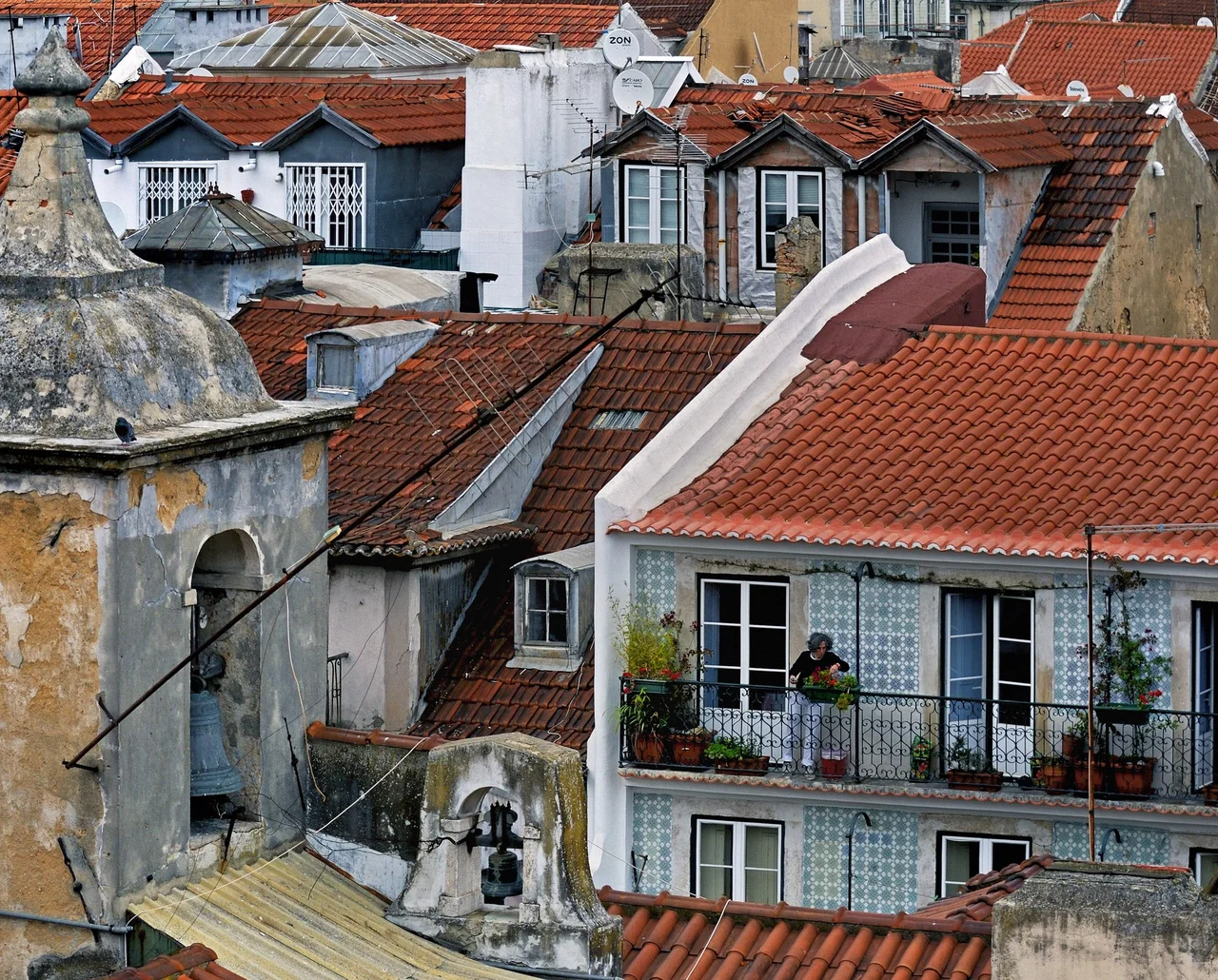
Quick Answer: Lisbon is the most expensive market in Portugal and the one where the district decides almost everything. The historic core, the regeneration districts, the modern riverfront and the Cascais line are four different products at four different prices, and short-term letting is restricted across much of the centre.
Lisbon decoupled from the rest of Portugal after 2015. Foreign demand met constrained supply in a city whose historic core cannot physically expand, and the result is a market where the ratio between local wages and housing costs is unusually wide.
For a buyer that has one practical consequence: the district is the decision. A budget that buys a small flat in Chiado buys a family apartment in Parque das Nacoes or a house with a garden on the Cascais line, and those are not variations on one choice.
Search demand splits along the same line. lisbon real estate runs at 1,300 a month in the United States and lisbon portugal real estate at 1,000, while British buyers search lisbon property for sale at 590 and lisbon apartments for sale at 390. Two vocabularies, one city, and both sets of buyers arrive at the same district question.
The Four Lisbons
| Market | Districts | Character |
|---|---|---|
| Historic core | Baixa, Chiado, Principe Real, Alfama, Graca | Prime, oldest, most restricted for letting |
| Central residential | Avenidas Novas, Campo de Ourique, Estrela | Where Lisbon actually lives, lifts and schools |
| Regeneration and river | Alcantara, Marvila, Beato, Parque das Nacoes | More space per euro, newer stock, uneven in places |
| The line | Oeiras, Carcavelos, Cascais, Estoril | Space, schools, beaches, 20 to 40 minutes in |
District by District
Baixa, Chiado and Principe Real. The prime historic core, and the top of the price per square metre range. Buildings are old, lifts are not guaranteed, and condominium and maintenance budgets are correspondingly heavy. Short-term letting is contained here.
Alfama and Graca. The postcard districts, and the most difficult logistically: narrow streets, limited parking, and buildings that frequently need work. Beautiful, and not the easy option.
Avenidas Novas and Campo de Ourique. Where residents actually buy. Lift-served apartment blocks, schools, shops and a metro line, at prices below the historic core for larger flats. For an owner, this is the most straightforward part of central Lisbon.
Parque das Nacoes. Built for the 1998 Expo, so the whole district is modern: lifts, parking, wide pavements, river frontage, an international school and a metro terminus. It is the practical choice for families and the least Lisbon-looking part of Lisbon.
Alcantara. Former industrial riverfront to the west, in regeneration, with conversions and newer stock and a growing food and office scene. More space per euro than the core, and still uneven street by street.
Marvila and Beato. The eastern equivalent, earlier in the same trajectory. The upside is larger and so is the variance, which makes walking the specific street non-negotiable.
Oeiras and Carcavelos. On the Cascais line, roughly half an hour into the centre, with beaches, space, parking and the densest concentration of international schools in Portugal. The standard answer for relocating families, covered further in international schools in Portugal.
What It Costs to Buy
| Cost | Basis | On a EUR 500,000 apartment |
|---|---|---|
| IMT, non-resident | Flat 7.5% from 1 September 2026 | EUR 37,500 |
| Stamp duty | 0.8% | EUR 4,000 |
| Notary and registry | Fixed and variable | Low four figures |
| Legal fees | Commonly 1% to 1.5% | EUR 5,000 to EUR 7,500 |
| Total | Roughly 9% to 11% | About EUR 47,000 to EUR 55,000 |
A Portuguese tax resident buying the same apartment moves onto a progressive scale that starts far lower, and a buyer who becomes resident within 24 months can reclaim the excess. See IMT for non-residents.
Take absolute prices per square metre by parish from the INE series with a date, as set out in Portugal house prices. A municipal average for Lisbon covers parishes that differ by more than two cities do.
What It Costs to Hold
| Charge | Lisbon character |
|---|---|
| IMI | 0.3% to 0.45% of rateable value, set by the municipality |
| AIMI | 0.7% above EUR 600,000 of taxable value per owner, reached often in the core |
| Condominium | Highest on old buildings with lifts and facades, lowest in modern blocks |
| Maintenance | Historic stock carries structural and facade obligations that modern stock does not |
The old-building maintenance line is the one that separates a Chiado purchase from a Parque das Nacoes one at the same price. A nineteenth-century building with a shared facade and a retrofitted lift generates works, and those works arrive as condominium assessments. Ask for the last two years of accounts and any approved but unbilled works before you offer.
Running costs in detail are in Portugal property running costs.
Letting: Read the Containment Map First
Lisbon operates Alojamento Local containment across much of the historic centre, restricting new registrations in the parishes where short-term demand is highest. The rule is geographic and it changes, so the only reliable answer is the current municipal position for the specific address.
Verify it before you sign the promissory contract. If a seller presents an existing registration as part of the value, get written confirmation of whether it survives the sale in that parish, and a price mechanism if it does not. The detail is in Lisbon Alojamento Local containment zones.
Old Stock or New
Lisbon’s supply splits into three kinds of building, and the choice drives the running cost more than the district does. Pre-1755 and 19th-century stock carries the highest renovation exposure, 1960s concrete the worst acoustics and insulation, and post-2000 construction the lowest annual cost at the highest price per square metre.
| Stock | What you get | What it costs you |
|---|---|---|
| Unrenovated historic | The lowest price per square metre in the core | A licensed works project, a queue, and an obras permit |
| Renovated historic | Period fabric with modern services | A premium, and a condominium that still owns an old facade |
| Purpose-built modern | Lifts, parking, insulation, predictable charges | Located where land was available, rarely in the core |
The unrenovated option is where buyers most often misprice. A low headline figure on a building in Alfama or Graca is not a discount until the works, the licence and the licence queue are costed, and in protected zones the permitted scope is narrower than a foreign buyer assumes.
The insulation point matters more in Lisbon than the climate suggests. Older stock was built for mild outdoor winters and is cold and damp indoors from December to February. That is an annual running cost, and it falls on the owner rather than a landlord.
The Rental Market Underneath the Prices
Two rental markets run in parallel in Lisbon and behave differently. Long-term letting is regulated under the NRAU, taxed at a flat 28% for non-residents on net income, and stable. Short-term letting needs an Alojamento Local registration, faces containment zones across the historic parishes, and swings with the season.
Long-term letting is regulated, the tenant protections are real, and the yields are modest because purchase prices have risen faster than rents since 2020. It is the stable option and the one that keeps working regardless of the containment map.
Short-term letting is where the returns looked attractive and where the regulation landed. Containment in the central parishes exists precisely because that market bid up housing, and any model built on it needs the current municipal position rather than a historical one.
For an owner who will use the property part of the year and let it the rest, the practical question is which of the two the building and the parish actually permit, and that is a question for the diligence stage. The yield arithmetic, net of IMI, condominium, management and tax, is set out in the Portugal rental yield guide.
Transport Is the Price Map
Lisbon prices track walking distance to a metro station more closely than any other single variable, and the effect is sharpest exactly where buyers assume charm carries the price. A 5-minute walk to a station and a 20-minute one price differently on the same street, and the gap widens in the outer parishes.
| Line | What it serves | Effect on price |
|---|---|---|
| Blue and Green | The historic core and Baixa | Priced in already, little upside |
| Yellow | Campo Grande, Saldanha, the northern spine | Steady, family-driven demand |
| Red | Oriente, Parque das Nacoes, the airport | The strongest recent uplift |
| Beyond the network | Parts of Alcantara, Ajuda, the western hills | Discount that closes only if a line arrives |
The pattern to understand is that the discount for being off the network is real and it is not always permanent. Extensions and new stations move whole streets, and the announcement moves them before the works do. That cuts both ways: the uplift is often priced in years before the platform opens, so buying an announcement rarely pays.
The counter-case is the hill. Lisbon’s topography means a station 400 metres away on the map can be a steep climb in practice, and a flat 700 metres often beats a vertical 400. Walk the route from the door to the platform before accepting any agent’s stated distance, in the afternoon heat rather than the morning.
What the Building Is Made Of
Three construction eras dominate the Lisbon stock and they behave completely differently under renovation, with cost differences measured in multiples rather than percentages. Buyers routinely price a Pombaline apartment and a 1970s flat as if the works cost the same, and then discover that one of them contains a structural timber cage.
| Era | Structure | Renovation reality |
|---|---|---|
| Pombaline, post-1755 | Timber cage (gaiola) inside masonry | Structural work touches the cage; specialist and slow |
| Late 19th century | Masonry walls, timber floors | Damp, floor levels, and services all need doing |
| 1940s to 1960s | Concrete frame, thin slabs | Straightforward, but poor acoustics and insulation |
| 1970s to 1990s | Concrete, larger blocks | Cheapest to renovate, hardest to love |
| Post-2000 | Current standards | Little to do, priced accordingly |
The Pombaline row is the one that catches people. That timber cage is the earthquake-resistant system the city was rebuilt on after 1755, and it is the reason a downtown apartment cannot be gutted the way a concrete one can. Removing or piercing structural timber without engineering advice is both a licensing problem and a safety one.
Ask three questions before you price the works: what era is the building, has it had a structural intervention already, and does the condominium have a record of it. The answers change a renovation budget by a multiple, not a percentage.
Parking Is a Separate Asset
In central Lisbon a parking space is a distinct, separately traded, separately priced asset rather than an amenity attached to an apartment. In the medieval districts it is scarce enough to move a whole purchase, and two otherwise identical flats can differ by 10% or more on this line alone.
| District | Parking reality |
|---|---|
| Alfama, Mouraria, Bairro Alto | Streets too narrow; often no option at any price |
| Baixa and Chiado | Public garages, monthly rental, nothing included |
| Principe Real, Estrela | Occasional building garages, at a large premium |
| Avenidas Novas, Alvalade | Residents’ permits work, some buildings have garages |
| Parque das Nacoes | Built with parking, included as standard |
Two things follow. A one-bedroom flat in Alfama with a garage space is not comparable to the identical flat without one, and treating them as comparables is how buyers misjudge that market. And the residents’ permit scheme, which makes street parking workable in the newer grid districts, does not rescue the medieval ones, where the constraint is the width of the street rather than the price of the permit.
Decide early whether you will own a car in Lisbon. Households who conclude they will not open up the historic districts at prices that look impossible to anyone insisting on a space. Households who will need one should filter for a garage before falling in love with a street.
What a Lisbon apartment costs to buy and hold
Acquisition on a EUR 500,000 Lisbon apartment for a non-resident completing from 1 September 2026 runs to 7.5% IMT of EUR 37,500, 0.8% stamp duty of EUR 4,000, and roughly 1% to 1.5% in legal fees, so about EUR 48,000 on top of the price. Annual holding then brings IMI at 0.3% to 0.45% of rateable value, condominium quotas of EUR 60 to EUR 150 a month in a lift building, and buildings insurance. AIMI at 0.7% bites only above EUR 600,000 of taxable value per owner, and because rateable value usually sits below market price, many apartments at this level escape it. Renovation is the line that varies most: current-standard stock needs nothing, and unimproved Pombaline stock can absorb more than the purchase price.
Pros and Cons
Lisbon offers the deepest and most liquid property market in Portugal, the widest tenant pool, and the only genuinely international professional network in the country. It also carries the highest prices outside the golden triangle, the tightest short-let restrictions, and an old-building renovation cost that surprises most foreign buyers.
Advantages:
- The deepest rental and resale market in Portugal
- Long-haul and European flights from an airport inside the city
- The strongest international professional community in the country
- Metro, trains and the Cascais line make much of the city car-optional
- Regeneration districts still offer space per euro below the core
Disadvantages:
- The highest prices in Portugal, and the widest gap to local wages
- Short-term letting contained across much of the centre
- Historic stock carries maintenance obligations that surprise foreign buyers
- Parking is scarce and expensive in the older districts
- Tourist pressure in the core affects daily life as well as prices
Risks and Red Flags
Lisbon purchases fail on the building rather than the district. A Pombaline apartment cannot be gutted like a concrete one, a fourth-floor walk-up narrows the exit market permanently, and the containment map decides whether short letting is possible at all.
- A municipal average price. Lisbon parishes differ enough that the average describes none of them.
- Assuming a letting licence. Containment is geographic and current, and yesterday’s answer may not hold.
- Buying into an old building without the accounts. Facade and lift works arrive as separate assessments on each owner.
- A lift described as planned. Retrofitting a lift into a historic building is a project, not a decision.
- Regeneration districts viewed only online. The variance between adjacent streets is the whole risk.
Checklist before you offer:
- Registered comparable sales in the same parish rather than across the municipality
- Current VPT and last year’s IMI on the specific property
- Two years of condominium accounts and any approved works
- The municipal AL position for the address, in writing
- Whether the building has a lift, and if not, whether one is legally possible
Who Each District Suits
Four Lisbons means four different buyers, and the deciding variables are not price. They are whether you need a lift, whether you need parking, whether you intend to let short-term, and whether you can tolerate an old building’s running costs in exchange for being inside the historic city.
Buyers who want the historic city. Chiado, Principe Real, Baixa, accepting old-building costs and letting restrictions.
Residents rather than visitors. Avenidas Novas, Campo de Ourique, Estrela: lifts, schools, and daily life that works.
Families relocating. Parque das Nacoes for modern city living, or Oeiras and the line for space and schools.
Buyers wanting upside and willing to look. Alcantara and Marvila, street by street. Both reward a walk at three different times of day, because a riverside conversion and a still-industrial block can sit two hundred metres apart.
Buyers letting long-term. Avenidas Novas and Campo de Ourique, where the tenant pool is deepest and the containment map is irrelevant, rather than the core.
The wider market analysis, including yields and history, is in the Lisbon property guide.
Frequently Asked Questions
It depends on whether you want the historic centre, a residential city district or the river. Baixa, Chiado and Principe Real are the prime historic core and the most expensive per square metre. Parque das Nacoes is modern, lift-served and family-oriented. Alcantara and Marvila are the regeneration districts. Oeiras and the Cascais line trade city centre access for space, schools and lower prices.
Lisbon is the most expensive market in Portugal by a clear margin, and the spread between parishes is wide enough that a municipal average is not useful. Take absolute figures from the INE series by parish with a date attached, and compare registered sales rather than portal asking prices, because the gap between the two widens whenever supply builds up.
Only where the municipal containment rules allow it. Lisbon operates containment zones covering much of the historic centre, which restrict new Alojamento Local registrations. Verify the position for the specific address before the promissory contract. A central apartment bought on a projected holiday-let income that cannot be licensed is a different investment from the one modelled.
It suits a specific buyer: modern lift-served apartments, wide pavements, river frontage, an international school and a metro line, in a district built from scratch for the 1998 Expo. What it does not have is the historic fabric people picture when they say Lisbon. For families and for anyone who wants a building with a lift and parking, it is the most practical part of the city.
Both are former industrial districts in regeneration, Alcantara west along the river and Marvila east. They offer more space per euro than the historic core, newer conversions, and a trajectory that has been upward. They are also less finished, with pockets that are still industrial, so walking the specific street matters more here than in the established districts.
If you need space, schools or parking, frequently yes. The Cascais line runs into central Lisbon every twenty minutes, Oeiras and Carcavelos sit roughly half an hour out, and the housing cost is below the historic core for materially more space. It is the standard answer for relocating families and the reason the international schools cluster there.
Roughly 9% to 11% of the purchase price as a non-resident: a flat 7.5% IMT on residential property from 1 September 2026, 0.8% stamp duty, plus notary, registry and legal fees. Older central buildings then carry condominium charges and maintenance well above the newer stock, which is the running cost buyers most often underestimate in the historic core.
Choosing between Lisbon districts?
Tell us the budget and who it is for. We shortlist by district and price the real cost of holding each one.
Get a Portugal property shortlist
Tell us your budget and region (Lisbon, Algarve, Porto, Cascais). We reply within one business day with vetted options matched to your goals.