
International Schools in Portugal 2026: Fees and Areas
Where Portugal's international schools cluster, what living within reach of each one costs, and how fees sit against the D7 and D8 visa income thresholds.
By Portuguese Estate Editorial · Updated September 7, 2026 · 11 min read
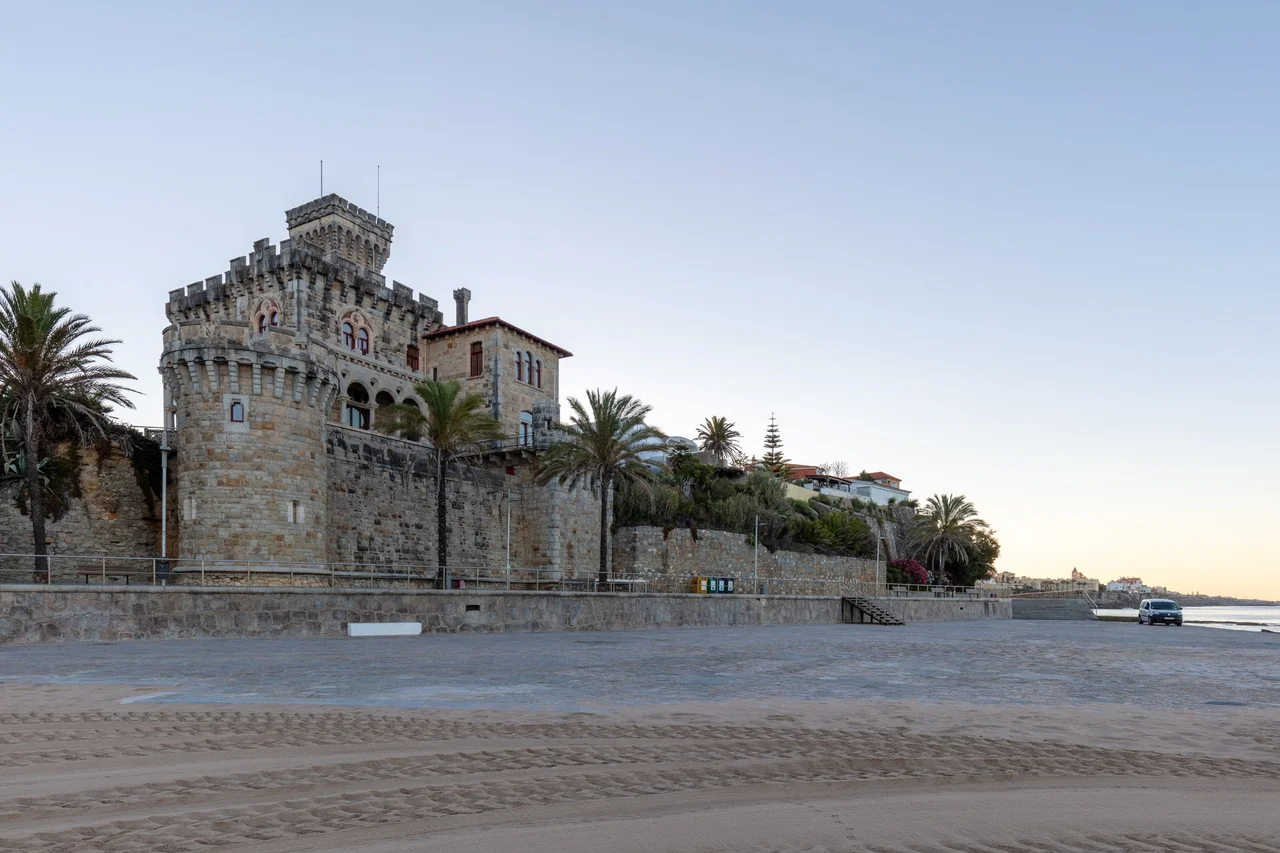
Quick Answer: Portugal’s international schools concentrate in three places: the Cascais and Oeiras line west of Lisbon, Lisbon itself, and Porto, with a small Algarve group. Places are scarcer than houses, so secure the school first and choose the neighbourhood second. Fees for two children commonly exceed the entire D7 visa income threshold.
Search for this and you get directories. One of them lists 82 schools, and several others list the same 82 again. They are useful and we are not going to beat them at listing, so this page does not try.
What none of them answer is the question a relocating family actually has: where do we live if the child goes there, what does that cost, and can our budget carry both the fees and the housing. That is the gap.
Where the Schools Are
| Cluster | Character | Housing cost signal |
|---|---|---|
| Cascais, Estoril, Carcavelos, Oeiras | The largest concentration, coastal, train to Lisbon in 20 to 40 minutes | The most expensive residential belt in the country alongside central Lisbon |
| Lisbon city | Several established schools plus newer bilingual entrants | High, with wide variation by parish |
| Porto and Foz | Smaller established group, city and coastal | Materially below the Lisbon belt |
| Central Algarve | A handful serving the resident foreign population | Below Lisbon, seasonal town economies |
| Everywhere else | Long commute or boarding | Low, and irrelevant if the school is unreachable |
That table is the whole geography of the decision. If international schooling is a hard requirement, Portugal is effectively four places, and the housing budget follows from which one you pick rather than the other way round.
The Cascais line deserves its reputation. The concentration of schools, the train into Lisbon, and an established English-speaking community make it the default for arriving families, and the housing market prices that in. Our Cascais area guide and Oeiras area guide cover the specifics.
Porto is the underused answer. The school group is smaller and the choice narrower, but the housing cost is materially lower for comparable space, covered in the Porto guide.
The Money Nobody Puts Together
International school fees and the rent or mortgage near the school get planned in two different documents and then collide. Tuition runs to five figures a year per child before extras, and housing inside a realistic commute of the Cascais or Lisbon clusters carries its own premium.
The visa income test is a legal minimum. The D7 asks for about EUR 920 a month in 2026 for a single applicant, plus 50% for a spouse and roughly 30% for each dependent child. The D8 asks about EUR 3,680 a month.
International school fees for two children commonly exceed the entire D7 threshold on their own, before housing, before food, before anything. A household that clears the visa test can be nowhere near able to fund the schooling that brought them to that neighbourhood.
| Cost line | How it behaves |
|---|---|
| Tuition | Per child, per year, republished annually, rises most years |
| Registration and enrolment | One-off at entry, sometimes substantial |
| Capital or development levy | Charged by some schools, one-off or annual |
| Transport | Bus routes are priced separately and shape where you can live |
| Uniform, lunches, trips, exam entry | Recurring, and routinely underestimated |
Ask every school for the complete schedule in writing, per child, for the coming academic year, and ask what each line rose by last year. Published figures on aggregator sites go stale within a year, which is why this page does not print any.
Curriculum: Pick for Where You Are Going, Not Where You Are
Three curricula dominate the Portuguese international sector: British, American and the International Baccalaureate. The choice is usually made on familiarity and should be made on exit, because the qualification a child leaves with has to be recognised by the university system they are heading into 5 or 10 years later.
| System | Terminal qualification | Fits a family heading to |
|---|---|---|
| International Baccalaureate | IB Diploma at 18 | Anywhere, and specifically universities that read it fluently |
| English National Curriculum | IGCSE at 16, A-levels at 18 | The UK, Ireland, and systems that map to A-levels |
| American | High school diploma with AP options | The United States and Canada |
| Portuguese national, bilingual variants | Portuguese secondary certificate at 18 | Staying in Portugal long-term |
The trap is switching mid-stream. A child moved from A-levels into the second year of an IB Diploma, or the reverse, loses more than a term, and the IB Diploma is a fixed 2-year programme with no mid-point entry. If there is a realistic chance of returning to your home system within five years, that fact should decide the curriculum before any campus visit does.
The bilingual Portuguese-English option is worth more attention than it gets. It costs less than the full international schools, it keeps the Portuguese language alive, and for a family genuinely settling it removes the awkward position of children who live in Portugal and cannot function in Portuguese.
Admissions Timing Against a Relocation Date
Portuguese school years run from September, and popular international schools work to an admissions calendar opening roughly 12 months ahead. A family deciding in March for the same September is applying into whatever is left, which is usually the schools with capacity rather than the schools they wanted.
| When | What happens |
|---|---|
| Autumn, one year ahead | Applications open for the following September at most schools |
| Winter | Assessments, interviews and, at some schools, entrance testing |
| Spring | Offers issued, deposits due to hold the place |
| Summer | Waiting-list movement as other families withdraw |
| September | Term begins |
Two practical consequences. A family deciding to move in March for that September is applying into whatever is left, which in the busiest year groups on the Cascais line can be nothing. And a deposit is normally required to hold a place well before your visa is granted, which means committing money against an application that has not yet been decided.
Mid-year entry is possible and more common than schools advertise, because international populations turn over. If your timing is awkward, ask directly about January entry rather than assuming September is the only door.
The Order That Saves Money
The sequence that saves money runs opposite to the one families use. Choosing an area, then housing, then applying to schools leaves the scarcest resource until last. Places are scarcer than property in the Cascais and Lisbon clusters, so the school application comes first and the address follows it.
| Step | Why it comes first |
|---|---|
| Shortlist schools and confirm year-group availability | Places, not houses, are what run out |
| Apply and secure an offer | An offer fixes the geography |
| Rent within reach of that school | Twelve months, before any purchase |
| Establish tax residency | 183 days, or a habitual home |
| Buy, if you still want to | On the resident IMT scale, not the flat 7.5% |
Buying before tax residency costs the flat 7.5% non-resident IMT rate on residential property under DL 97/2026, plus 0.8% stamp duty, against a resident scale that starts far lower. On a Cascais purchase that difference is a five-figure sum, and it is entirely avoidable by sequencing. The tax residency test is set out in the 183-day guide, and the wider relocation budget in the cost of living guide.
The State School Alternative
Portuguese state education is free, open to resident children of any nationality, and the path a large number of foreign families end up on. Almost no international-school directory mentions it, because the directories are published by the sector selling the alternative at five figures a year per child.
Advantages:
- No fees, which changes the household budget by more than any other single decision
- Genuine integration and language acquisition, fastest at primary age
- Available anywhere in the country, which reopens the whole map of where to live
Disadvantages:
- Instruction is in Portuguese, and secondary entry without the language is hard
- Curriculum continuity is broken if you later move to a third country
- Support for non-Portuguese speakers varies sharply by school and municipality
The common compromise is state primary and a reassessment at secondary. It is materially cheaper than eleven years of fees and it removes the geographic constraint that otherwise ties the family to one coastal belt.
What Housing Near Each Cluster Actually Costs to Hold
Fees are the visible number, rent the second, and ownership costs the one families meet in year two, because school-driven relocations usually end in a purchase. Add 7.5% IMT for a non-resident buyer, 0.8% stamp duty, then IMI annually at 0.3% to 0.45% of rateable value.
| Cluster | Purchase cost level | Annual owner charges to expect |
|---|---|---|
| Cascais, Estoril, Oeiras | The highest outside central Lisbon | IMI at the municipal rate on a high rateable value, AIMI likely above EUR 600,000, condominium fees in most apartment stock |
| Lisbon city | High, wide variation by parish | As above, with older buildings carrying heavier maintenance |
| Porto and Foz | Materially lower for comparable space | Lower IMI base, lower condominium budgets |
| Central Algarve | Below Lisbon, seasonal town economies | Coastal exposure raises maintenance, pools raise condominium charges |
IMI runs at 0.3% to 0.45% of the rateable value for urban property, with each municipality setting its own rate inside that band, so two comparable houses in neighbouring councils on the same line carry different annual bills. AIMI adds 0.7% on the share of taxable value above EUR 600,000 per owner, which the Cascais belt reaches more often than any other part of the country.
Set that against the fee schedule before you decide the cluster. A Porto household can frequently fund the school and the house for what the Cascais house alone would cost, and the school choice there is narrower rather than absent.
Waiting Lists, and How Places Really Get Allocated
The published admissions process and the way places actually come free are two different things, and the second is what gets a child into a full school. International school populations churn as families are posted in and out, so a school full in June routinely has places in September.
| Reality | What it means for you |
|---|---|
| Year groups fill at entry points | Reception and year 7 are easier than mid-years |
| Places free through departures | Expat turnover creates mid-year vacancies |
| Sibling priority | Applies at most schools, and it is absolute |
| Waiting lists are not queues | Schools balance year groups, not order of arrival |
| Assessment and interview | Places can be conditional on them |
| Deposits hold places | And they are usually non-refundable |
The turnover point is the useful one. International school populations churn as families are posted in and out, which means a school that is genuinely full in June may have places in September and again in January. A firm no in spring is not a permanent no, and staying in contact through the year is what converts it.
The sibling rule matters for planning a family of more than one child. Securing a place for the eldest at a school with sibling priority effectively secures the others, which is an argument for applying to the school you want for the whole family rather than the one with an immediate vacancy.
Boarding, and the Option Most Families Overlook
A small number of Portuguese schools offer boarding, and for families relocating on a timetable that does not match the September start it resolves a problem that otherwise forces a year’s delay. Fees run materially above the day rate, and places are limited.
The typical use case is a family arriving mid-year, or one where the working parent’s posting starts before the household can move. Boarding places are limited and the fee is materially above the day rate, but the alternative, splitting the family across countries for two terms, carries its own costs.
The second use case is location. A family that wants to live in the Alentejo, the Silver Coast or the interior, where there is no international school within a reasonable drive, can sometimes reconcile the two by boarding weekly. Whether that suits a particular child is a family question rather than a property one, but households ruling out a whole region on schooling grounds should at least know the option exists before they do.
The Extras Beyond the Fee
Published tuition is the largest number in the budget and not the whole of it. Registration, an annual or one-off capital levy, transport charged by distance, lunches, uniform, trips and exam entry fees are all separate, and together they add a meaningful percentage to the headline figure.
| Item | Nature |
|---|---|
| Registration and enrolment | One-off, on acceptance, usually non-refundable |
| Capital or development levy | Annual at some schools, one-off at others |
| Transport | Bus routes are charged separately and by distance |
| Lunches | Rarely included in the tuition figure |
| Uniform and equipment | First year is the expensive one |
| Trips and residentials | Optional in name, routine in practice |
| Exam entry fees | IB and A level entries, in the final years |
Taken together these commonly add a meaningful percentage to the headline figure, and the transport line is the one that interacts with the property decision: a house forty minutes from the school on a bus route costs more per year than one within walking distance, every year, for as long as the child is enrolled.
Ask each school for a full fee schedule rather than the tuition figure, and ask specifically what a first year costs against a subsequent one. The gap between them is where families are caught.
Risks and Red Flags
School planning fails on timing rather than money. Families secure a house, then discover the year group is full, the bus does not run to that address, or the fee schedule carries a capital levy nobody quoted alongside the tuition.
- Fee figures without a date. Schools republish annually. A number from an aggregator two years old is not a budget.
- Choosing a house before a school place. The most expensive mistake in family relocations, and the most common.
- Ignoring the exit curriculum. Starting an IB pathway when the family returns to a national system in three years creates a problem for the child, not the parent.
- Assuming the Algarve has options. It has a handful, concentrated in the centre, and a house in the eastern or western Algarve may be an hour each way.
- Budgeting tuition only. Transport, levies and the extras routinely add a large fraction on top.
Checklist before committing to an area:
- Written fee schedule from each shortlisted school, per child, for the coming year
- Confirmation of availability in your children’s specific year groups
- The school bus route map, which decides which neighbourhoods are viable
- Curriculum continuity checked against where the family expects to be in five years
- Housing viewed only after an offer of a place
Who Each Cluster Suits
The three clusters suit families with different constraints, and the constraint is rarely budget. It is which curriculum the child needs, how far a daily bus route runs, and whether a place exists in the specific year group at the specific school in the year you are moving.
Families needing a large school choice. The Cascais and Oeiras line, and accept the housing cost. It is where the schools, the community and the Lisbon train are.
Families balancing cost against choice. Porto. Fewer schools, a real city, and housing costs materially below the Lisbon belt for comparable space.
Families willing to use the state system. Everywhere. Braga, Aveiro, Coimbra and Setubal become viable, and the money saved on fees usually exceeds the difference between a value-belt house and a coastal one. The wider comparison is in the best places to live guide.
Families arriving on a work-based route. Check the fee position before the visa. A D8 household at the threshold and two children in private schooling is a budget that does not close.
Frequently Asked Questions
Three clusters. The Cascais, Estoril, Oeiras and Carcavelos line west of Lisbon holds the largest concentration by a wide margin. Lisbon itself has several, including newer bilingual options in the city. Porto has a smaller established group, and the central Algarve has a handful serving the resident foreign population. Everywhere else in Portugal, an international school means a long commute or boarding.
Fees are set per school and republished annually, so any figure quoted without a date is unreliable. Budget for more than the headline tuition: registration and enrolment fees, a capital or development levy at some schools, transport, uniform, lunches, exam entry and trips. Ask each school for the full fee schedule for the coming year in writing, per child, and ask what rose last year.
Usually not on the visa threshold alone. The D7 floor is about EUR 920 a month for a single applicant in 2026, plus 50% for a spouse and about 30% per child. That is a legal minimum designed to show you will not become a burden, not a household budget, and international school fees for two children commonly exceed the entire threshold. Model the fees as a separate line before choosing a school-dependent location.
The three common options are the International Baccalaureate, the English National Curriculum with IGCSEs and A-levels, and the American system. The practical question is not which is better but where your children go next. A family returning to the UK in four years should think hard before starting an IB pathway, and the reverse applies for a family heading to a US university.
At the popular Cascais-line schools, yes, particularly at primary entry points and in year groups that filled during the post-2020 arrivals. Places are the scarce resource in this market, not housing. Apply before you choose a neighbourhood, because the reverse order is how families end up with a school place forty minutes from the house they just bought.
Yes. State education is free and open to resident children regardless of nationality, and younger children typically integrate quickly. The constraint is language: instruction is in Portuguese, and secondary entry without the language is hard. Many families use the state system for primary and reassess at secondary, which is a materially cheaper path than eleven years of private fees.
No. Secure the school place first, then choose housing within reach of it. Rent for the first year in any case: buying before you become Portuguese tax resident triggers the flat 7.5% IMT rate rather than the resident scale, and school-driven relocations are the ones most likely to need a second move.
Relocating around a school place?
Tell us the school and the year groups. We map what housing within its bus route costs, to rent and to own.
Get a Portugal property shortlist
Tell us your budget and region (Lisbon, Algarve, Porto, Cascais). We reply within one business day with vetted options matched to your goals.