
Property for Sale in Cascais: Areas and Prices 2026
Where to buy in Cascais and Estoril, from the bay and Guincho to Birre and Alcabideche, with school access, buying costs and what a house costs to hold.
By Portuguese Estate Editorial · Updated September 23, 2026 · 12 min read
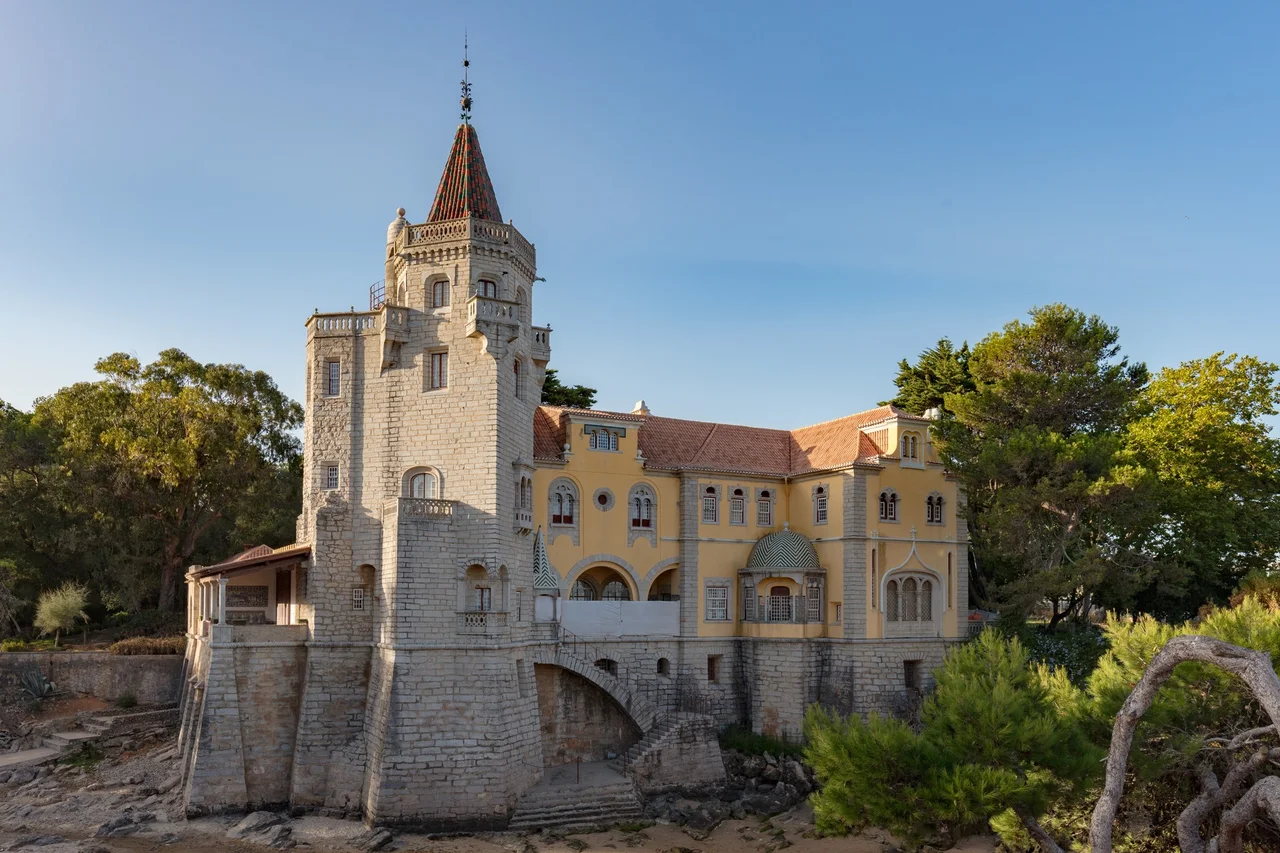
Quick Answer: Cascais is the most expensive residential belt in Portugal outside central Lisbon, and what you are buying is access: thirty minutes into the capital by train, and the country’s densest cluster of international schools. The neighbourhood choice is usually decided by the school, not by the view.
American searches put cascais portugal real estate at 880 a month, the highest of any Portuguese town outside the two cities, and British buyers add cascais property for sale at 480 and property for sale in cascais portugal at 390, which makes it the single most searched town in the country for foreign buyers.
The reason is not the beach. It is the combination of a commuter railway into Lisbon, an international school cluster, and a coastline where the buildable land ran out.
The Six Cascais Markets
| Area | Character | Trade |
|---|---|---|
| Cascais bay and old town | Walkable, marina, restaurants, the highest prices | Small properties, tourist pressure in summer |
| Estoril and Monte Estoril | Period houses, gardens, one train stop earlier | Quieter, older stock with older-house costs |
| Birre and Quinta da Marinha | Plots, villas, space, closest to the schools | Car-dependent, and priced for the schools |
| Guincho and the natural park | Atlantic, wild coast, development capped | Wind, and a drive to everything |
| Carcavelos and Parede | The Lisbon end of the line, beaches, better value | Denser, less of the Cascais feel |
| Alcabideche and inland | Materially cheaper, more space per euro | No train, and no sea |
Area by Area
Cascais bay and the old town. The postcard version: a marina, a fishing harbour, restaurants and a promenade, with the train station in the middle of it. Apartments dominate, they are not large, and they carry the highest price per square metre in the municipality. Summer brings crowds to the bay and the promenade, and residents plan their routines around them.
Estoril and Monte Estoril. One stop earlier on the same line, with the casino, the gardens and a stock of substantial period houses. Prices sit below the Cascais bay for comparable property, and Monte Estoril on the hill between the two is where many buyers land after comparing both.
Birre and Quinta da Marinha. Inland behind the coast, and where the villas with plots are. This is the school belt: the international schools are within a short drive, which is exactly why it prices the way it does. You need a car, and you will use it daily.
Guincho. Atlantic-facing inside the Sintra-Cascais natural park, which caps what can be built and keeps the landscape intact. The wind is constant enough to have made it a windsurfing destination. It is beautiful, and genuinely remote from shops, schools and other daily services.
Carcavelos and Parede. The Lisbon end of the line, with a big beach, a well-known international school and noticeably better value. Denser and more ordinary than Cascais proper, and closer to the capital.
Alcabideche, Sao Domingos de Rana and inland. Off the coast, off the train, and materially cheaper. The trade is honest: you get space and a lower price, and in return you drive everywhere.
What It Costs
| Sub-market | Level, municipality = 100 | Note |
|---|---|---|
| Cascais bay, front line | Well above 100 | Scarce, small, and the highest demand |
| Estoril and Monte Estoril | Around 100 | Period stock, larger plots |
| Birre and Quinta da Marinha | Around to above 100 | Plot size and school access price in |
| Guincho | Above 100 | Development capped, so supply is fixed |
| Carcavelos and Parede | Below 100 | The value end of the line |
| Alcabideche and inland | Well below 100 | No sea, no train |
Take absolutes from the INE series by parish with a date, as set out in Portugal house prices. Cascais is one municipality containing markets that differ by a factor of two or more, so a municipal average is not a usable number here.
What You Pay on Top
| Cost | Basis | On a EUR 800,000 house |
|---|---|---|
| IMT, non-resident | Flat 7.5% from 1 September 2026 | EUR 60,000 |
| Stamp duty | 0.8% | EUR 6,400 |
| Notary and registry | Fixed and variable | Low four figures |
| Legal fees | Commonly 1% to 1.5% | EUR 8,000 to EUR 12,000 |
| Total | Roughly 9% to 11% | About EUR 76,000 to EUR 88,000 |
At Cascais price levels the residency question is worth real money. A Portuguese tax resident buying the same house moves onto a progressive scale that starts far lower, and a buyer who becomes resident within 24 months can reclaim the excess. See IMT for non-residents.
What It Costs to Hold
| Charge | Cascais character |
|---|---|
| IMI | 0.3% to 0.45% of rateable value, at the municipality’s rate |
| AIMI | 0.7% above EUR 600,000 of taxable value per owner, reached here routinely |
| Condominium | High in gated developments with pools, gardens and security |
| Salt and wind maintenance | Front-line and Guincho property needs more frequent external work |
| Pool and garden | A villa with grounds is a service contract, not a feature |
AIMI is the line that distinguishes Cascais from the rest of Portugal. Above EUR 600,000 of taxable value per owner it applies annually at 0.7%, and a large share of the local stock sits above that threshold. Two people owning jointly each have their own allowance, which is a planning point worth raising with your lawyer before the deed rather than after. See AIMI, the wealth surcharge.
Schools Decide the Neighbourhood
School place first, then neighbourhood, then house: that is the working order for a relocating family in Cascais, and reversing it is the expensive mistake. International school places are the scarce resource here, not property, and a house chosen before a place is secured can end up 40 minutes from the school.
Places at the established schools on this line are scarcer than houses, particularly at primary entry and in year groups that filled after 2020. Apply first, take the offer, then look at housing within that school’s bus route. Choosing Birre because you liked a house, and then discovering the place is at a school in Carcavelos, produces a commute you will drive twice a day for years.
The cluster and the fee structure are covered in international schools in Portugal.
The Train, and What It Actually Buys
The Cascais railway line is the reason this municipality prices the way it does, and it deserves more precision than “30 minutes to Lisbon”. The line runs along the coast from Cais do Sodre, and the difference between a 5-minute walk to a station and a 20-minute one is visible in every asking price.
| From | To Cais do Sodre | Practical effect |
|---|---|---|
| Cascais | About 33 to 40 minutes | The far end, and the most walkable town |
| Monte Estoril and Estoril | About 30 to 35 minutes | The same line, a stop or two closer |
| Carcavelos | About 22 to 27 minutes | The best time-to-price ratio on the line |
| Parede and Oeiras | Under 25 minutes | Closest to the city, least Cascais in feel |
Two things follow. The line runs along the coast, so a house near a station is near the sea, and that doubles the premium on the same properties. And Birre, Quinta da Marinha and Alcabideche are not on it at all, which is why they are cheaper and why they are car-dependent in a way the station towns are not.
If someone in the household will commute daily, walk the actual route from the candidate house to the platform before deciding. The difference between a five-minute walk and a fifteen-minute uphill one is the difference between using the train and buying a second car.
Building Where There Is No Land
Cascais has almost no undeveloped land left inside its built area, and a large part of the coast sits inside the Sintra-Cascais natural park where development is capped by design. New supply therefore arrives as replacement rather than expansion, which is the structural reason prices here hold above the rest of Greater Lisbon.
The practical consequences for a buyer are three. New build is scarce and expensive, and most of it is redevelopment of existing plots rather than expansion. Renovation of older stock is therefore the normal route to a modern house here, which makes the works, the licence and the municipal queue part of most purchases at the upper end. And the supply constraint is structural rather than cyclical, which is a large part of why prices have held.
Anyone planning to extend or rebuild should establish the permitted volume for the specific plot before valuing it, particularly inside or adjacent to the park boundary, where the answer is often narrower than a foreign buyer assumes.
The Letting Market Runs on Relocations, Not Tourists
Cascais has holiday demand, and the rental market that actually clears is corporate and family relocation. Households arrive for a school year or a posting and want 12 months, furnished, near a specific school or the train. That tenant pays for heating and insulation in a way a summer holidaymaker never does.
| Tenant type | Term | What they need |
|---|---|---|
| Relocating family | 12 months or more | Three bedrooms, near a school, parking |
| Corporate posting | 6 to 24 months | Furnished, walkable, close to the line |
| Remote worker couple | 6 to 12 months | Two bedrooms, fast internet, sea within reach |
| Summer holiday let | Weeks | Beach proximity, pool, capacity |
| Winter long stay | 3 to 6 months | Warm, dry, and genuinely heated |
The winter row is where owners lose money. Cascais gets a real northern European long-stay market between October and March, and the properties that win it are the ones with proper heating and insulation. A summer villa with tile floors, single glazing and no heating shows beautifully in July and is unlettable in January to a tenant who has other options.
That points at a specification rather than a location. Heating, insulation and a dry winter interior turn a six-week asset into a ten-month one, and in this market the tenants who pay for that exist in numbers.
Where the Boundary With Lisbon Actually Falls
Cascais is a municipality of its own, and the boundary between it and Lisbon is administrative rather than visible along a continuous built-up coast. Three councils sit within 20 minutes of train, each setting its own IMI rate inside the national 0.3% to 0.45% band and its own short-let position.
| Place | Municipality | Practical effect |
|---|---|---|
| Cascais and Estoril | Cascais | Cascais IMI rate, Cascais licensing |
| Carcavelos and Parede | Cascais | Same, at lower prices |
| Oeiras and Pacos de Arcos | Oeiras | A third council, its own rules |
| Alges and Restelo | Lisbon | Lisbon rates and containment map |
Buyers browsing a portal along the Estoril line rarely notice they are crossing two municipal borders in twenty minutes of train. Each council sets its own IMI rate within the national band, runs its own building licence queue and takes its own position on short-let registration.
The practical instruction is the same one that applies across Greater Lisbon: read the property’s freguesia and council off the caderneta predial rather than off the marketing, then check that council’s position on anything you intend to do. A property described as Cascais in a listing may sit in Oeiras, and the two answer differently.
The Sea Here Is Not the Algarve’s
Cascais faces the open Atlantic at the mouth of the Tagus, and buyers arriving with an Algarve mental model are regularly surprised by the water and the wind. The sea is materially colder, the swell larger, and the summer nortada blows hard across west-facing terraces most afternoons.
The ocean is materially colder than the southern coast and the swell is bigger. Guincho, a few kilometres west, is a serious windsurfing and kitesurfing beach precisely because the afternoon nortada blows hard through the summer, and that same wind reaches the terraces of houses along the whole western stretch. The sheltered town beaches inside the bay are a different experience again, calm and small and crowded in August.
For a property decision this resolves into orientation and shelter. A terrace facing west toward Guincho is spectacular and frequently unusable on a summer afternoon; the same house with a south-facing courtyard is comfortable all season. Ask which way the outdoor space faces, and if you can, stand on it at four in the afternoon in July rather than at eleven in the morning in April.
What a Cascais family house costs to buy and let
Take a EUR 800,000 three-bedroom house within walking distance of the line. Acquisition for a non-resident is 7.5% IMT of EUR 60,000 plus 0.8% stamp duty of EUR 6,400, with legal fees around 1.5%, so roughly EUR 878,000 deployed. Annual holding brings IMI at 0.3% to 0.45% of rateable value and, at this price level, AIMI at 0.7% on taxable value above EUR 600,000 per owner, which joint ownership doubles the allowance against. On the income side the relocation market pays for 12-month furnished contracts near a specific school, and that tenant expects heating and insulation rather than a summer specification. A house that performs in January lets for the whole year; one that does not competes with holiday stock for 3 months and stands empty for the other 9. The specification that separates them is heating, glazing and insulation, and it costs far less to buy already installed than to retrofit.
Pros and Cons
Cascais offers the strongest school cluster in Portugal, a 30-minute rail line into central Lisbon, and a relocation rental market that pays for 12-month contracts. It also carries prices second only to the golden triangle, almost no developable land, and an Atlantic that is nothing like the Algarve’s.
Advantages:
- Thirty minutes into Lisbon on a train that runs every twenty minutes
- The densest international school cluster in Portugal
- A deep resale market, which matters on exit
- Genuine year-round town life rather than a season
- Coast, natural park and city access in one municipality
Disadvantages:
- The highest prices in Portugal outside central Lisbon
- AIMI applies to a large share of the stock
- Summer crowding in the bay and old town
- Gated-development condominium budgets are among the country’s highest
- Inland value comes at the cost of the train
Risks and Red Flags
Cascais purchases go wrong on schools and on wind. A house chosen before a school place is secured can end up 40 minutes from it, and a west-facing terrace that photographs beautifully is unusable on most summer afternoons.
- A municipal average price. Cascais contains markets that differ by more than two.
- Buying before the school place. This is the expensive mistake buyers on this line make most often.
- AIMI overlooked. It is annual, it applies above EUR 600,000, and joint ownership changes the arithmetic.
- Guincho viewed on a calm day. The wind is the defining feature of Guincho, and a calm-day viewing hides it.
- Condominium accounts not requested. Pools, gardens and security generate assessments.
Checklist before you offer:
- Confirm which parish and which school bus route the property sits in
- Get the current VPT, last year’s IMI, and whether AIMI applies
- Two years of condominium accounts and any approved but unbilled works
- The municipal Alojamento Local position for the address, in writing
- Model the purchase both as a non-resident and after tax residency
Who Each Area Suits
Six Cascais markets means six different buyers, and the variables that separate them are the school, the station and the wind. Which international school a family needs, how far the walk to the line runs, and whether the outdoor space faces the afternoon nortada decide more than the price per square metre.
Relocating families. Birre, Quinta da Marinha or Carcavelos, chosen by school first.
Buyers who want to walk everywhere. The Cascais bay and old town, accepting smaller properties and summer crowds.
Buyers who want a period house. Estoril and Monte Estoril, at a discount to the bay and on the same line.
Buyers who want nature and space. Guincho, if the wind and the driving are acceptable.
Buyers optimising on price. Alcabideche and inland, or Parede and Carcavelos if the train matters.
Cascais sits inside the wider Lisbon market, covered in property for sale in Lisbon, and American buyers arriving here will find the tax picture in moving to Portugal from the US.
Frequently Asked Questions
Three things stack: a thirty-minute train into Lisbon, the densest concentration of international schools in Portugal, and a coastline with limited buildable land behind it. Foreign demand has met that constraint since 2015 and the result is the most expensive residential belt in the country outside central Lisbon. You are paying for access and for schooling as much as for the sea.
The bay and old town for walkability and the highest prices, Monte Estoril and Estoril for period houses and the train, Birre and Quinta da Marinha for space, plots and proximity to the international schools, Guincho for the Atlantic and the wind, and Alcabideche or Sao Domingos de Rana inland for materially lower prices with a car.
It is the default answer for relocating families in Portugal, because the international schools cluster along this line and the train reaches Lisbon in half an hour. Secure the school place before you choose the neighbourhood, because places are scarcer than houses and the school decides which side of Cascais works.
Spectacular and windy. The Guincho stretch faces the open Atlantic inside a natural park, which caps development and keeps it wild, and the wind is a daily fact rather than a seasonal one. It suits surfers and people who want space and nature over convenience; it is a drive from everything, including the school run.
Cascais operates its own Alojamento Local framework, separate from Lisbon's, and the position varies within the municipality. Verify the current rules for the specific address before the promissory contract. Long-term letting to relocating families is the steadier option here and does not depend on the licensing map.
Roughly 9% to 11% as a non-resident: flat 7.5% IMT on residential property from 1 September 2026, 0.8% stamp duty, notary, registry and legal fees. Cascais prices also mean AIMI is reached more often here than almost anywhere else, at 0.7% on taxable value above EUR 600,000 per owner, which is an annual charge rather than a one-off.
Generally yes, for comparable property, and it is on the same train line one stop earlier. Estoril carries older period housing, a casino and a slightly quieter feel, and it trades at a discount to the Cascais bay without giving up the connection. Monte Estoril, on the hill between the two, is the compromise many buyers end up making.
Buying in Cascais around a school?
Tell us the school and the budget. We shortlist inside its catchment and price the AIMI and condominium position on each.
Get a Portugal property shortlist
Tell us your budget and region (Lisbon, Algarve, Porto, Cascais). We reply within one business day with vetted options matched to your goals.