
Property in Central and Northern Portugal: Prices 2026
Buying inland and in the north: Coimbra, Aveiro, Braga, the Douro and the interior, what each costs and what a house costs to hold there.
By Portuguese Estate Editorial · Updated September 7, 2026 · 12 min read
Quick Answer: Central and northern Portugal is the country’s value belt: real university cities at roughly half the Lisbon housing cost, and an interior cheaper again. The trade is weather, insulation and liquidity, and all three are manageable if you price them.
British searches put property for sale in central portugal at 170 a month and property for sale in northern portugal at 140, with the individual cities adding more: braga portugal real estate and coimbra portugal real estate at 210 each in the United States, and aveiro portugal real estate at another 210.
Nobody arrives here first. Buyers reach central and northern Portugal after pricing the Algarve and the Lisbon coast, and what they find is that the same budget buys a different life rather than a smaller version of the same one.
The Sub-Markets
| Area | Character | Price level, Lisbon = 100 |
|---|---|---|
| Aveiro and the Ria | Canals, university, flat and cyclable, coast nearby | 40 to 55 |
| Coimbra | The old university city, hospital, central | 40 to 55 |
| Braga and the Minho | Young, green, wet, an hour from Porto | 40 to 55 |
| Viseu and the Dao | Wine country, a handsome small city | 30 to 45 |
| Leiria and the Silver Coast hinterland | Between Lisbon and Coimbra, coast within reach | 35 to 50 |
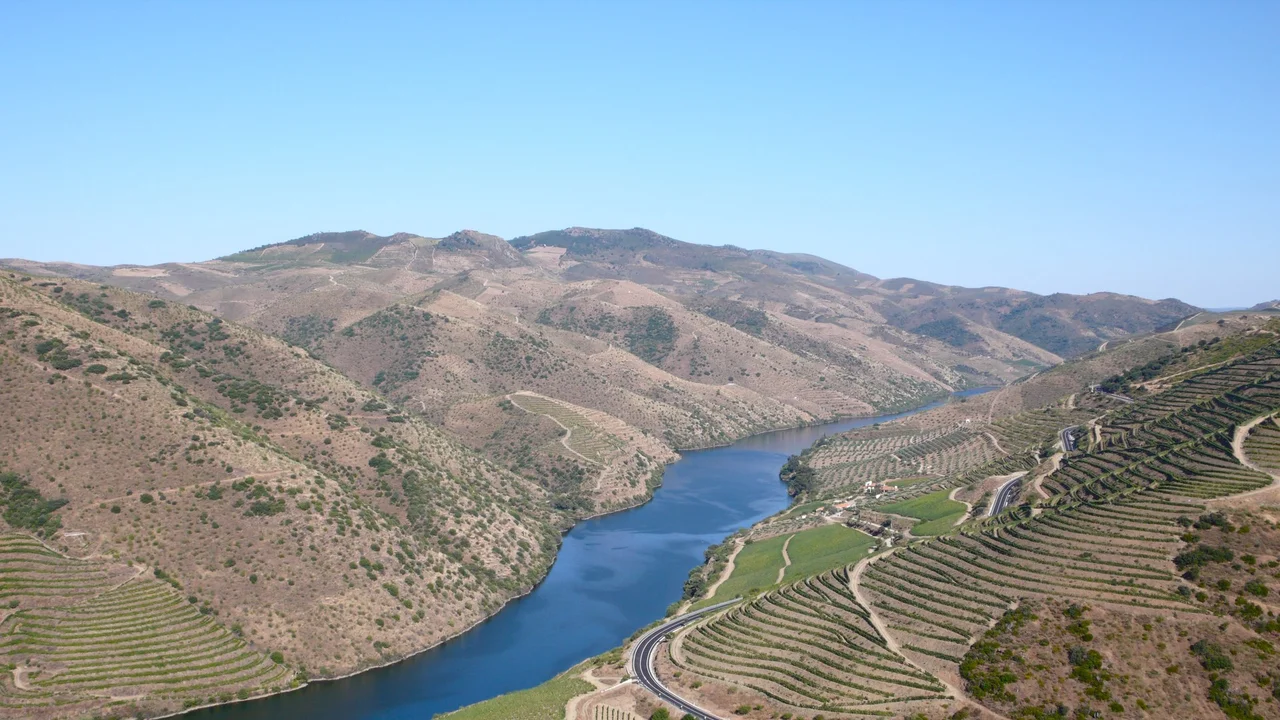
| Douro valley | Terraced vineyards, quintas, spectacular | Varies wildly, and thin |
| Beira interior, Guarda and Covilha | Mountains, granite, cold, cheapest | 20 to 35 |
City by City
Aveiro. A small canal city on a lagoon between Porto and Coimbra, flat enough that people actually cycle, with a university, a growing tech presence and the beaches of Costa Nova and Barra fifteen minutes away. One of the easiest places in Portugal to live without a car.
Coimbra. The old university city on the Mondego, with the country’s oldest institution and one of its main hospitals. Historic, hilly, and priced well below the coast. A real city that does not depend on tourism.
Braga. Young, growing and cheap, with a substantial student population, a genuine local economy and Porto airport an hour away. The Minho is wet, which is the honest trade, and Braga is the strongest value case in the north for anyone who does not need the sea.
Viseu and the Dao. A handsome, quiet small city in wine country, further from everything and cheaper for it.
The Douro valley. Terraced vineyards and quintas, and a market that barely functions in the transactional sense: few comparable sales, few buyers, and a working agricultural context behind most of the properties. Beautiful and slow in both directions.
Beira interior. Guarda, Covilha and the Serra da Estrela: granite villages, real winters, the lowest prices in mainland Portugal, and a population that has been leaving for decades.
What You Pay to Buy
| Cost | Basis | On a EUR 180,000 house |
|---|---|---|
| IMT, non-resident | Flat 7.5% on residential property from 1 September 2026 | EUR 13,500 |
| Stamp duty | 0.8% | EUR 1,440 |
| Notary and registry | Fixed and variable | Low four figures |
| Legal fees | Commonly 1% to 1.5%, with a floor | EUR 2,000 to EUR 3,000 |
| Total | Roughly 10% to 12% at this price level | About EUR 18,000 to EUR 22,000 |
Note the proportion. Notary, registry and legal fees have a floor, so on a EUR 180,000 purchase they take a larger share than they would on a coastal one. See IMT for non-residents and the cost of buying.
What It Costs to Hold
| Charge | Character here |
|---|---|
| IMI | 0.3% to 0.45% of a modest rateable value, so low in absolute terms |
| AIMI | Effectively never reached outside the Douro’s top end |
| Condominium | Low, and confined to city apartment blocks |
| Heating | The dominant running cost, and the region’s defining one |
| Damp | High in the Minho and at altitude, on stock built without a damp course |
Heating is not a footnote here. A Braga or Guarda winter in an uninsulated house is expensive, and the cost falls on the owner rather than a landlord. Ask what the current owner actually paid last winter, and treat a shrug as an answer. Running costs are covered in Portugal property running costs.
Insulation, and Why It Decides the Purchase
| Stock | Winter performance | What it implies |
|---|---|---|
| Pre-1990 village or town house | Poor: no damp course, single glazing, no wall insulation | A retrofit, with an obras licence if structural |
| 1990s to 2000s apartment | Mediocre: better glazing, thin insulation | Improvable at moderate cost |
| Post-2010 construction | Built to current standards | The premium buys a lower running cost |
In the Algarve this is a comfort question. In Braga, Guarda or the Beira interior it is a habitability one, and the retrofit is frequently the largest single item in a renovation budget after the roof. Anything structural or touching the envelope needs a licence, and the licence is a queue: see the obras licence guide.
The corollary is that new build in this region carries a premium that is more justified than it looks, because the running-cost difference over a decade is substantial.
Liquidity, City by Interior
| Market | Transaction depth | Practical effect |
|---|---|---|
| Coimbra, Braga, Aveiro | Real and regular | Pricing is a calculation, exit is normal |
| Viseu, Leiria and the secondary towns | Thinner but functioning | Slower, still tractable |
| Douro valley | Very few sales | Pricing is an opinion, exit is slow |
| Beira interior and deep countryside | Minimal | The buyer pool is a handful a year |
The pattern is worth internalising before choosing on price alone. The gap between a Braga apartment and an interior village house is not only twenty or thirty percent of price; it is the difference between a market and an absence of one.
Getting Around, and What an Hour Actually Means
Distances in this region are short by international standards and slow by Portuguese ones. The A1 and A25 make the cities quick to reach from each other, while an interior village 40 kilometres from a motorway can be an hour from a supermarket that stocks what you want.
| From | To Porto airport | To Lisbon airport | Rail |
|---|---|---|---|
| Aveiro | About 45 minutes | Two and a half hours | Main line, frequent |
| Braga | About an hour | Three hours and more | Main line, frequent |
| Coimbra | An hour and a half | Two hours | Main line, the fastest services stop here |
| Viseu | An hour and a half | Three hours | No passenger line |
| Guarda and the Beira interior | Two to three hours | Three hours and more | Limited |
| Douro valley | An hour and a half to three | Four or more | The scenic Douro line, slow |
The main Lisbon to Porto railway runs through Coimbra and Aveiro, and it is fast, frequent and inexpensive. Anyone weighing this region against the coast should factor that in: a Coimbra or Aveiro base reaches both cities by train without a car, which is not true of most of the Algarve.
Viseu is the exception worth flagging. It is a handsome city with no passenger rail at all, which makes it more car-dependent than its size implies.
Renting Out in a University Region
The letting market here runs on students rather than tourists, which inverts everything the coast teaches. Coimbra, Braga, Aveiro and Porto together hold tens of thousands of students, demand concentrates in September, and the unit that lets is a room or a small flat rather than a family apartment.
| Market | Tenant pool | Character |
|---|---|---|
| Coimbra | Students and hospital staff | Strong, academic-year shaped, predictable |
| Braga | Students and young professionals | Growing, and the deepest in the north after Porto |
| Aveiro | Students and a tech cluster | Steady, smaller |
| Viseu and secondary towns | Local families | Thin but stable |
| Interior | Very limited | Not a letting proposition |
Two consequences. Student lets follow the academic year rather than the tourist season, which means occupancy is predictable and the summer is the void rather than the peak, the reverse of the Algarve. And long-term letting works here without any reference to a licensing map, because short-term restrictions are largely a coastal and capital problem.
For a buyer whose plan involves rental income rather than personal use, a Braga or Coimbra apartment is a materially more predictable proposition than an Algarve holiday let, at a lower entry price.
The Wine Regions, and Buying Land With Vines
Land inside a demarcated wine region carries obligations and value that ordinary rural land does not. The Douro is the oldest demarcated region in the world, its terraces are UNESCO-listed, and planting rights attach to the plot rather than to whoever farms it.
| Region | What it is | Effect on land |
|---|---|---|
| Douro | The oldest demarcated wine region in the world | Terraces, planting rights, UNESCO listing |
| Bairrada | Between Coimbra and Aveiro | Established vineyards, lower profile |
| Dao | Inland, around Viseu | Granite soils, quieter market |
| Vinho Verde | The green north, Minho | Smallholdings, dispersed ownership |
The Douro is the one that most often reaches international buyers, usually as a quinta with terraces and a view over the river. Three things to establish before valuing one. Planting rights are regulated and attached, so the vines on a plot are not simply a crop you may replace at will. The UNESCO listing constrains what may be built and altered across a large part of the valley. And the terraces themselves are the maintenance liability: dry stone walls that have held those slopes for centuries need work, and that work is skilled, slow and expensive.
None of that argues against buying. It argues for buying with the vineyard treated as an operating asset with its own accounts, rather than as landscaping attached to a house.
Winters Inland, and the Cost of Heating a Stone House
The interior of northern and central Portugal is genuinely cold in winter, colder than most foreign buyers expect from a country they associate with the Algarve. Inland Beira, the Serra da Estrela and the upper Douro see frost, and the Serra sees snow.
| Property type | Winter behaviour |
|---|---|
| Old granite house, unimproved | Cold and damp; expensive to heat at all |
| Old house with insulation retrofitted | Comfortable, and the retrofit is the cost |
| Village house in a terrace | Warmer, sheltered on two sides |
| Modern build to current standards | Comfortable and cheap to run |
| Isolated quinta | Cold, exposed, and no mains gas |
The last row deserves attention because it combines several problems. An isolated stone house has no mains gas, may have limited electrical supply, relies on bottled gas or wood, and loses heat through every surface. The romantic version of that property in a summer photograph and the February version are different buildings.
The cost to fix it is not small: insulation, glazing, a heating system, often rewiring. Budget it before the offer rather than after, and remember that the same money spent on a modern house in the same district buys a house that is already warm.
Depopulation, and Which Villages Are Coming Back
The interior of this region lost population for decades and the trend has not fully reversed, which produces both the opportunity and the principal risk. Six signals visible in an afternoon predict whether a specific village is recovering better than any regional statistic does.
| Signal | What it tells you |
|---|---|
| A working primary school | The village has families, not only pensioners |
| A cafe open on a weekday morning | There is a resident population |
| A pharmacy and a health post | Services are still viable locally |
| Building work in progress | Somebody else believes in the place |
| A bus service | Not everyone here drives |
| Empty houses on every street | The trend has not turned yet |
Those six lines are worth more than any regional statistic when assessing a specific village, and they take an afternoon to check. A village with a school and a busy cafe is a functioning place with a future; a beautiful village with neither is a landscape with houses in it, and reselling there means finding another buyer who wants exactly that.
Some places genuinely are turning. Proximity to a growing city, a motorway junction, or a working tourism draw pulls people back, and the villages that recover tend to be within commuting distance of somewhere with jobs. The ones further out are being bought by foreign and returning-emigrant purchasers for renovation rather than repopulating on their own terms, which is a fine reason to buy and a poor basis for expecting capital growth.
Pros and Cons
Central and northern Portugal offers city living at half the coastal price, two demarcated wine regions, and university towns with a rental floor underneath them. It also carries a genuinely cold inland winter, uninsulated stone housing stock, and villages still losing population.
Advantages:
- Roughly half the Lisbon housing cost in real cities with real economies
- Universities in Coimbra, Braga and Aveiro support a steady rental market
- Porto and Lisbon airports within an hour or two
- Genuine Portuguese towns rather than foreign enclaves
- Low absolute holding costs
Disadvantages:
- Cold inland winters and a wet north-west, on uninsulated stock
- A much smaller English-speaking community than the coast
- Thin resale markets outside the university cities
- The interior is depopulating, so services thin over a long hold
- Douro quintas carry agricultural obligations most buyers do not expect
Risks and Red Flags
Interior purchases fail on winter and on liquidity. An unimproved granite house is genuinely cold and expensive to heat from November to March, and a village with no school and no open cafe is a landscape with houses in it rather than a market.
- A summer viewing only. The winter is the variable in this region, more than anywhere else in Portugal.
- Insulation assumed. On pre-1990 stock it is usually absent, and the retrofit is a licensed project.
- A Douro quinta priced as a house. It is an agricultural business with obligations attached.
- Interior prices compared without liquidity. Cheap and unsellable are different problems.
- Fixed acquisition costs ignored. At these prices they are proportionally heavy.
Checklist before you offer:
- Visit in January or February, not only in summer
- Ask the current owner what heating actually cost last winter
- Establish the insulation position and what a retrofit would require
- Current VPT and last year’s IMI on the specific property
- Comparable registered sales in the same parish, not the municipality
Who This Region Suits
Buyers who want a city at half the price. Braga, Coimbra or Aveiro, each with a university, a hospital and a working economy.
Families on a single international income. The housing saving against Lisbon funds a great deal else, and the schools are local rather than international.
Buyers who want land. The interior, with the classification and water checks set out in rural property and land.
Buyers who want warmth and an English-speaking community. The Algarve, covered in property for sale in the Algarve.
Buyers who need a quick exit. Not the interior. The cities work; the countryside does not.
Frequently Asked Questions
Loosely the belt between the Lisbon metro and the Douro, taking in Coimbra, Leiria, Viseu, Castelo Branco and the Beira interior. Housing runs at roughly half the Lisbon level in the university and coastal towns and far below that inland. It is the best value in mainland Portugal for buyers who want a real town rather than a resort.
It is one of the strongest value propositions in the country: a young university city with a genuine local economy, an hour from Porto airport, at roughly half the Lisbon housing cost. The trade is weather, because the Minho is wet and the winters are cold, and a much smaller international community than the coast.
A canal city on a lagoon between Porto and Coimbra, flat, cyclable and served by a university. Prices sit in the value belt, well below Porto for comparable property, and the coast at Costa Nova and Barra is a short drive. It suits buyers who want a small city with water and a low cost base.
Only with a longer holding period and wider margin than a city purchase. Quintas with working vineyards are agricultural businesses with agricultural obligations, not large houses with a view, and the valley has very few comparable sales, which makes pricing an opinion. It is spectacular and it is illiquid.
Genuinely cold inland and at altitude, and wet almost everywhere in the north-west. This matters more than the temperature suggests because much of the older housing stock was built without insulation. Heating an uninsulated house through a Beira or Minho winter is a real annual cost, and it is the most common surprise for buyers who visited in summer.
The same national charges: roughly 9% to 11% as a non-resident, led by a flat 7.5% IMT on residential property from 1 September 2026 and 0.8% stamp duty, then notary, registry and legal fees. Because prices are low, the fixed elements are proportionally heavier here than on a coastal purchase.
Yes, and increasingly so the further from a city you go. The university cities of Coimbra, Braga and Aveiro have real markets with regular transactions. The deep interior has few comparable sales and a small buyer pool, which makes both pricing and exit slower. Budget a longer holding period than a coastal purchase would need.
Comparing the value belt?
Tell us the budget and whether you need a city. We price the same specification in Braga, Coimbra and Aveiro, heating included.
Get a Portugal property shortlist
Tell us your budget and region (Lisbon, Algarve, Porto, Cascais). We reply within one business day with vetted options matched to your goals.