
Property for Sale on the Silver Coast: Towns and Prices
Where to buy on Portugal's Silver Coast, from Ericeira and Nazare to Peniche, Obidos and Caldas da Rainha, with buying costs and what a house costs to hold.
By Portuguese Estate Editorial · Updated September 7, 2026 · 12 min read
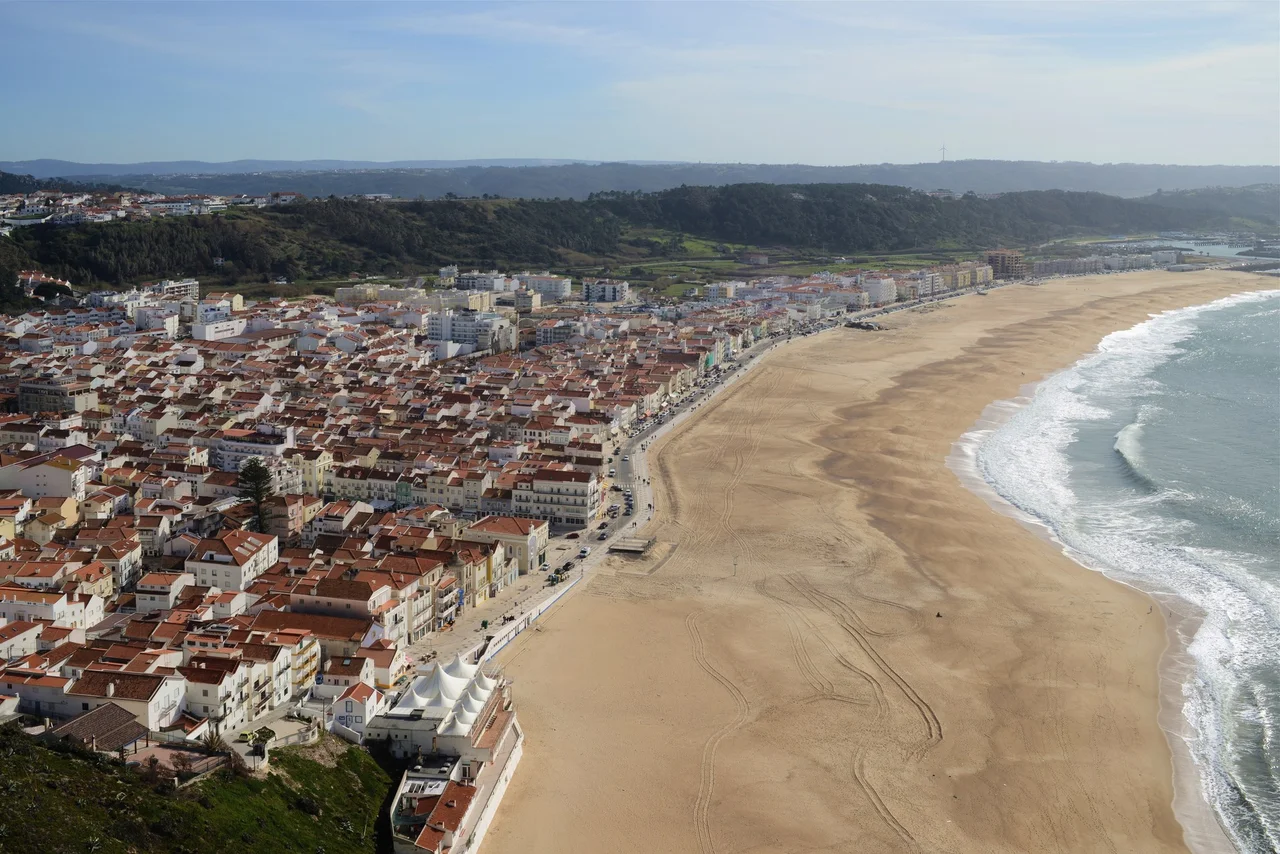
Quick Answer: The Silver Coast is Portugal’s value coastline: Atlantic beaches and towns at a fraction of Algarve prices, an hour to two hours north of Lisbon. The trade is weather, services and a thinner resale market, and the winter is the part buyers most often fail to test.
A caution before the property, because it affects how you should read everything ranking for this region. silver coast portugal runs at 1,600 searches a month in the UK, and the page one for it is five travel sites out of eight: International Living, a travel blog, a holiday guide, a villa rental company and a tourism site. Two property results and one local guide make up the rest.
That tells you most people typing this phrase are planning a trip, not a purchase. It also tells you the region is under-served editorially for the ones who are buying, which is what this page is for.
It is worth being straight about the consequence. Half the audience for this phrase will never buy anything, so any yield or demand figure quoted off general Silver Coast interest is inflated. The buying market here is real but smaller than the search volume suggests, and that shows up as a thinner set of comparable sales and a slower exit rather than as a lower price.
The Towns
| Town | Character | Suits |
|---|---|---|
| Ericeira | Surf town, cobbled centre, an hour from Lisbon | Buyers wanting coast with Lisbon in reach |
| Peniche and Baleal | Working fishing port plus a surf peninsula | Surfers, and buyers wanting the lowest coastal prices |
| Nazare | Dramatic cliff, famous winter waves, a real town below | Buyers who want a year-round Portuguese town |
| Sao Martinho do Porto | A near-enclosed bay with calm water | Families and anyone who wants swimmable sea |
| Foz do Arelho and Obidos lagoon | Lagoon, dunes, quiet | Buyers wanting space and water without the ocean swell |
| Obidos | Walled medieval town inland | Setting, at the cost of a commute to everything |
| Caldas da Rainha | The regional service town, hospital, market, schools | Practical living rather than a view |
| Lourinha and inland | Farmland, quintas, the lowest prices in the region | Renovation projects and space |
The distinction that matters most is coastal exposure. Nazare and Peniche face the open Atlantic and get its weather directly. Sao Martinho sits inside a bay and behaves completely differently in January. Two towns twenty minutes apart are not the same climate.
What It Costs
| Sub-market | Price level, region average = 100 | Note |
|---|---|---|
| Ericeira | Well above 100 | Lisbon proximity and surf brand both price in |
| Sao Martinho do Porto, front line | Above 100 | The sheltered bay is scarce |
| Nazare and Peniche | Around 100 | Coastal, exposed, seasonal |
| Caldas da Rainha | Below 100 | Services rather than sea |
| Obidos and inland | Below 100 | Setting or land, condition varies widely |
| Lourinha and farmland | Well below 100 | Renovation stock |
Take absolutes from the INE series by municipality with a date, as set out in Portugal house prices. Silver Coast pricing is noisier than the Algarve’s because there are fewer comparable registered sales in any given parish, which is also why an independent valuation is worth more here than in a deep market.
What You Pay on Top
| Cost | Basis | On a EUR 280,000 house |
|---|---|---|
| IMT, non-resident | Flat 7.5% from 1 September 2026 | EUR 21,000 |
| Stamp duty | 0.8% | EUR 2,240 |
| Notary and registry | Fixed and variable | Low four figures |
| Legal fees | Commonly 1% to 1.5% | EUR 2,800 to EUR 4,200 |
| Total | Roughly 9% to 11% | About EUR 27,000 to EUR 31,000 |
The residency point matters more here than elsewhere, because a large share of Silver Coast buyers are relocating rather than buying a second home. Buying after establishing Portuguese tax residency puts you on the resident scale instead of the flat 7.5%, and on this budget that difference is most of a year’s living costs. See IMT for non-residents.
What It Costs to Hold, and the Renovation Question
| Charge | Silver Coast character |
|---|---|
| IMI | 0.3% to 0.45% of rateable value, set by each municipality |
| AIMI | Rarely reached, given the price level |
| Condominium | Low, because much of the stock is houses rather than blocks |
| Heating and damp | The region’s real running cost, on uninsulated stock |
| Salt and wind maintenance | High on exposed front-line property |
A large share of what is for sale here is old rural or village stock, which makes renovation a normal part of the purchase rather than an exception. Three things belong in the budget before an offer: the cost per square metre of the works, the obras licence and its municipal queue, and the fact that documented, invoiced improvements reduce your taxable gain when you eventually sell. The detail is in Portugal property running costs.
Buyers underestimate the licence queue more often than the works. A renovation planned around a summer letting season that begins before the permit issues is a renovation that misses the season.
Two Halves, and the Drive Between Them
The Silver Coast behaves as two markets separated by roughly an hour of motorway, and buyers who search the whole stretch at once compare incomparable things. The southern half prices on Lisbon proximity, the northern half on its own local economy, and the same house can differ by 30% or more between them.
| Southern half | Northern half | |
|---|---|---|
| Towns | Ericeira, Torres Vedras, Lourinha, Peniche | Sao Martinho, Nazare, Foz do Arelho, Alcobaca |
| Lisbon | 45 minutes to an hour | 90 minutes to two hours |
| Price | Higher, and rising with Lisbon | Lower, and moving more slowly |
| Buyer | Commuters, weekenders, Lisbon overflow | Relocators and retirees buying a whole life |
| Rental demand | Year-round from the Lisbon side | Seasonal, narrower |
The southern half prices partly as Lisbon commuter belt. Ericeira in particular is closer to the capital’s orbit than to Nazare’s, which is why it carries a premium the rest of the coast does not.
The northern half is the value proposition in its pure form, and the further you go the more the exit slows. That is the trade being made, and it should be made deliberately rather than discovered later.
Buying Inland: Quintas and Land
Inland Silver Coast property costs a fraction of anything coastal, and a large share of searches end there. A quinta 20 minutes from the sea can trade below half the price of a comparable house in Sao Martinho, and the difference is bought with a car, a renovation and a colder winter.
Four checks belong in that diligence and they are not the same as a town apartment’s.
Rustic or urban classification. Land registered as rustic has different building rights from urban land, and a ruin on rustic land is not automatically a house you may rebuild at the size you want. Establish the classification and the permitted volume before you value the plot.
Water. A borehole, a spring or a mains connection are three different situations with three different costs and legal positions. Ask what supplies the property, whether it is licensed, and what the neighbours draw from.
Access. Tracks across a neighbour’s land are common, and the right to use one is a legal question rather than a habit. Get it documented.
Boundaries. Older rural registrations describe boundaries in terms that predate accurate surveying. A discrepancy between the register, the tax record and the fence is normal and needs resolving before, not after.
None of these are reasons to avoid inland property. They are the reason a rural purchase here needs a lawyer who does rural work rather than one who does apartments.
Surf, and the Towns It Built
Nazare turned a fishing town into an international name through one wave, and the effect on the coast either side of it has been real. Praia do Norte’s winter swell, generated by an underwater canyon that focuses Atlantic energy onto one beach, made the town a global surfing destination and reshaped its property market in a decade.
| Town | Surf role | Property effect |
|---|---|---|
| Nazare | Big-wave winter destination | Winter season where there was none |
| Peniche and Baleal | Consistent year-round beach breaks | Surf schools, camps, long-stay rentals |
| Sao Martinho do Porto | Sheltered bay, no surf | Family market, calm water, different buyer |
| Foz do Arelho | Lagoon and ocean | Mixed, quieter |
| Ericeira, to the south | World Surfing Reserve | The most established of them |
The important consequence is seasonal rather than cultural. A stretch of Portuguese coast that used to be dead from October to May now has a winter economy in the surf towns, which changes the letting arithmetic for owners there and does nothing at all for the towns without waves a few kilometres away.
Sao Martinho do Porto is the clearest illustration. Its almost-enclosed bay has no surf by definition, and it draws families with small children for exactly that reason. Two towns, twenty minutes apart, with different seasons, different tenants and different buyers.
Distance to Lisbon Is the Other Price Driver
Distance to Lisbon is the Silver Coast’s second price engine and it operates as a readable gradient. Under an hour puts a town in commuter range and prices it accordingly; 2 hours puts it in a local market. The same specification falls in price with each additional half hour of drive.
| From Lisbon | Towns | Market character |
|---|---|---|
| Under an hour | Ericeira, Mafra, Torres Vedras | Commuter-capable, priced accordingly |
| One to 1.5 hours | Obidos, Caldas da Rainha, Peniche | Weekend and second-home range |
| 1.5 to 2 hours | Nazare, Sao Martinho, Foz do Arelho | Holiday and relocation, not commuting |
| Over two hours | Figueira da Foz and north | A different market, priced locally |
The A8 motorway carries most of this traffic and it is fast, which is why the gradient tracks driving time rather than straight-line distance. It is also tolled, which is a modest but real running cost for anyone doing the trip weekly.
The pattern that follows is consistent across the coast: the same house costs materially less for each additional half hour from Lisbon, and the quality of the house does not change with it. Buyers willing to sit at the far end of the gradient get the largest discount on the coast, and pay for it in every trip to the airport.
What the Winter Is Really Like
Winter is the single most underestimated factor in a Silver Coast purchase. The coast faces the open Atlantic at a latitude well north of the Algarve, rain arrives in sustained systems from November to March, and unimproved stone houses hold that damp. A July viewing shows a different building.
Between November and March the coast is wet, windy and genuinely cold indoors in unimproved stock. Rain arrives from the Atlantic in sustained systems rather than short showers, and the older houses inland, built in stone with no insulation and no central heating, hold that damp. Buyers viewing in July are shown a completely different building from the one they will own in January.
| What to check | Why |
|---|---|
| Insulation and glazing | The difference between comfortable and unaffordable |
| Heating system | Many older properties have none at all |
| Damp history | Look for the signs, and ask directly |
| Orientation | South-facing rooms are worth real money here |
| Roof condition | Sustained Atlantic rain finds every weakness |
This is also the strongest argument for the newer stock that buyers often dismiss as characterless. A modern house built to current thermal standards is cheap to heat and dry through the winter, and on this coast that is not a small preference. It is the difference between a house you use all year and one you use for three months.
Anyone serious about buying here should view at least one property in February. It is the cheapest due diligence available and almost nobody does it.
Pros and Cons
The Silver Coast offers coastal property at a fraction of Algarve or Cascais prices, within 2 hours of Lisbon airport, in towns that have resident populations rather than seasonal ones. It also carries a genuinely wet Atlantic winter, a thinner foreign resale market, and stock that frequently needs insulating.
Advantages:
- The cheapest genuinely coastal property in western Portugal
- Space: houses with land are normal here rather than exceptional
- An hour to two hours from Lisbon airport and the capital’s services
- Fewer letting restrictions than Lisbon or the central Algarve
- Real Portuguese towns with year-round populations, not resort strips
Disadvantages:
- Wet, windy Atlantic winters on largely uninsulated stock
- No local international airport
- A thinner resale market, so the exit is slower and pricing less certain
- A smaller and newer English-speaking community than the Algarve
- Much of the stock needs work, with a licence queue attached
Risks and Red Flags
Silver Coast purchases fail on the winter and on distance. The coast is wet and windy from November to March, unimproved stone houses hold that damp, and a town 2 hours from Lisbon is in a different market from one 40 minutes away.
- A summer viewing only. The Atlantic winter is the variable, and February settles it.
- Treating the region as one climate. A sheltered bay and an exposed headland twenty minutes apart are different products.
- Renovation costed without the licence. The permit queue is part of the timeline and the price.
- Thin comparables taken on trust. Commission an independent valuation where registered sales are scarce.
- Assuming Lisbon is close. It is one to two hours, and that is every airport run for the life of the ownership.
Checklist before you offer:
- Visit in February, and specifically on a windy day
- Ask the current owner what they paid to heat and dry the house last winter
- Get the obras position from the municipality if works are planned
- Commission an independent valuation rather than relying on asking prices
- Model the purchase both as a non-resident and after tax residency
Who Each Town Suits
Towns 20 minutes apart on this coast suit completely different buyers, and the deciding variables are surf, shelter and drive time to Lisbon. A big-wave town has a winter season and a family town has none; a sheltered bay draws households with small children and repels everyone who came for the swell.
Buyers who want the coast and Lisbon. Ericeira, at a price premium that reflects exactly that.
Families. Sao Martinho do Porto for the water, Caldas da Rainha for the services, hospital and schools.
Surfers and buyers optimising on price. Peniche and Baleal, accepting exposure and seasonality.
Buyers who want a working Portuguese town. Nazare, which has a resident population below the tourist cliff.
Renovators. Lourinha, Obidos and the inland farmland, with the works, the licence and the queue all costed before the offer.
The wider regional analysis is in the Silver Coast property guide, and the comparison against the south in the Algarve.
Frequently Asked Questions
The Costa de Prata runs roughly from Ericeira north of Lisbon up past Peniche, Nazare and Sao Martinho do Porto toward Figueira da Foz, with inland towns like Obidos and Caldas da Rainha included by convention. It is a loose marketing name rather than an administrative region, which is why two guides can draw it differently. Treat it as the Atlantic coast between the Lisbon metro and the Centro region.
Substantially, for comparable coastal property, and that is the main reason buyers look here. The trade is weather and services: winters are wetter and windier, the English-speaking community is smaller and newer, and the flight network runs through Lisbon rather than a local airport. Space and price are what the region sells.
Wet, windy and cooler than the Algarve, with Atlantic weather arriving directly off the ocean. It matters more than the temperature suggests because much of the older housing stock was built without insulation. Anyone considering the region should visit in February before buying, which is the most repeated piece of advice from people who live there.
Roughly an hour to ninety minutes for the southern end around Ericeira and Peniche, and closer to ninety minutes to two hours for Nazare and Sao Martinho. There is no local international airport, so every arrival and departure routes through Lisbon. For owners who fly home often, that drive is part of the cost of the discount.
Yes, with an Alojamento Local registration, and the municipalities here are generally less restrictive than Lisbon or the central Algarve. The constraint is demand rather than licensing: the season is shorter and narrower than the Algarve's, and surf towns like Ericeira and Peniche have a different rental pattern from family beach towns like Sao Martinho.
Sao Martinho do Porto for its sheltered bay and calm water, Caldas da Rainha for services, schools and a hospital, and Obidos for the setting if the commute is acceptable. Ericeira works for families who want the surf culture and Lisbon within an hour. Peniche and Nazare are more seasonal and more exposed.
It is better understood as a lifestyle purchase with a slower exit than as an income play. Prices are low, which is the appeal, but transactional depth is thinner than the Algarve or the Lisbon metro, so the exit takes longer and pricing is less certain. Budget a longer holding period than you would for a Lisbon apartment.
Looking at the Silver Coast?
Tell us the budget and whether you will renovate. We shortlist by town and price the works and the holding costs.
Get a Portugal property shortlist
Tell us your budget and region (Lisbon, Algarve, Porto, Cascais). We reply within one business day with vetted options matched to your goals.