
Cheap Property for Sale in Portugal: What It Buys 2026
What cheap Portuguese property actually buys in 2026, where the low prices are, and what the works, the licence and the exit really cost.
By Portuguese Estate Editorial · Updated September 23, 2026 · 12 min read
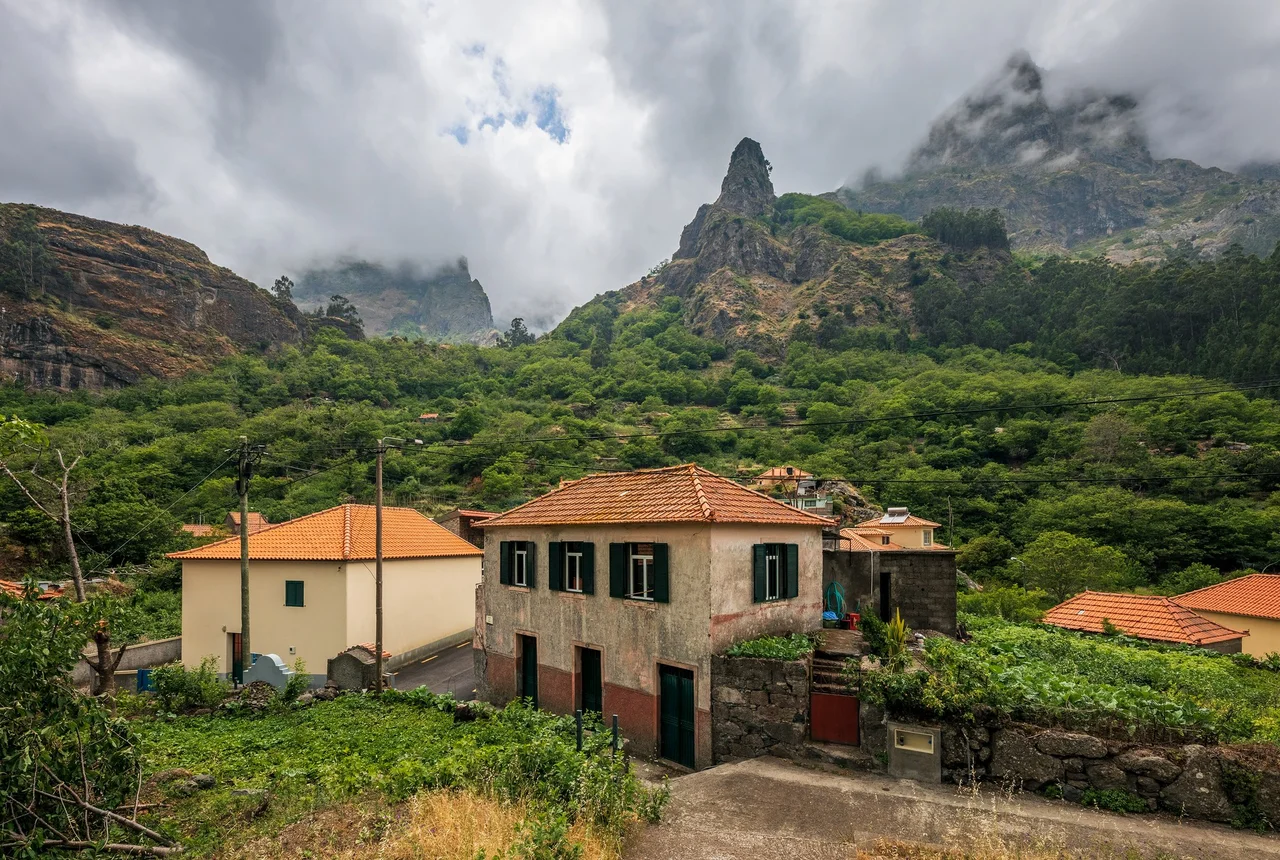
Quick Answer: Cheap Portuguese property is real and it is cheap for reasons: condition, services, distance and depopulation. The purchase price is the smallest number in the project, and the ones that decide it are the works, the obras licence and whether the title and classification permit what you intend.
British searches put cheap property for sale in portugal at 390 a month, with cheap property in portugal, cheap rural property for sale in portugal, bargain property for sale in portugal and price-capped variants adding several hundred more. It is one of the most searched property phrases in the market.
It is also the one where the gap between the search and the reality is widest, so this page is about what the money actually buys.
What Cheap Actually Means Here
| Budget | What it realistically buys | Where |
|---|---|---|
| Under EUR 50,000 | A ruin or a shell, or a small flat in a depopulating town | Interior north, Beira, inland Alentejo |
| EUR 50,000 to EUR 100,000 | A village house needing full renovation, or a modest habitable flat inland | The same regions, plus small towns |
| EUR 100,000 to EUR 150,000 | A habitable village or town house, works still likely | Central interior, inland Algarve, northern towns |
| EUR 150,000 to EUR 200,000 | A comfortable inland house, or a small flat in a secondary city | Value belt: Coimbra, Braga, Aveiro, Setubal |
The pattern holds across all four rows: the price falls with distance from the coast and with the population trend, and it falls fastest where both move together.
Where the Low Prices Are, and Why
| Region | Character | Why it is cheap |
|---|---|---|
| Interior north, Guarda and Braganca | Granite villages, mountains, cold winters | Decades of depopulation, altitude, distance |
| Beira and the central interior | Terraces, olive and vine, small towns | Distance from the coast and from services |
| Inland Alentejo | Plains, big plots, big skies | Water scarcity, summer heat, low population |
| Inland Algarve, Monchique and the hills | Citrus, cork, hills | Cheaper than the coast and still near it |
| Minho and the north-west | Green, wet, fragmented parcels | Small plots, rain, and inheritance division |
Depopulation is the honest common factor. It is why the house is affordable and why the primary school closed, and both are the same fact seen from different sides. That is a fair trade for some buyers, and it is not a hidden one.
The Works Are the Real Budget
| Element | Why it dominates |
|---|---|
| Roof | The most common major failure, and the first thing to price |
| Structure | Walls, lintels, floors in old stock, and settlement |
| Damp | Traditional construction with no damp course, in a wet north |
| Wiring and plumbing | Usually a full replacement rather than a repair |
| Drainage | A septic system where there is no mains sewer |
| Windows and insulation | The difference between habitable and merely standing |
| Access for machinery | On narrow village streets, a genuine cost driver |
On a EUR 60,000 village house a full renovation frequently exceeds the purchase price, sometimes by a multiple. The project can still make sense, provided you get a per-square-metre estimate from someone who has renovated in that district before you commit, and hold a contingency that is real rather than notional.
The licensing side is the other half. Structural work, anything touching the envelope and any change of use need an obras licence, which is a municipal decision and a municipal queue. See the obras licence guide.
Abandoned Property, and Why It Sits Abandoned
The empty stone house that has stood untouched for 20 years is usually a title problem rather than a building problem. Two Portuguese realities account for most of them: undivided inheritance among heirs who must all agree, and a licensing position that never permitted what the buyer imagines.
Inheritance. Portuguese succession divides property among heirs, and over two or three generations a single house can end up with a dozen part-owners scattered across three countries. Every one of them has to agree to sell. A building empty for thirty years is frequently empty because that agreement has never been reached, and a buyer who wants it has to wait for it to be.
Classification. Many such buildings stand on rustic land, where building rights are narrow and specific. The right to restore what was there is not the right to build what you want, and the recorded footprint and volume decide the difference.
Both are answerable before you fall for the place. Ask for the certidao permanente and the caderneta predial, and take the parcel reference to the camara. The wider framework is in due diligence on Portuguese property.
What You Pay to Buy
| Cost | Basis | On a EUR 80,000 house |
|---|---|---|
| IMT, non-resident | Flat 7.5% on residential property from 1 September 2026 | EUR 6,000 |
| Stamp duty | 0.8% | EUR 640 |
| Notary and registry | Fixed and variable, so proportionally heavier here | Low four figures |
| Legal fees | Higher than usual: the diligence is rural work | Budget above 1.5% |
| Survey and searches | Title, classification, water, boundaries | Several hundred to low four figures |
| Total | Above 11% on a small purchase | Fixed costs do not shrink with the price |
That last row is the point that gets missed. Notary, registry, searches and legal fees have a floor, so on a EUR 80,000 purchase they are a much larger share of the budget than on a EUR 800,000 one. Acquisition costs on cheap property routinely exceed the 9% to 11% headline. See the cost of buying property in Portugal.
What It Costs to Hold
| Charge | Character at this price level |
|---|---|
| IMI | 0.3% to 0.45% of a modest rateable value, so genuinely low |
| AIMI | Not reached |
| Condominium | Usually none, since most of this stock is houses |
| Maintenance | The dominant cost: old stock, wet winters, and time |
| Standing charges | Water and power connections continue on an empty house |
| Caretaking | Someone to check it, if you are not there |
Holding costs are the one genuinely cheap part of cheap property, and they are dwarfed by maintenance on a house that is old and often empty.
The Exit
| Factor | Position in the cheapest districts |
|---|---|
| Comparable sales | Scarce, so pricing is opinion rather than calculation |
| Buyer pool | Small, and mostly other foreign renovators |
| Marketing period | Measured in seasons |
| What sells | Completed work, conventionally finished |
| What does not | Half-finished projects, at a steep discount |
The last row is the warning. A renovation abandoned at sixty percent is the hardest thing to sell in the Portuguese market, because the next buyer is pricing the unknown remainder. If you start, budget to finish.
Where the Bargain Is Not a Bargain
Cheap Portuguese listings attract a particular kind of problem, and 3 patterns account for most of them: a price that reflects unresolved title, a building whose services would cost more than the purchase to bring to standard, and a location too remote for any builder to quote competitively.
The building with more owners than it appears. Marketed by one heir who cannot deliver the others. You can spend months and legal fees discovering that no sale was ever possible.
The plot sold on what it “could” become. A rustic parcel described with an imagined house on it. The imagined house is the seller’s, not the municipality’s, and the difference is the whole value.
The renovation quoted without a licence. A builder’s price for works that require a permit nobody has applied for. The number is real and the timeline is fiction.
None of these are exotic. They are the ordinary shape of a market where prices are low enough that diligence feels disproportionate, which is exactly when it pays most. The wider pattern of what goes wrong in Portuguese purchases is set out in property scams to avoid in Portugal.
The rule that covers all three: nothing a seller or an agent says about what may be built counts unless the municipality has said it in writing about that parcel.
The Renovation Nobody Budgets: Services
Buyers pricing a cheap rural or village house concentrate on the roof and the walls, then meet the real cost: everything that makes a building habitable in 2026. Wiring, water, drainage, heating, a bathroom, a kitchen and insulation are 7 separate jobs, and none is visible in a photograph.
| Service | Typical state in cheap stock | What it involves |
|---|---|---|
| Electrics | Original, unearthed, undersized | Full rewire and a new supply |
| Water | Mains connection may not exist | Connection, or a registered borehole |
| Drainage | Cesspit, or nothing | Septic tank to current standards |
| Heating | None at all | A system, plus the insulation to make it work |
| Bathroom and kitchen | Rudimentary or absent | Everything, including the plumbing behind it |
| Insulation | None | Roof, walls, and glazing together |
Every line on that list is invisible in a photograph and unavoidable in practice. A house at forty thousand euros with none of these is not a house at forty thousand euros; it is a plot with useful walls, and the honest total is the purchase plus a renovation that will usually exceed it.
That does not make it a bad purchase. It makes it a project with a real budget, and the buyers who do well are the ones who priced the six rows above before committing rather than discovering them one at a time.
Distance From a Builder Is a Cost
The cheapest property sits furthest from everything, including the trades who would renovate it, and that is the quiet multiplier on interior projects. Builders price travel into every day of a job rather than once, and a remote site limits how many firms will quote at all.
| Situation | Effect on the works |
|---|---|
| Near a town with an active building sector | Competitive quotes, normal timelines |
| Forty minutes from the nearest town | Travel time priced into every day |
| Remote, poor access road | Deliveries surcharged, some refused |
| Region with heavy emigration | Very few trades left locally |
| Anywhere in high season | Everyone booked, quotes inflated |
Builders price travel, and on a remote site they price it into every single day of a project rather than once. A six-month renovation an hour from the nearest town carries a premium that a comparable job in a serviced area does not, and the same distance limits how many firms will even quote.
Before committing to a remote bargain, obtain two written quotes from firms who have actually visited the site. If only one will come, that is your answer about both the price and the timeline.
Inheritance Ownership, and Why Some Houses Never Sell
A recurring reason a cheap Portuguese house has stood empty for 20 years has nothing to do with its condition: it is owned by 11 people. Portuguese succession divides property among heirs, and where an estate was never formally settled, ownership fragments further with each generation.
Portuguese succession divides property among heirs, and where an estate was never formally settled, ownership fragments with each generation. A village house may be held by a dozen cousins across three countries, several of whom have never seen it, one of whom cannot be found, and all of whom must agree to a sale.
| Situation | Effect on a purchase |
|---|---|
| Undivided estate (heranca indivisa) | Every heir must consent |
| An heir abroad | Powers of attorney, notarised and apostilled |
| An heir who cannot be traced | The sale may simply be impossible |
| A disputed share | Litigation, on an unknown timetable |
| Estate not registered to the heirs at all | Registration must happen before any sale |
This is why the bargain is a bargain. The price reflects a title problem, not just a roof problem, and the discount is the market’s estimate of how hard it will be to fix.
Some of these resolve cleanly, with a competent local lawyer and patience measured in months. Some never resolve. The instruction is the same either way: have the ownership position established in the registry before any money moves, and treat a seller who cannot show clean title as a seller who does not yet have anything to sell.
Pros and Cons
Cheap Portuguese property is real and it is a project rather than a bargain. Prices under EUR 100,000 exist across the interior, and the purchase is usually the smaller half of the total: rewiring, drainage, water, heating and insulation routinely exceed the price paid.
Advantages:
- Genuinely among the cheapest habitable property in western Europe
- Space and privacy unavailable at any coastal price
- Very low annual holding costs
- Documented, invoiced works reduce the eventual capital gain
- A finished restoration in a good village does find its buyer
Disadvantages:
- The works frequently exceed the purchase price
- Fixed acquisition costs are proportionally heavy on a small budget
- Title and classification problems are common in this part of the market
- Services thin out as the district’s population falls
- The exit is slow and the buyer pool small
Risks and Red Flags
Cheap Portuguese property is cheap for reasons, and the reasons are usually title or services rather than cosmetics. An undivided estate with eleven heirs and a house with no mains water, no drainage and original wiring are the two classics.
- A ruin with no title check. Unresolved inheritance is the norm at this end of the market.
- A price with no works estimate. The purchase is the smaller half of the budget.
- “Ready to restore”. Ask what the camara permits, in writing, for that parcel.
- A shared or unlicensed water source. In the dry interior this decides usability.
- A part-finished project sold as a bargain. It is the hardest asset to resell in this market.
Checklist before you offer:
- Certidao permanente and caderneta predial, read by a lawyer who does rural work
- A written municipal indication of permitted building volume
- A per-square-metre works estimate from a builder active in that district
- Water source, drainage and legal access, each documented
- A contingency you would actually be willing to spend
Who This Suits
Cheap Portuguese property suits buyers treating it as a funded project on a multi-year timeline, and punishes anyone treating it as a discount. The deciding questions are whether the title is clean, whether the services exist, and whether a builder will actually travel to the site.
Renovators with time and a real budget. The trade works when the works are funded and the timeline is measured in years.
Buyers who want space above convenience. Nothing on the coast comes close on plot size at these prices.
Buyers wanting a habitable house now. The value belt rather than the interior: central and northern Portugal covers those towns.
Buyers who need to sell within a few years. Not this. A city apartment has the liquidity, covered in apartments for sale in Portugal.
Rural specifics, including classification, water and boundaries, are in rural property and land for sale in Portugal.
Frequently Asked Questions
Yes, and under 50,000 in the interior, but almost always in one of three conditions: a village house needing full renovation, a rural building with limited or no services, or a flat in a depopulating town. Genuinely habitable property at coastal or city prices does not exist at that level. The listing price is the beginning of the budget rather than the end of it.
The interior north around Guarda and Braganca, the central interior in Beira, and inland Alentejo. All three are cheap for the same reason: population has been leaving for decades, which is also why the school, the health centre and the shop are further away each year. Inland Algarve and the northern Minho sit above them and still well below any coastal market.
Frequently more than the purchase. A full renovation on old stock means roof, wiring, plumbing, drainage, windows and often structure, priced per square metre before you add services that may not exist. Add the obras licence and its municipal queue. Buyers who model the purchase and not the works are the ones who stall halfway.
Usually title and classification. Abandoned buildings often have unresolved inheritance among many heirs, boundaries that predate accurate surveying, and a rustic land classification that limits what may be rebuilt. A building being empty for thirty years does not make it available; it frequently makes it complicated. Establish who owns it and what may be built before valuing it.
As a project, sometimes. As a liquid asset, rarely. Comparable registered sales are scarce in the cheapest districts, the buyer pool is small, and the exit is measured in seasons. That does not make it a bad purchase, but it makes the holding period long and the margin thin against acquisition costs of roughly 9% to 11% plus the works.
The same rates, on smaller numbers. Non-resident IMT is a flat 7.5% on residential property, stamp duty 0.8%, and IMI runs 0.3% to 0.45% of the rateable value annually. The proportions do not change with the price, so acquisition costs remain roughly 9% to 11%, which matters more on a cheap purchase because it is a larger share of a small budget.
Title and heirs, land classification and permitted building volume, water and drainage, legal access, and boundaries against the registry. Then the works: roof, structure, damp and services, priced by someone who has renovated in that district. Five checks and one estimate, and every one of them is worth more than the discount you are chasing.
Chasing a cheap Portuguese house?
Send us the listing. We check title, classification and permitted volume, and estimate the works before you offer.
Get a Portugal property shortlist
Tell us your budget and region (Lisbon, Algarve, Porto, Cascais). We reply within one business day with vetted options matched to your goals.