
Property for Sale in Tavira: Areas and Prices 2026
Where to buy in Tavira and the eastern Algarve, from the old town to Cabanas and the island, with year-round living, buying costs and holding costs.
By Portuguese Estate Editorial · Updated September 7, 2026 · 11 min read
Quick Answer: Tavira is the eastern Algarve’s answer to the question of where you can actually live all year. It has a resident population, a hospital, a market and services that run in February, at prices below the central resort strip. The beach is on an island across the lagoon, which is either a feature or a dealbreaker.
British buyers search property for sale in tavira portugal at 480 a month and tavira property for sale at another 480, while American searches put tavira portugal real estate at 320. For a town of this size those are substantial numbers, and they reflect what the eastern Algarve is for.
The central Algarve sells a season. Tavira sells a year.
The Tavira Markets
| Area | Character | Trade |
|---|---|---|
| Old town, both banks of the Gilao | Cobbled streets, townhouses, the Roman bridge | Protected, so works are constrained; parking is hard |
| Newer town quarters | Apartments and modern townhouses, walkable | Less character, more practicality |
| Riverside and Santa Luzia | Water frontage, the octopus village, the footbridge island | Priced for the water |
| Cabanas de Tavira | Waterfront village facing its own island | More holiday-oriented, quieter in winter |
| Inland toward Santo Estevao | Quintas, land, the lowest prices | A car, and a drive to everything |
| Conceicao and Cabanas hinterland | Newer villa developments with pools | Suburban rather than town |
Area by Area
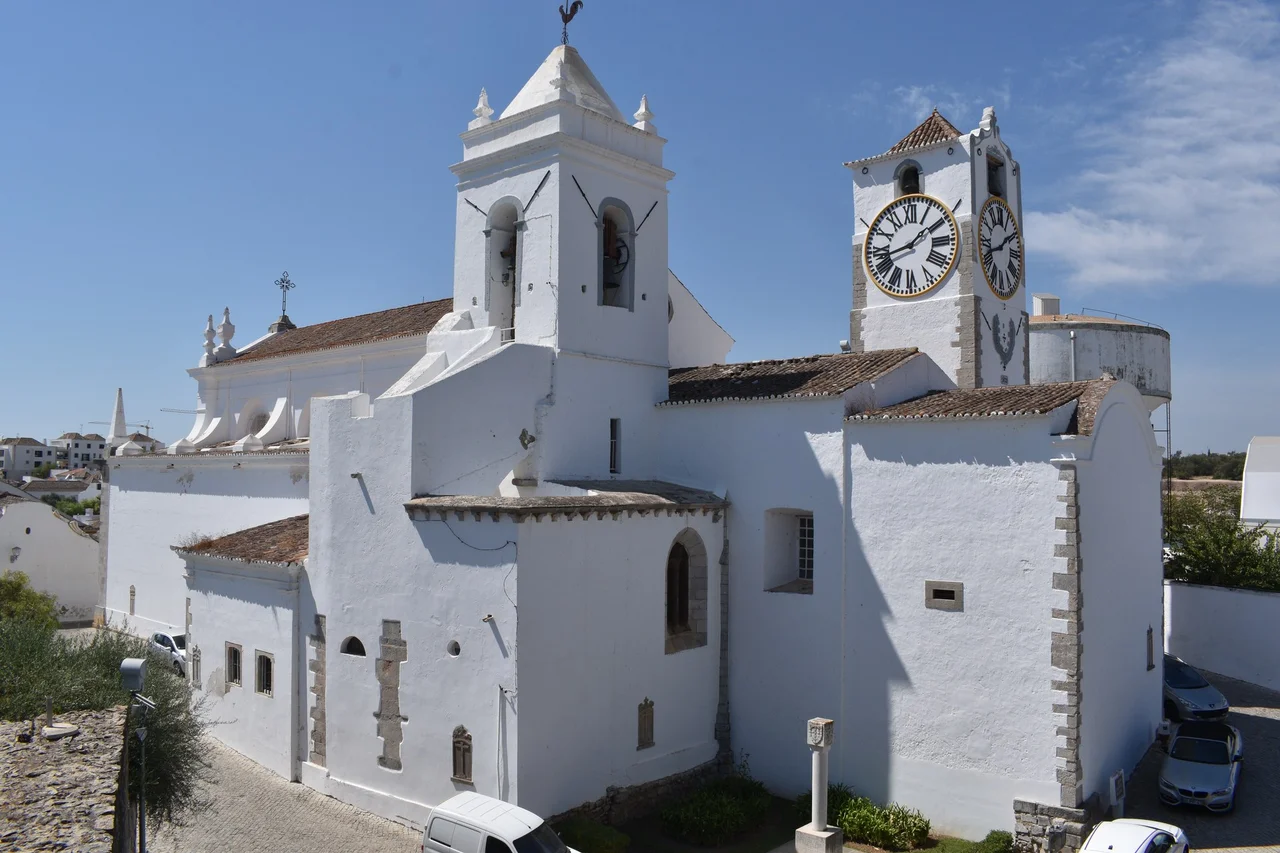
The old town. Two banks of the Gilao joined by the bridge, with the castle and Santa Maria do Castelo above. The housing is townhouses, often narrow, frequently in need of work, and inside a protected area where the municipality decides what may be altered. Charming, and the least straightforward purchase in the town.
The newer quarters. Apartments and modern townhouses within walking distance of the market and the river. This is where most practical buyers end up: lifts, parking, and a five-minute walk to a supermarket that is open in January.
Riverside and Santa Luzia. Santa Luzia is the octopus-fishing village a few kilometres west, with a footbridge to Praia do Barril, and it prices for the setting. Riverside property in Tavira itself is the town’s premium tier.
Cabanas de Tavira. A waterfront strip facing the lagoon and its island, with a boardwalk and a short ferry. Smaller, more seasonal and more holiday-oriented than Tavira, with front-line apartments above the Tavira average.
Inland. Quintas, olive groves and the lowest prices in the municipality. The trade is honest: land and quiet in exchange for driving to everything, including the bakery.
What It Costs
| Sub-market | Level, Tavira average = 100 | Note |
|---|---|---|
| Riverside and Cabanas front line | Well above 100 | Water frontage is the scarce commodity |
| Old town, renovated | Above 100 | Character plus completed works |
| Old town, unrenovated | Below 100 | Before the works, the licence and the queue |
| Newer quarters | Around 100 | The bulk of the practical stock |
| Conceicao and villa developments | Around 100 | Pools and gardens raise the holding cost |
| Inland | Well below 100 | Condition and access vary widely |
Take absolutes from the INE series with a date, as set out in Portugal house prices.
What You Pay on Top
| Cost | Basis | On a EUR 320,000 townhouse |
|---|---|---|
| IMT, non-resident | Flat 7.5% from 1 September 2026 | EUR 24,000 |
| Stamp duty | 0.8% | EUR 2,560 |
| Notary and registry | Fixed and variable | Low four figures |
| Legal fees | Commonly 1% to 1.5% | EUR 3,200 to EUR 4,800 |
| Total | Roughly 9% to 11% | About EUR 31,000 to EUR 36,000 |
Many Tavira buyers are relocating rather than buying a second home, which makes the timing point worth stating: buying after establishing Portuguese tax residency puts you on the resident scale instead of the flat 7.5%. See IMT for non-residents.
What It Costs to Hold
| Charge | Tavira character |
|---|---|
| IMI | 0.3% to 0.45% of rateable value, at the municipality’s rate |
| AIMI | Rarely reached at Tavira price levels |
| Condominium | Low in the town, higher in villa developments with pools |
| Damp and salt | Old-town townhouses and lagoon-front property both need attention |
| Pool and garden | A recurring service contract wherever there is one |
Old-town damp is the specific local issue. Traditional construction, a river, and a lagoon combine to make moisture management an ongoing job rather than a one-off repair. Ask the current owner what they actually do about it each year. General running costs are in Portugal property running costs.
The Island Beaches, and What They Mean Daily
The Ria Formosa is a protected lagoon system behind barrier islands, and Tavira’s beaches sit on those islands rather than on the mainland shore. Reaching sand means a ferry of roughly 10 to 20 minutes, which changes daily life: no beachfront road, no seafront strip, and an outlook that cannot be built out.
| Access | How | Practical effect |
|---|---|---|
| Tavira Island | Ferry from the town or from Quatro Aguas | A short crossing, and a timetable |
| Praia do Barril | Footbridge and a small train from Santa Luzia | Walkable, and popular in summer |
| Cabanas Island | Ferry from the Cabanas boardwalk | Minutes across, seasonal frequency |
This is the eastern Algarve’s defining trade. You get a protected natural park, calm water, birdlife and no beachfront development, and you give up walking out of the house onto sand. Buyers who want the second should look at the central strip instead, and it is better to establish that before viewing than after.
The lagoon also constrains development, which is part of why the eastern Algarve has kept its character while the central strip built out.
Renovating in a Protected Town
A large share of Tavira’s old-town stock needs work, and the constraint is the licence rather than the builder. The historic centre is protected, so facades, roof lines, window openings and materials are controlled, and an obras application through the municipality runs on its own timetable.
Three things belong in the diligence. The scope of what you may alter is set by the municipality, and in the protected area it is narrower than most foreign buyers expect, particularly for facades, windows and rooflines. The obras licence is a municipal process with a queue, and a renovation planned around a summer letting season that starts before the permit issues will miss it. And documented, invoiced works reduce your taxable gain when you eventually sell, which makes proper invoicing worth more than a cash discount.
Get a written indication of the permitted scope from the camara before the offer, not after the survey.
Getting There and Getting Around
The eastern Algarve is better connected than its quiet reputation suggests. Faro airport sits about 30 minutes west by the A22, Seville is roughly 2.5 hours east, and the regional railway runs along the coast. For an owner flying in several times a year that combination matters more than it looks.
| Route | Practical position |
|---|---|
| Faro airport | 35 to 45 minutes by the A22 motorway |
| Rail | A coastal line runs Tavira to Faro and on to Lagos, slow but useful |
| Spanish border | Vila Real de Santo Antonio and the ferry to Ayamonte, about 30 minutes |
| Seville airport | Roughly two and a half hours, and often cheaper in winter |
| Lisbon | Two and a half to three hours by motorway |
The Seville option is the one buyers discover late. When the Faro winter schedule thins, Seville frequently has flights that Faro does not, and the drive is manageable for a planned trip. For a household flying home several times a year, that changes the calculation about winter accessibility.
Inside the town, the old centre is walkable and the parking is not. If you are buying in the historic quarter, establish where you will actually leave a car before you commit, because the answer is often a paid lot several minutes away rather than the street outside.
The Salt Pans, the Birds and What Cannot Be Built
The Ria Formosa reaches its widest point around Tavira, and the flats between the town and the barrier islands are salt pans, aquaculture and protected wetland rather than development land. That is the structural reason the eastern Algarve looks the way it does.
| Feature | Consequence for a buyer |
|---|---|
| Natural park designation | Development is constrained across the lagoon front |
| Working salt pans | Traditional production continues; the landscape is in use |
| Bird populations | Flamingos, spoonbills and waders, in numbers, year round |
| Barrier islands | Beach access by ferry, so no beachfront road |
| Protected outlook | A view over the pans is durable in a way a resort view is not |
For property this cuts in a specific direction. A house facing the lagoon here is not going to have its outlook built out, which is a genuinely different proposition from a sea view on the central strip where the next plot may still be developable. That durability is a large part of what the eastern Algarve premium buys.
It also sets a limit on what the area can ever become. There will not be a beachfront resort strip at Tavira, because the beach is on an island and the land between is a park. Buyers who want resort infrastructure should read that as a warning; buyers who want the opposite should read it as the whole point.
The Portuguese Town Underneath the Foreign Market
Tavira carries an unusually strong resident Portuguese market for an Algarve town with this much international interest, and that shapes both what reaches the market and how it is priced. Two parallel markets run on the same streets, and a search in English shows only one of them.
| Foreign-facing stock | Local market stock | |
|---|---|---|
| Where | Old town, riverfront, coastal developments | Newer blocks behind the centre, outer parishes |
| Marketing | International portals, English listings | Portuguese listings, local agency windows |
| Price basis | Comparable international demand | Local incomes and mortgage capacity |
| Typical unit | Renovated townhouse, apartment with a view | Three-bedroom flat with parking |
| Competition | Other foreign buyers | Portuguese families |
The gap between the two columns is real and it is visible to anyone who searches in both languages. A buyer who only ever sees the first column pays first-column prices, which is a fair outcome for first-column property but a poor one for a flat behind the centre that a local buyer would price differently.
The practical habit is simple and costs nothing: search the Portuguese-language listings for the same street and compare. If the two disagree, the disagreement is the question to put to the agent.
Spain Is Half an Hour Away
Tavira sits closer to Spain than to Albufeira, with the border at Vila Real de Santo Antonio about 30 minutes east. For residents that proximity is a practical part of daily life rather than a curiosity: Spanish supermarkets, Seville airport as a second route home, and a time zone 1 hour ahead.
| Reason to cross | Detail |
|---|---|
| Supermarkets and retail | Ayamonte and Huelva, with different pricing |
| Seville airport | Roughly two and a half hours, a second route home |
| Faro airport | About 30 minutes west, the primary one |
| Day trips | Ayamonte by ferry across the Guadiana, or the bridge |
| Time zone | Spain runs an hour ahead, which catches people out |
Seville is the row that matters for an owner. Having a second international airport within a manageable drive widens the flight options considerably in winter, when Faro’s schedule thins and routes to some northern European cities go seasonal.
None of this changes the legal position of a Portuguese property, which is governed entirely by Portuguese law and taxed in Portugal regardless of how close the border is. It changes the practical experience of living here, and for households weighing the eastern Algarve against the centre, it belongs in the comparison.
What a renovated old-town house costs in Tavira
Take a EUR 300,000 townhouse inside the protected centre. Acquisition for a non-resident is 7.5% IMT of EUR 22,500 plus 0.8% stamp duty of EUR 2,400, with legal fees around 1.5%, so roughly EUR 329,000 deployed. If the house needs work, the binding constraint is the licence rather than the builder: facades, roof lines, window openings and materials are controlled in the protected centre, and an obras application runs on the municipality’s timetable. Budget the permit as a season rather than a fortnight, and price the works before the offer rather than after. The compensation is that the same protection preserves the streetscape you are buying into, and the lagoon frontage beyond it cannot be built out at all. That durability is a large part of what the eastern Algarve premium buys, and it is the reason values here behave differently from the resort strip.
Pros and Cons
Tavira offers a working Portuguese town with a resident population, a hospital, 30 minutes to Faro airport, and a lagoon outlook that planning protection makes durable. It also has no beachfront, a protected old town where renovation is slow, and a market that requires searching in Portuguese to see properly.
Advantages:
- A genuine year-round town with a resident population and services
- The mildest winters in mainland Portugal
- Faro airport 35 to 45 minutes away, with a coastal railway too
- Prices below the central Algarve strip for comparable property
- The Ria Formosa natural park caps development, which protects the setting
Disadvantages:
- No beach at the door: the sand is across the water
- Old-town stock is protected and frequently needs structural work
- Parking in the historic centre is difficult
- A shorter and narrower letting season than the central strip
- Damp is an ongoing job in traditional construction
Risks and Red Flags
Tavira purchases fail on protected-town renovation rules and on the beach. The old town’s facades, roofs and openings are controlled, and buyers who expected sand at the end of the street find a ferry timetable instead.
- Assuming a mainland beach. The islands are the beaches, and the ferry is the access.
- Buying an old-town house without the permitted scope. The municipality decides, not the architect.
- Renovation costed without the licence queue. The permit is part of the timeline and the price.
- Holiday-let income assumed. Verify the municipal position and model a shorter season.
- Damp treated as a one-off. In this construction it is annual maintenance.
Checklist before you offer:
- A survey on anything in the old town, and specifically for damp and roof
- A written indication of permitted works from the camara
- The current VPT and last year’s IMI on the property
- The municipal Alojamento Local position for the address
- A winter visit, and a summer one, before deciding between Tavira and Cabanas
Who Tavira Suits
Tavira suits buyers who want a town rather than a resort, and it disappoints anyone expecting the central Algarve’s infrastructure. The deciding questions are whether a ferry to the beach reads as charm or as friction, and whether a winter with services open matters more than a summer with a strip.
Retirees and year-round residents. The core case, and the reason the town has the foreign population it does. Services, a hospital and a winter that is genuinely mild.
Buyers who want a Portuguese town rather than a resort. Tavira still functions as a town for its own residents, which is increasingly rare on this coast.
Renovators with patience. The old town rewards it, provided the permitted scope is established first.
Holiday-home buyers who want quiet. Cabanas, accepting a shorter season and a smaller village.
Buyers who want to walk to a beach. Not here. The central Algarve, covered in property for sale in the Algarve, is the right search.
For the wider regional picture and the retirement case, see retiring in Portugal.
Frequently Asked Questions
It is one of the few Algarve towns where the honest answer is yes. Tavira keeps a resident Portuguese population through winter, the shops and restaurants do not shut in November, and it has a hospital, schools and a working market. That is the main reason retired and relocating buyers concentrate in the eastern Algarve rather than the central resort strip.
Below the central Algarve resort strip for comparable property, and well below the golden triangle. Within the town the spread runs from apartments in the newer quarters at the low end, through old-town townhouses that usually need work, to riverside and Cabanas front-line property at the top. Take absolute figures from the INE series with a date rather than from an article.
Tavira is a working town on the Gilao river with a Roman bridge, a market and a resident population. Cabanas de Tavira, a few kilometres east, is a smaller waterfront village facing the Ria Formosa lagoon and its island beach, more oriented to holiday use. Cabanas front-line prices above the Tavira average; Tavira offers more town and more services.
Not directly. Tavira Island is a sandbar across the Ria Formosa reached by ferry from the town or by a footbridge at Santa Luzia, which is a genuine consideration for daily life and an advantage for the lagoon environment. Cabanas has the same arrangement with its own island. Buyers wanting to walk out of the house onto sand should look at the central Algarve instead.
Yes, with an Alojamento Local registration, and the eastern Algarve municipalities have generally been less restrictive than Lisbon or the busiest central towns. Confirm the current position for the specific address with the municipality before the promissory contract, and treat the season as shorter than the central strip's.
Roughly 35 to 45 minutes by road, which is closer than most of the central Algarve resorts. There is also a railway line along the coast into Faro. For owners who fly in and out regularly, that proximity is one of the eastern Algarve's practical advantages over the west.
Damp, roof condition and what the municipality will permit. Much of the old town is protected, which narrows the scope of what you may alter and adds a licensing step. Old townhouses here are frequently attractive and frequently need structural work, so a survey and a conversation with the camara belong before the offer rather than after.
Looking at Tavira or the eastern Algarve?
Tell us whether it is a home or a let. We shortlist by area and flag the renovation scope before you offer.
Get a Portugal property shortlist
Tell us your budget and region (Lisbon, Algarve, Porto, Cascais). We reply within one business day with vetted options matched to your goals.