
Coastal and Sea View Property for Sale in Portugal
Buying sea view property in Portugal: what a view is worth, how it is protected or lost, and the maintenance costs of owning on an exposed coast.
By Portuguese Estate Editorial · Updated September 7, 2026 · 12 min read
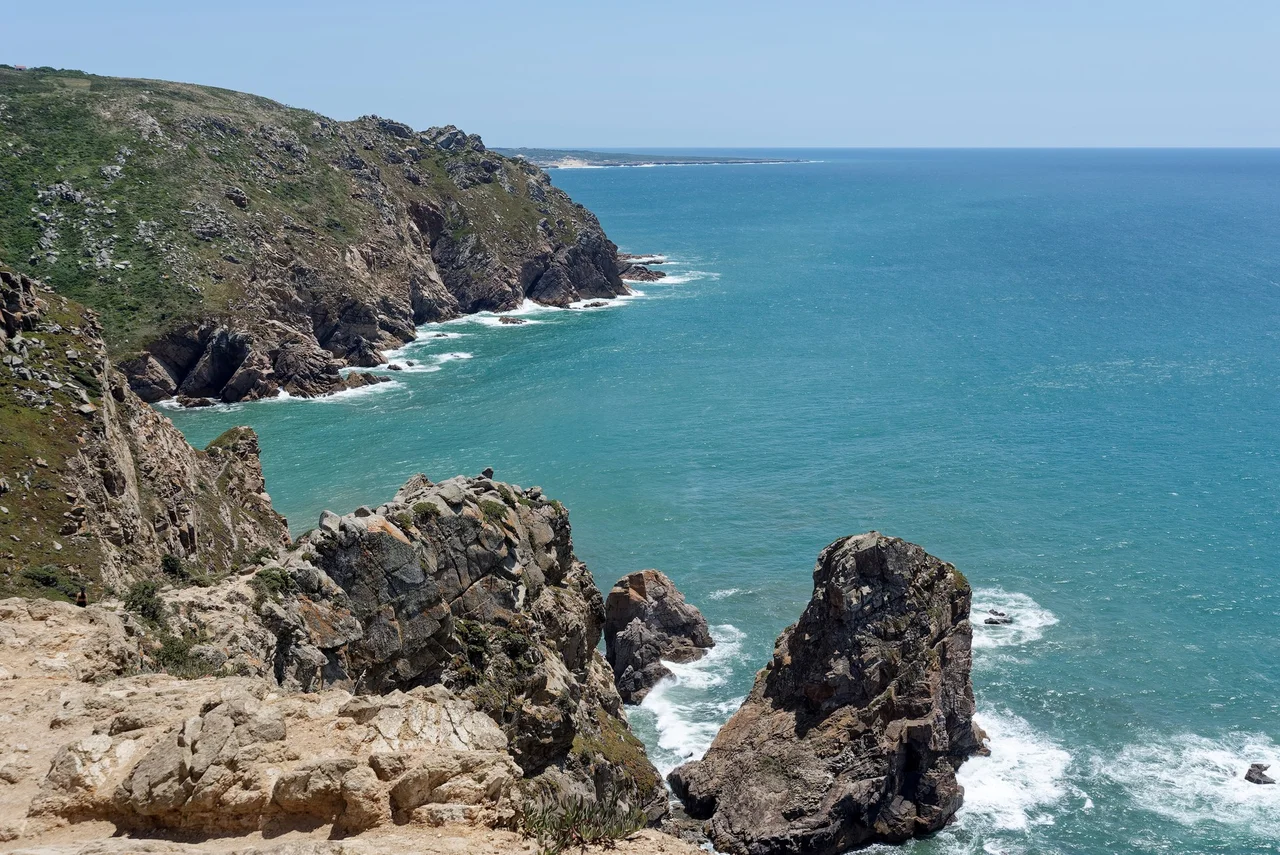
Quick Answer: A sea view is usually the largest single premium in a Portuguese price, and the two questions that decide whether it is worth paying are whether the view is protected and what the exposure costs to maintain. Both are answerable before you offer, and both are usually assumed instead.
American searches put portugal real estate beachfront at 210 a month, with portugal oceanfront real estate and portugal waterfront real estate at 110 each, and British buyers add property for sale in portugal with sea view and coastal property for sale in portugal at 70 each. Add the front-line searches on individual towns and it is a substantial cluster.
It is also the cluster where buyers most often pay for something they have not checked, because a view feels like a fact and is actually a permission.
What You Are Paying For
| Element | What decides it |
|---|---|
| How much sea | Full frontage, partial, or a slice from one room |
| From where | Living space and terrace, or only an upper bedroom |
| Orientation | South and west catch the sun, and the weather |
| Whether it survives | The classification of everything between you and the water |
| Access to the water | A path, a road, or a cliff |
The fourth line is the one that matters most and is checked least. A view across an undeveloped plot is only permanent if that plot cannot be built on, and “it has always been empty” is not a planning designation.
Verifying the View
A sea view is worth a premium only if it is protected, and protection is a documentary question rather than a matter of opinion. The municipal plan, the registry and the coastal management position between them settle whether the outlook can be built out, and a lawyer can obtain all three.
The municipal plan for the intervening parcels. What may be built there, and to what height and volume.
The classification of those parcels. Rustic land with no building rights is a very different neighbour from urban land awaiting a developer.
Any protection designation. Coastal setbacks, protected landscape and natural park boundaries all restrict development, and where they apply the view is genuinely durable.
Where the answer is that the land in front is developable, the view is a temporary condition, and it should be priced as one. Where the answer is a natural park boundary, you are buying something that will still be there in twenty years, and that is worth paying for. The general framework is in due diligence on Portuguese property.
Where the Protected Coast Is
| Stretch | Protection character | View durability |
|---|---|---|
| Vicentine coast, Sines to Sagres | Natural park along its length | Very high |
| Sintra and Cascais coast, Guincho | Natural park, development capped | Very high |
| Comporta to Melides | Protected landscape and reserve | Very high |
| Ria Formosa, eastern Algarve | Natural park, lagoon and barrier islands | High |
| Central Algarve resort strip | Built up, with pockets of protection | Mixed, and parcel-specific |
| Silver Coast | Protected in stretches, developed in others | Mixed |
The pattern is worth noticing: the most protected coasts are frequently the least developed and the cheapest, and the least protected are where the resorts are. A view on the Vicentine coast is more durable and less expensive than a view on the central Algarve, and the reason is that fewer people want to be there.
What Exposure Costs
| Item | Why the coast is harder on it |
|---|---|
| External paint and render | Salt-laden wind strips and blisters it faster |
| Window and door seals | Driven rain and salt degrade them on a shorter cycle |
| Metal fixings, railings, gates | Corrosion is continuous rather than occasional |
| Glass and frames | Etching and pitting on the weather side |
| Air conditioning and pool plant | Condensers and pumps fail sooner in salt air |
| Timber | Decking and shutters need a real maintenance routine |
Front-line property carries a maintenance premium over an equivalent inland house, and it is a recurring cost rather than a one-off. Ask the current owner what the external repainting cycle has actually been, and whether the seaward elevation is on a different schedule from the rest. The wider framework is in Portugal property running costs.
What You Pay to Buy and to Hold
| Cost | Basis | On a EUR 700,000 front-line apartment |
|---|---|---|
| IMT, non-resident | Flat 7.5% from 1 September 2026 | EUR 52,500 |
| Stamp duty | 0.8% | EUR 5,600 |
| Notary, registry, legal | Fixed plus percentage | Around EUR 9,000 to EUR 13,000 |
| Total acquisition | Roughly 9% to 11% | About EUR 67,000 to EUR 77,000 |
| IMI, annual | 0.3% to 0.45% of rateable value | Every year |
| AIMI, annual | 0.7% above EUR 600,000 of taxable value per owner | Reached by much front-line stock |
AIMI is worth flagging specifically on this page, because sea-view pricing pushes a large share of coastal property over the threshold. It is annual, and joint ownership gives each owner an allowance. See AIMI, the wealth surcharge and IMT for non-residents.
Front Line or One Row Back
| Front line | One row back | |
|---|---|---|
| Price | The full premium | Materially lower |
| View | Unobstructed, from living space | Often nearly as good from an upper floor |
| Exposure | Maximum salt and wind | Noticeably less |
| Letting rate | Higher, where licensing permits | Lower, but so is the entry price |
| Noise and footfall | Promenades are busy in season | Quieter |
| Resale | The narrowest, wealthiest buyer pool | A wider pool |
For an owner who will use the property rather than let it, one row back is frequently the better purchase: most of the outlook, less of the weather, and a meaningfully lower price. For an owner letting seasonally, front line earns its premium in the nightly rate, provided the municipality permits the letting at all.
Walk both before deciding. The difference between a front-line terrace and a second-line balcony is often smaller in reality than it is in the price.
The Beach Itself, and Public Access
Portuguese beaches are public without exception, and the maritime public domain extends inland from the shoreline. No private beach exists anywhere in the country, so a property described as having one is describing proximity and privacy rather than ownership.
What varies is access, and it varies more than buyers expect.
| Situation | What it means |
|---|---|
| Public path or steps from the property | The best case, and worth verifying on foot |
| Access across a neighbouring plot | A right that must be documented, not assumed |
| Public access several hundred metres away | Common, and fine, but not what the photograph implied |
| Cliff frontage with no descent | A view rather than a beach, whatever the listing says |
| Seasonal lifeguard and services | Concentrated on the busier beaches, absent elsewhere |
The cliff case is the one that disappoints. A great deal of the most spectacular Portuguese coastal property sits above water it cannot reach directly, and the nearest usable descent may be a drive. Walk it before you buy.
Public access also cuts the other way, in a good direction: because the shoreline is public, the promenade in front of a front-line property is not going to be privatised, and neither is the beach.
Which Coast, and What It Is Like to Live On
| Coast | Sea and weather | Character |
|---|---|---|
| Central Algarve | Warmest, calmest water, sheltered coves | Developed, seasonal, the most services |
| Eastern Algarve | Lagoon and barrier islands, mild | Year-round towns, beaches by ferry |
| Western Algarve and Vicentine | Cooler, bigger surf, real wind | Dramatic, quiet, protected |
| Lisbon coast, Cascais to Guincho | Atlantic, cool, breezy | City access, schools, the highest prices |
| Silver Coast | Wet, windy, big Atlantic swell | Space, low prices, thin services |
| Madeira and the Azores | Volcanic, no sand in the mainland sense | Islands, with island logistics |
Two variables separate these rows more than price does: water temperature and wind. The central Algarve is the only stretch where the sea is comfortably swimmable for a long season, and the Atlantic coasts are cooler and rougher in a way that photographs never convey.
If swimming is a large part of why you are buying on the coast, that narrows the search considerably, and it narrows it toward the most expensive and most developed option. That is a trade worth making consciously.
Coastal Erosion and the Retreating Line
Parts of the Portuguese coast are actively eroding, and the state has spent two decades managing the consequences through defence works and exclusion zones. For a front-line purchase this is not an abstraction: a collapse can close a beach access or a cliff path that formed part of what you bought.
| Where | Situation |
|---|---|
| Costa da Caparica | Long-running defence and nourishment works |
| Parts of the Silver Coast | Cliff retreat, with restricted zones |
| Aveiro and the north-western beaches | Active management, some structures lost |
| Algarve cliffs | Periodic collapses, with closed beach sections |
| Sheltered bays and lagoons | Materially more stable |
Two things follow for a purchase. Cliff-top land and the beaches below it are subject to safety exclusion zones that can be imposed after a collapse, and those zones can close a beach access or a path that was part of what you bought. And coastal defence works, when they come, are public works: they change views, close beaches for seasons, and are decided by authorities rather than owners.
The questions to ask are specific. Is the property inside a coastal management plan area, has the local authority mapped erosion risk on that stretch, and has anything on the plot or the cliff below it been the subject of works or restrictions. Municipal planning departments hold the answers and a Portuguese lawyer can obtain them.
None of this means avoiding the coast. It means understanding that a sea view bought on a retreating cliff is a different asset from the same view above a stable rocky headland, and that the difference is visible in the documents rather than in the photograph.
Salt, Wind and the Real Maintenance Bill
A front-line Atlantic property runs a maintenance cycle roughly twice as fast as an inland equivalent, and the driver is salt rather than weather. Window frames, metal fixings, external render and outdoor plant all degrade faster, and the specification chosen at installation decides how much faster.
| Element | Coastal reality |
|---|---|
| Window and door frames | Aluminium corrodes; timber needs frequent work |
| Metal fixings and railings | Rust appears within a season if untreated |
| External paint and render | Shorter cycle, more frequent repainting |
| Air conditioning units | Outdoor condensers corrode faster |
| Pool equipment | Salt air shortens plant life |
| Electronics and appliances | Measurably shorter lives near the front |
The material specification is the lever. Marine-grade stainless steel, powder-coated aluminium rated for coastal exposure, and properly treated timber cost more at installation and less over a decade. A property fitted out to inland standards on a front-line plot generates a maintenance bill that surprises its owner in year three.
When viewing, look at the metalwork rather than the kitchen. Rusting railings, pitted door furniture and blistered paint on the seaward elevation tell you both how exposed the plot is and how the previous owner treated it.
The Sound, and What Nobody Mentions
A front-line property comes with permanent noise, and buyers who viewed on a calm day are regularly surprised by it. Atlantic surf on an exposed beach is loud, it runs all night, and in winter storms it is genuinely powerful.
Most owners come to love it and describe it as the reason they bought. A minority find it prevents them sleeping and discover this after completion. There is no way to know which group you are in from a photograph or a summer afternoon viewing, and the only reliable test is to spend a night on that stretch of coast, ideally out of season when the swell is bigger.
The related point is wind noise. Exposed coastal properties with large glazed areas can drum, whistle and rattle in a way that inland houses do not, and the quality of the window installation is what separates a comfortable house from an exhausting one. Ask what the glazing is rated for, and treat any front-line property with basic aluminium frames as one that will need them replaced.
Pros and Cons
A sea view is the most durable premium in Portuguese property and the one most often bought on assumption. Whether the outlook is protected, whether the cliff below is stable, and what salt air costs annually are three separate questions with documentary answers.
Advantages:
- Genuinely fixed supply where coastal protection applies
- The strongest letting rates in the country, where licensing permits
- Views that survive, on the protected stretches
- Portugal’s coast is long and varied, so the choice is real
- Front-line property holds value well over long holds
Disadvantages:
- A maintenance premium that recurs every year
- AIMI applies to much of the stock
- The narrowest buyer pool on exit
- Seasonal footfall on promenades and beachfronts
- Unprotected views can be built out
Risks and Red Flags
Sea-view purchases fail on three things a photograph cannot show: whether the view is protected, whether the cliff is retreating, and what salt air does to a building specified to inland standards. All three are answerable from documents and a survey.
- A view assumed rather than verified. Check every parcel between the property and the water.
- “Nobody can build there.” Ask which designation says so, and get it in writing.
- Maintenance priced as inland. Salt and wind shorten every external cycle.
- AIMI unmodelled. At sea-view prices it applies more often than not.
- A summer viewing on a calm day. The weather side is the maintenance side.
Checklist before you offer:
- Classification and permitted volume of the intervening parcels
- Which protection designation applies, if any
- The external repainting and seal-replacement history
- Current VPT, last year’s IMI, and whether AIMI applies
- A second viewing on a windy day
Who This Suits
Buyers letting seasonally where licensing permits. Front line earns its premium in the rate, and the Algarve is the deepest market: see property for sale in the Algarve.
Long-hold owners on a protected stretch. The Vicentine and Sintra coasts, where the view is a designation rather than a hope.
Buyers who want the view and not the weather. One row back, on an upper floor.
Buyers optimising on price. The protected but undeveloped coasts, covered in the Alentejo and Comporta and the Silver Coast.
Frequently Asked Questions
Enough that it is usually the single largest premium in the price, and enough that it is worth verifying rather than assuming. The premium varies with how much sea, from which rooms, and whether it is protected. An unobstructed front-line view on the Algarve or the Cascais coast commands multiples of the same property set back a few streets.
Yes, unless something prevents it. Coastal protection, natural park designation and municipal plans stop development in many places, which is exactly why views in those places cost more. Where the land in front is developable, the view is a temporary condition. Establish the classification and the permitted volume of the plots between you and the water before paying for the outlook.
Salt attacks metal, paint, seals and glass, and wind drives it. Front-line property needs external repainting, window and door seal replacement, railing and fixing treatment, and air-conditioning or pool plant servicing on a shorter cycle than an inland equivalent. Budget a maintenance premium rather than treating the running costs as identical.
It depends on what you want the view to do. The Algarve's central cliffs give turquoise coves and calm swimming. The west and Vicentine coast give drama and wind. Cascais and Sintra combine sea with city access. Madeira gives altitude and the Atlantic, and the Azores give the most extraordinary settings and the thinnest market.
Front-line property holds value well because supply is genuinely fixed by coastal protection, and it lets strongly where licensing permits. The counterweights are the maintenance premium, AIMI at these price levels, and a narrower buyer pool than a town apartment. It works over a long hold and works poorly over a short one.
A set of designations and setbacks that restrict building near the shoreline, along with natural parks covering large stretches of coast. For a buyer they cut both ways: they limit what you may do with your own plot, and they are the reason the view in front of you is likely to survive. Establish which layer applies before you plan anything.
One row back is frequently the better value, and sometimes the better house: a materially lower price, less salt and wind exposure, and often a view that is nearly as good from an upper floor. Front line is worth its premium when the outlook is protected and the property will be let, where the rate difference is real.
Paying for a sea view?
Send us the listing. We check what may be built between you and the water before you offer.
Get a Portugal property shortlist
Tell us your budget and region (Lisbon, Algarve, Porto, Cascais). We reply within one business day with vetted options matched to your goals.