
Villas for Sale in Portugal: Prices and Running Costs
Buying a villa in Portugal: where they are, what they cost by region, and the pool, garden and maintenance bills that never appear in the listing.
By Portuguese Estate Editorial · Updated September 7, 2026 · 12 min read
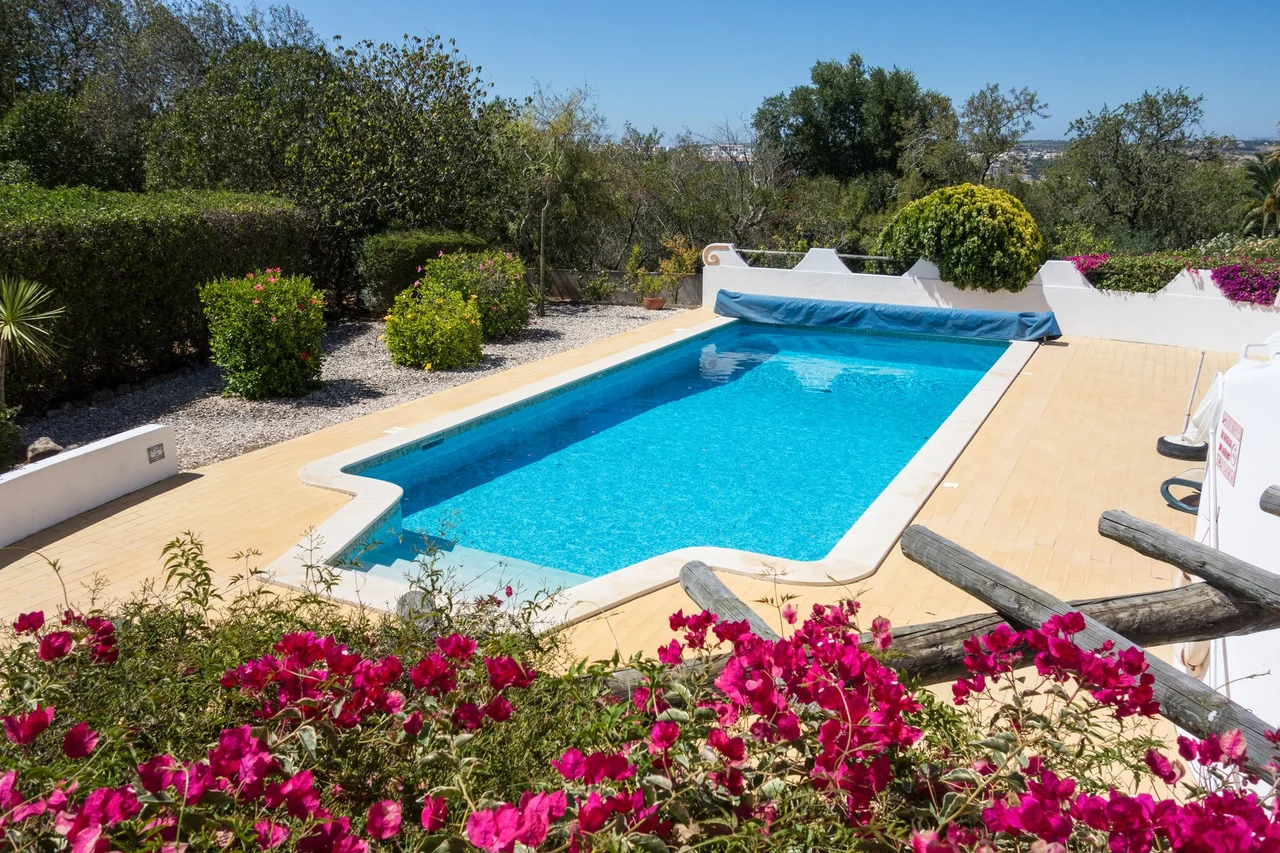
Quick Answer: Villas concentrate in the Algarve and on the Cascais and Comporta coasts, because Portuguese cities are apartment markets. Plot size drives the price more than floor area, and the running costs, pool, garden, roof, insurance and AIMI, are the part that never appears in the listing.
British searches put villas for sale in portugal at 1,300 a month, with algarve villas for sale adding 390 and American searches another 390 for the national phrase. It is one of the highest-volume property-type searches in the market, and one of the least well served: the results are listings, and none of them tell you what the house costs once you own it.
Where the Villas Are
| Region | Character | Price driver |
|---|---|---|
| Algarve, golden triangle | Quinta do Lago, Vale do Lobo, Almancil: large plots, golf, gated | Plot size and golf frontage |
| Algarve, central and west | Resort villas and standalone houses, many with pools | Proximity to the beach and the view |
| Algarve, inland | Quintas and country villas, the lowest prices | Land and condition |
| Cascais, Sintra, Birre | Villas with gardens near the schools and the train | Location, plot, school access |
| Comporta and the Alentejo coast | Low, pine, sand, architect-led houses | Scarcity and design |
| Silver Coast and Madeira | Fewer, and cheaper for the same size | Distance and weather |
Portugal’s cities barely feature, and that is structural. Lisbon and Porto grew as apartment cities, so a detached house with a garden inside either is genuinely scarce, which is why the villa market sits on the coasts and in the belt west of Lisbon.
Why Price per Square Metre Misleads Here
Price per square metre works for apartments and misleads badly on villas, because the plot rather than the building carries most of the value. Two houses of identical floor area on plots of 800 m2 and 2,500 m2 are not comparable properties, and a rate per square metre says they are.
| Component | What it contributes |
|---|---|
| Plot | In the golden triangle and Comporta, often most of the value |
| Building footprint | What the per-square-metre figure measures |
| Pool, terraces, outbuildings | Value, and running cost |
| View and orientation | Priced steeply and defined loosely |
| Permitted volume remaining | Whether you may extend, and by how much |
Two villas of identical floor area on plots of very different size and permitted volume are not comparable, and the rate per square metre will suggest they are. Ask for the plot area and the permitted building volume alongside the floor area, and compare those.
Advertised areas also vary between gross and net, which can shift the same house by around a fifth. Ask which basis the figure uses before comparing anything.
What You Pay to Buy
| Cost | Basis | On a EUR 900,000 villa |
|---|---|---|
| IMT, non-resident | Flat 7.5% from 1 September 2026 | EUR 67,500 |
| Stamp duty | 0.8% | EUR 7,200 |
| Notary and registry | Fixed and variable | Low four figures |
| Legal fees | Commonly 1% to 1.5% | EUR 9,000 to EUR 13,500 |
| Total | Roughly 9% to 11% | About EUR 85,000 to EUR 100,000 |
At villa prices the residency timing question is worth a great deal. A Portuguese tax resident buying the same house moves onto a progressive scale that starts far lower, and a buyer who becomes resident within 24 months can reclaim the excess. See IMT for non-residents.
What It Costs to Run
Villa running costs are the line listings never carry and the difference between an enjoyable house and an expensive one. Pool servicing, garden and irrigation, insurance on a high rebuild cost, IMI at 0.3% to 0.45% of rateable value and AIMI at 0.7% above EUR 600,000 all run annually.
| Cost | What drives it | Continues when empty |
|---|---|---|
| Pool servicing and chemicals | Size, whether it is heated, and season length | Yes |
| Pool pump electricity | Running hours, which do not stop out of season | Yes |
| Garden and grounds | Plot size, planting, irrigation | Yes |
| Roof and facade | Area, exposure, and age | As it accrues |
| Insurance | Rebuild cost, not market value | Yes |
| IMI | 0.3% to 0.45% of rateable value, at the municipal rate | Yes |
| AIMI | 0.7% above EUR 600,000 of taxable value per owner | Yes |
| Caretaking or management | Whether anyone checks the house between visits | Yes |
Two of those deserve emphasis. AIMI applies at villa price levels far more often than at apartment levels, it is annual, and joint ownership gives each owner their own EUR 600,000 allowance, which is a planning point for before the deed rather than after. See AIMI, the wealth surcharge.
And the empty-house problem. A villa used six weeks a year still pays for the pool, the garden, the insurance and the taxes for fifty-two. Buyers model the purchase and not the fifty-two weeks, and that is where the disappointment lives. The full framework is in Portugal property running costs.
Villas Fail at Their Infrastructure
Villas go wrong at their services rather than their structure. Photographs show walls and views; the failures are a pool pump at the end of its life, a borehole that was never registered, a septic system below current standards, and an access road nobody has agreed to maintain.
| System | What to check | Why it matters |
|---|---|---|
| Pool plant | Age of pump and filtration, condition of the shell and lining | Resurfacing and plant replacement are four-figure jobs |
| Roof | Tile condition, insulation, and any past leak history | The most expensive single failure |
| Retaining walls and terracing | Movement, cracking, drainage behind them | Structural, and worse on slopes |
| Water supply | Mains, licensed borehole, or shared source | Determines whether the garden is affordable |
| Drainage | Mains sewer or septic tank, and when it was last serviced | Septic failure is disruptive and not cheap |
| External joinery and paint | Condition on the weather-facing elevations | A cycle cost, not a one-off |
Commission a survey. Portugal has no convention of a buyer’s survey, so most purchases proceed without one, and on a house with this much infrastructure that is a false economy.
Letting a Villa
A villa with a pool is the strongest performer in the Algarve holiday market, which is exactly why several municipalities have restricted new Alojamento Local registrations. Existing licences do not transfer on sale, so income shown by a seller may not be available to a buyer. Confirm the position for the specific address before the promissory contract.
Two arithmetic points if letting is part of the plan. Peak-week rates annualise into yields that do not survive the void months, the management fee, the higher wear of turnover, the pool and garden contracts and the tax. And a let villa needs a manager, which is a cost rather than a friend with a key. The licensing framework is in the Alojamento Local guide.
New Build or Resale
The villa market splits sharply on age, and the difference appears in running costs rather than purchase price. A house built to current thermal standards with a 5-year structural guarantee costs a fraction to heat and maintain of a 1990s villa with single glazing, original plant and no insulation.
| New build villa | Resale villa | |
|---|---|---|
| Insulation and glazing | Built to current standards | Frequently poor on anything pre-2000 |
| Pool and plant | New, with a warranty | Age unknown until you ask |
| Systems | Solar, heat pump, smart controls common | Whatever was installed and never replaced |
| Plot | Whatever land was available, often set back | The established positions were built on first |
| Price | A clear premium | Cheaper per square metre, with a works budget behind it |
| Completion risk | Real, on off-plan purchases | None |
The insulation line matters more than the Portuguese climate suggests. An uninsulated villa is cold and damp from December to February, and heating a large volume badly is a serious annual number. New construction changes that materially.
The counter-argument is position. The best plots, the front lines and the mature gardens were taken decades ago, and a new villa is usually set further back for exactly that reason. Buyers who want both end up buying an older house on a good plot and rebuilding it, which is a project with an obras licence and a queue attached.
Where Villas Hold Their Value
Liquidity is the villa market’s weak point and it varies more than price does. The buyer pool for a EUR 1.5 million house is a fraction of the pool for a EUR 300,000 apartment, and it is international, which means an exit can take 12 months or more in a slow year.
| Situation | Exit character |
|---|---|
| Established area, conventional layout, good plot | The deepest villa buyer pool, sells in a normal timeframe |
| Resort development with a managed rental scheme | Buyers are investors as well as users, which widens the pool |
| Highly individual architect house | A small pool of buyers who want exactly that |
| Very large plot in a thin district | The land is the value, and the buyer set is narrow |
| Unfinished or partly renovated | The smallest pool of all, and the steepest discount |
The pattern is consistent: the more the house expresses one owner’s taste, the fewer people want it next. That is not an argument for building nothing distinctive, it is an argument for pricing the holding period accordingly and for not assuming an apartment’s liquidity.
The Pool, Priced Properly
A pool is the single most commonly underestimated element of villa ownership, and the gap between what buyers expect and what owners pay is consistent enough to be predictable.
| Item | Reality |
|---|---|
| Weekly servicing | Year round, not just in season |
| Chemicals | Continuous, and heavier in hot months |
| Pump and filtration electricity | A meaningful share of the annual bill |
| Heating, if fitted | Substantial, and the reason most are not heated |
| Resurfacing | Periodic, and a five-figure job when it comes |
| Plant replacement | Pumps and heaters have finite lives |
| Safety and insurance | Fencing or cover requirements, and cover terms |
Two conclusions follow. A pool left unserviced for a season costs more to recover than a year of servicing would have cost, which is why absentee ownership and pool ownership have to be planned together. And the plant is the part that fails: ask the age of the pump, the filter and any heater, because a villa presented immaculately can be sitting on equipment at the end of its life.
Salt chlorination, common in newer Algarve villas, reduces the chemical handling and adds its own cell replacement cycle. Neither system is free, and any villa marketed with a pool but no stated servicing arrangement has an owner who has been doing it themselves or not at all.
Staff, Security and the Villa That Stands Empty
A villa used a few weeks a year still needs someone to open it, close it, and notice when something has gone wrong. This is the running cost that has no equivalent in apartment ownership.
| Function | Why it is needed |
|---|---|
| Keyholding | Access for trades, deliveries, and emergencies |
| Regular checks | Leaks, storm damage, pests, and break-ins |
| Garden | Growth does not pause between visits |
| Pool | As above, and it degrades fastest |
| Arrival preparation | Opening the house, utilities, provisioning |
| Alarm and monitoring | Empty houses in quiet areas are targets |
The arrangement varies from a neighbour with a key to a full management contract, and the cost varies accordingly. What does not vary is that some arrangement is necessary. An empty villa with no local presence is where small problems become expensive ones: a slow leak found in October that started in June, a storm-damaged roof nobody reported, a pool that turned green and stayed that way.
Budget it explicitly as an annual line before purchase. Buyers who leave it out of the model are the ones who describe villa ownership as more expensive than they expected, and this is usually the line they omitted.
Boundaries, Neighbours and the Plot Next Door
On a villa the plot is most of the value, and what happens on the plots around it is the risk that owners least often check before buying.
| Question | Where the answer is |
|---|---|
| Is the adjoining plot developable | The municipal plan (PDM) |
| Has anything been applied for | The council’s licensing records |
| What height is permitted next door | The plan again, and it varies by zone |
| Are there rights of way across the plot | The registry and the certidao |
| Is the access road public or shared | The registry, and it matters for maintenance |
| Where do the boundaries actually run | A survey, not the fence line |
The developable-neighbour question is the one that turns a view into a wall. A villa bought for its outlook over an empty parcel is exposed to whatever that parcel’s zoning permits, and the answer is a public document rather than a matter of opinion.
The shared access road deserves its own attention on resort and semi-rural plots. A private road serving several houses needs an agreed maintenance arrangement, and where none exists the road degrades until somebody pays for it. Ask who owns it, who maintains it, and whether there is a written agreement, because an unmade access road is both a running cost and a resale problem.
Pros and Cons
A villa buys space, privacy and a plot, and commits you to infrastructure an apartment owner never touches. Pool plant, irrigation, septic systems, private roads and a garden that grows whether you are there or not are the lines that decide the annual cost.
Advantages:
- Space, privacy and outdoor living that no apartment offers
- Strong holiday-letting performance where the licensing permits it
- Plot value tends to hold better than building value over long holds
- Room to extend where permitted volume remains
- The Portuguese climate makes outdoor space usable most of the year
Disadvantages:
- Running costs scale with the property and continue when it is empty
- AIMI applies at these price levels far more often
- A smaller buyer pool on exit than a city apartment
- Infrastructure failures are expensive and invisible in photographs
- Highly personalised houses sell slowly
Risks and Red Flags
Villas fail at their infrastructure rather than their architecture. Pool plant, boreholes, septic systems, private access roads and irrigation are the lines that generate unexpected five-figure bills, and none of them appears in a photograph of the terrace.
- Price per square metre used as a comparison. Plot and permitted volume are doing the work.
- A pool with no plant history. Ask the age of the pump and when the shell was last resurfaced.
- AIMI unmodelled. It is annual, and joint ownership changes the arithmetic.
- No survey. The Portuguese norm is no survey, and villas are exactly where that norm costs money.
- Letting income assumed. Check the municipal position, then model the year rather than the peak weeks.
Checklist before you offer:
- Plot area, floor area basis, and any remaining permitted volume
- Pool plant age and resurfacing history
- Roof, retaining walls and drainage inspected specifically
- Water supply and its licence
- Current VPT, last year’s IMI, and whether AIMI applies
Who a Villa Suits
A villa suits owners whose use justifies the fixed annual cost, because the pool, garden and caretaking bills arrive whether the house is occupied or not. The deciding question is weeks of use per year rather than budget.
Families who will use it for months, not weeks. The running costs make sense against real use, and the space is the point.
Buyers letting seasonally, where licensing allows. A pool villa is the strongest product in that market, and the manager is part of the budget.
Year-round residents. The empty-house problem disappears, and the outdoor space earns its keep.
Buyers wanting a low-maintenance base. An apartment is the honest answer, and the city markets are covered in property for sale in Lisbon and Porto.
The regional villa markets are covered in the Algarve and Cascais.
Frequently Asked Questions
Overwhelmingly the Algarve, then the Cascais and Sintra belt west of Lisbon, then Comporta and the Alentejo coast, with smaller concentrations on the Silver Coast and in Madeira. Portuguese cities are apartment markets: a detached house with a garden and a pool inside Lisbon or Porto is rare and priced accordingly.
The range is enormous because a villa is a category rather than a product. A three-bedroom villa inland from the Algarve coast, a front-line villa in Vale do Lobo and a Comporta beach house are three different markets. What is consistent is that plot size drives the price more than floor area does, particularly in the golden triangle, which makes price per square metre of building a poor comparison tool.
More than buyers expect, and the costs scale with the property rather than with what it earns. A pool is a service contract and an energy bill, a garden is labour, a large roof and long facades are maintenance, and insurance rises with rebuild cost. Add IMI on the rateable value and, at villa prices, AIMI at 0.7% above EUR 600,000 of taxable value per owner.
For a family that will use it, usually yes; for a property that sits empty most of the year, it is a cost with no return. Servicing, chemicals, pump electricity and periodic resurfacing continue whether anyone swims or not. If the villa will be let, a pool materially raises the rate you can charge, which is the case where it pays for itself.
Yes, with an Alojamento Local registration, and the position varies by municipality. Villas with pools are the strongest performers in the Algarve holiday market, which is precisely why several municipalities have restricted new registrations. Verify the position for the specific address before the promissory contract.
Not automatically. Apartments in the main cities have deeper resale markets and sell faster; villas are a smaller pool of buyers, and the more individual the house the smaller that pool becomes. A well-located villa in an established area is liquid enough; a highly personalised house in a thin market is not, and that difference belongs in the holding-period assumption.
The pool plant and its age, the roof, the state of any retaining walls or terracing, the borehole or mains supply, the septic system if there is no mains drainage, and the condition of external paint and window seals on the weather side. Villas fail at their infrastructure rather than their walls, and none of that appears in the photographs.
Looking at villas?
Send us a listing. We come back with the plot and permitted volume, the pool and garden costs, and whether AIMI applies.
Get a Portugal property shortlist
Tell us your budget and region (Lisbon, Algarve, Porto, Cascais). We reply within one business day with vetted options matched to your goals.